Large-scale solar crosses a symbolic threshold
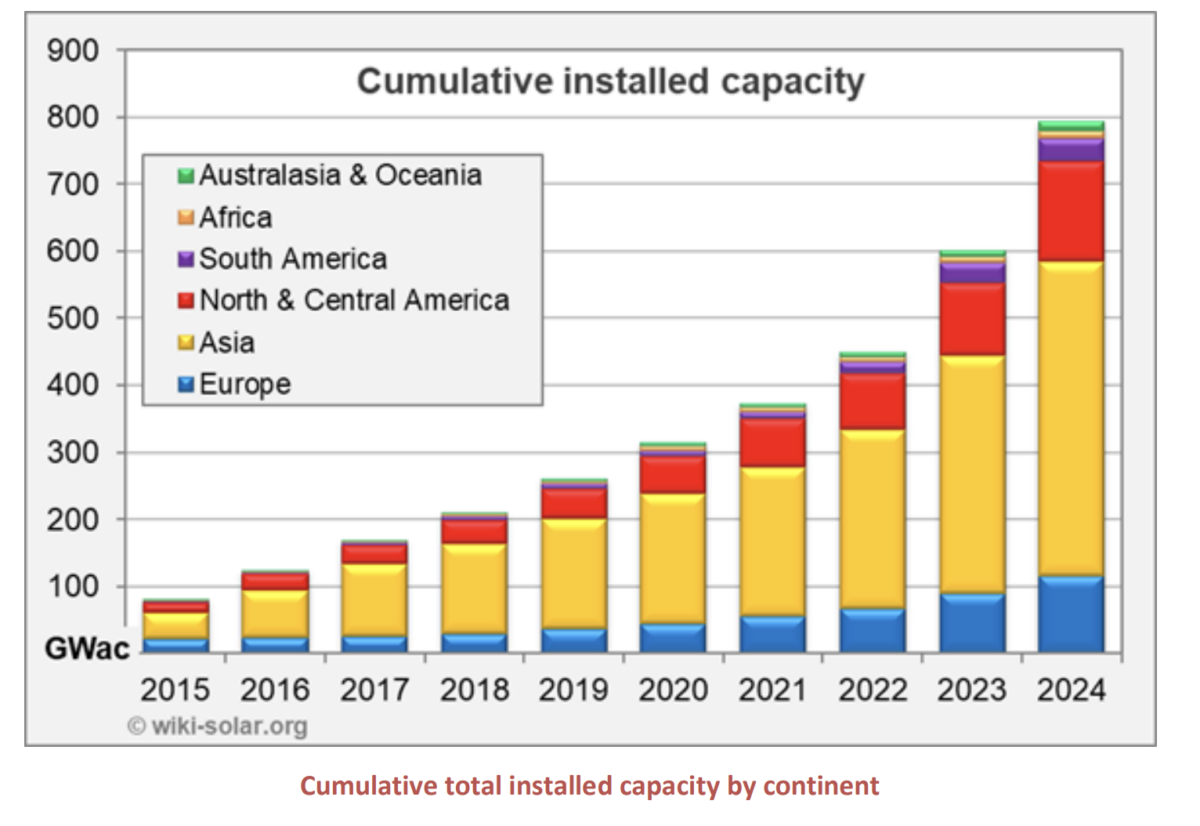
Utility-scale solar has crossed one of the power sector’s clearest milestones: 1 terawatt alternating current installed worldwide. According to analysis reported by pv magazine and compiled by Wiki-Solar, the world’s 33 largest utility-scale solar markets reached a combined 1,008 GWac by the final quarter of 2025.
The number applies specifically to large projects of 4 MWac and above, not to solar capacity overall. That distinction matters. Rooftop and distributed systems push total global solar capacity much higher, but the 1 TWac mark for large-scale plants is important because it reflects how quickly solar has matured from a niche technology into core generation infrastructure.
What the figure includes
Wiki-Solar said its utility-scale database now covers 23,285 projects across the leading 33 countries. Those markets account for roughly 92% of the world’s utility-scale solar total, giving the dataset considerable weight as a snapshot of deployment at the largest end of the industry.
The growth rate behind the milestone may be even more important than the total itself. Last year’s additions approached 250 GWac, which Wiki-Solar described as a record for a single calendar year. That pace suggests solar’s expansion is still accelerating rather than flattening after years of rapid buildout.
Crossing 1 TWac is therefore not just a round-number achievement. It is evidence that utility-scale solar is now being deployed at a scale comparable with the biggest conventional generation build cycles of previous eras. The sector is no longer defined mainly by policy-led pilots or isolated flagship projects. It is increasingly a standard part of national power planning.

Why the alternating-current milestone matters
Solar capacity can be expressed in different ways, and the distinction between direct current and alternating current often creates confusion outside the industry. Wiki-Solar’s figure uses GWac, which is especially relevant for grid integration because it reflects plant output on the AC side, where electricity is delivered into the network after inversion.
That makes the 1 TWac threshold a useful operational benchmark. It speaks more directly to grid-facing generation capacity than module nameplate numbers alone. In practical terms, it is another sign that solar is now deeply embedded in utility systems rather than sitting at their margins.
Philip Wolfe, Wiki-Solar’s founder, said that at current growth rates utility-scale solar should match wind power by the end of 2026. He also pointed to a broader reality that is already visible today: total solar generation, once rooftop and distributed systems are included, is already much larger than utility-scale figures alone suggest.
Solar’s next phase is about system impact
The most striking part of the new data is not only how much solar has been built, but what that implies for the next phase of the energy transition. At smaller scales, solar’s challenge was cost reduction and market entry. At the terawatt scale, the challenge is how to integrate large volumes of variable generation while maintaining reliability, flexibility, and affordable electricity.
That is why milestones like this increasingly intersect with transmission, storage, and market design. Utility-scale solar can now be deployed fast enough to reshape power mixes, wholesale pricing patterns, and investment decisions across the grid. As capacity climbs, system operators and policymakers have to solve a different class of problem: not whether solar can compete, but how to organize power systems around a technology that is becoming structurally dominant in daytime generation.
In that sense, the 1 TWac threshold is as much a signal to grid planners as it is to developers and investors. Large solar fleets change how electricity networks are built and run. They intensify the need for flexible resources, new interconnections, and storage that can shift generation into evening demand peaks. They also raise the strategic importance of project siting, permitting, and land use decisions.

From momentum to market power
Recent solar milestones have often emphasized total global capacity, but utility-scale deployment tells a specific story about institutional confidence. Large plants require financing, land access, transmission planning, engineering capacity, and regulatory approval. Reaching more than 1,000 GWac across major markets means those ingredients are now available at enormous scale.
The record build in 2025 also suggests that developers and investors continue to see utility-scale solar as one of the fastest and most bankable ways to add new generation. Even without more detailed country-by-country results in the source text, the overall direction is clear: solar’s industrial base and development pipeline are still expanding.
That trend has strategic implications well beyond the renewable energy sector. Countries that can connect solar quickly gain a relatively fast route to additional domestic generation. For import-dependent economies, it can improve energy security. For power-hungry sectors such as data centers, industrial electrification, and green fuels, it offers a scalable source of new supply, especially when paired with storage and grid upgrades.
A milestone with more headroom ahead
The 1 TWac figure is unlikely to stand as a long-term plateau. If annual additions continue near current levels, the next terawatt will arrive far faster than the first. That acceleration is typical of technologies that move from early adoption into infrastructure status, and utility-scale solar appears to be firmly in that category now.
Wiki-Solar’s analysis therefore captures a transition point. Large solar plants have passed the symbolic terawatt line, annual additions are still setting records, and the industry is moving into a stage where its main questions are no longer about viability but about dominance, integration, and speed.
The broader energy transition still depends on many technologies and policies. But one conclusion from the latest numbers is hard to avoid: utility-scale solar is no longer merely growing quickly. It is becoming one of the defining physical systems of the global electricity economy.
This article is based on reporting by PV Magazine. Read the original article.
Originally published on pv-magazine.com




