The AI Power Demand Surge Hits the Grid
America's electric utilities are confronting a problem rarely faced in the modern era: too much demand arriving too fast. A new analysis from the Edison Electric Institute reveals that investor-owned utilities across the country are currently working to interconnect approximately 39 gigawatts of new load, driven primarily by the explosive growth of data centers supporting artificial intelligence workloads and the expansion of advanced domestic manufacturing facilities.
The figure represents one of the largest single waves of new electricity demand in the history of the American grid. Utilities that spent much of the past two decades planning for flat or slowly declining electricity demand are now managing interconnection requests that arrive faster than their planning processes were designed to handle, forcing a fundamental rethink of how grid infrastructure planning works in a world shaped by AI-driven electricity consumption.
EEI's report provides the most comprehensive aggregate figure yet assembled for this demand wave. Individual data points had been emerging from utility earnings calls and Federal Energy Regulatory Commission interconnection proceedings for months, but the 39 GW figure quantifies the total scale of the challenge facing the transmission and distribution infrastructure that underpins the American economy's growing computational needs.
What 39 Gigawatts Actually Means
To put the number in context: 39 gigawatts is roughly equivalent to the combined peak electricity demand of Texas during a summer heat wave. It represents a meaningful fraction of total U.S. generation capacity and is all seeking grid connection at roughly the same time, concentrated in specific geographic clusters near existing fiber infrastructure, water supplies, and climate conditions favorable for data center cooling.
Not all queued projects will ultimately connect. Interconnection studies routinely reveal that significant portions of applications are speculative, financially unviable, or delayed by the chicken-and-egg problem of requiring transmission upgrades whose costs must be allocated across multiple projects simultaneously. But even a fraction of this demand successfully connecting would represent a fundamental change in the electricity system's load profile and geographic distribution.
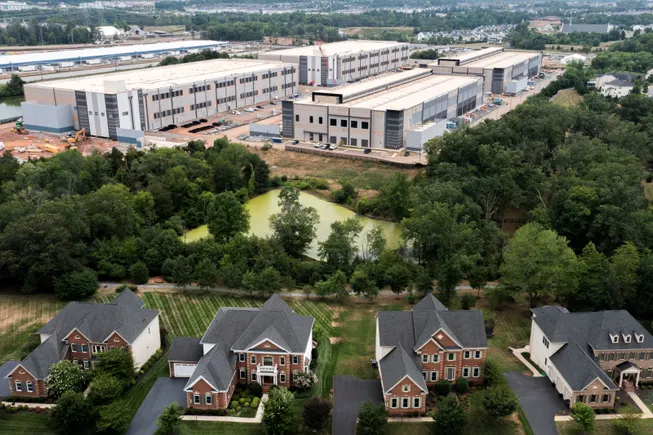
The geographic clustering effect is particularly significant for grid planning. Data center development has concentrated in corridors including Northern Virginia, the Dallas-Fort Worth area, central Ohio, and Phoenix — where existing fiber networks and favorable permitting environments have created powerful investment magnets. These localized demand concentrations exceed what local distribution systems were designed to serve, forcing expensive and time-consuming transmission infrastructure upgrades.

Interconnection Queue Reform and Its Limits
FERC's interconnection queue reform rules, finalized in 2023 and gradually coming into effect, were designed to address a chronic problem: the queue of projects waiting for grid connection had grown so large and so full of speculative filings that the entire process slowed to near paralysis. The rules introduced co-optimization, cluster processing of applications, and stronger financial requirements for participants — measures intended to accelerate connection of legitimate projects while clearing speculative entries.
Early results suggest the reforms are having effect in some regions, but the sheer volume of new demand means the underlying challenge is not going away. Utilities are also navigating the intersection of data center load growth with the clean energy transition: many of the same transmission upgrades needed to connect data centers are also needed to evacuate renewable energy from remote generation sites to population centers, creating competing priorities for limited infrastructure investment budgets.
The regulatory and planning frameworks governing electricity infrastructure were built for a different era — one where demand grew slowly and predictably and large new loads were rare events. Adapting those frameworks to rapid, concentrated demand growth requires not just rule changes but institutional and cultural shifts within utilities, state regulators, and the organizations responsible for regional transmission planning.
Industry Responses and New Models
Technology companies, aware that power availability has become a genuine constraint on expansion plans, are taking increasingly active roles in grid investment. Some hyperscalers have signed agreements to directly fund transmission upgrades, effectively financing the infrastructure needed to support their own load growth. Others have begun co-locating data centers with dedicated generation resources — including natural gas plants, nuclear facilities, and large-scale renewable installations — to reduce dependence on already-strained shared transmission infrastructure.
Small modular reactor developers have identified data center operators as primary potential customers, with several projects in early development stages targeting hyperscaler energy procurement agreements as anchor contracts. The combination of SMR baseload power and large data center demand could create a new model for behind-the-meter industrial power that bypasses some interconnection queue challenges entirely, though commercial SMR deployment remains years away for most projects.
States that can offer reliable, affordable electricity are increasingly competitive destinations for data center investment, while those with constrained grids risk missing out on significant economic activity and high-paying jobs. The politics of grid investment are shifting accordingly, with economic development arguments being added to traditional reliability and clean energy rationales for transmission infrastructure spending.
Looking Ahead
EEI's 39 GW figure is a snapshot, not a final tally. Analysts tracking new data center announcements and manufacturing expansion plans suggest the pipeline of projects seeking grid connection will continue to grow through the remainder of the decade. The question is not whether this demand will materialize but whether the infrastructure to serve it can be built fast enough to keep pace with the investment decisions being made today by technology companies planning their AI infrastructure for the next five to ten years.
The challenge is as much institutional as physical. Transmission lines, substations, and generation resources can be built given adequate time and capital. The harder problem is aligning the incentives, regulatory frameworks, and stakeholder interests of an electricity sector that was never designed for the pace of change the AI revolution is imposing on it. How that alignment gets achieved will shape the geography, economics, and environmental footprint of artificial intelligence for decades to come.
This article is based on reporting by Utility Dive. Read the original article.
Originally published on utilitydive.com