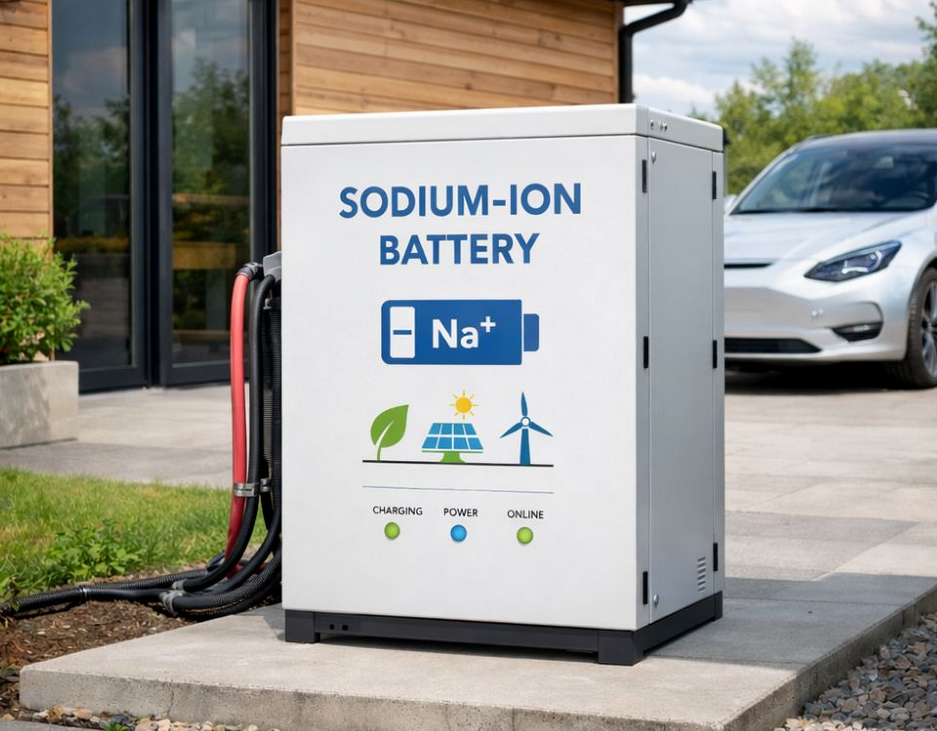
A Milestone for Sodium-Ion Technology
NanoMalaysia, the government-backed nanotechnology commercialization agency, has unveiled a sodium-ion battery prototype that achieves an energy density exceeding 300 watt-hours per kilogram. The figure represents a significant leap for sodium-ion chemistry, which has traditionally lagged behind lithium-ion in energy density but offers compelling advantages in cost and material availability.
The prototype was developed through a collaboration between NanoMalaysia and domestic research institutions, with testing conducted at certified facilities. If the results hold up under independent verification and scale-up conditions, the technology could accelerate the timeline for sodium-ion batteries to compete directly with lithium-ion across applications from grid storage to electric vehicles.
Why 300 Wh/kg Matters
Energy density is one of the most critical metrics for battery technology. It determines how much energy a battery can store relative to its weight, directly impacting electric vehicle range, grid storage capacity, and the viability of portable electronics.
Most commercial lithium-ion batteries operate in the 250 to 300 Wh/kg range, with the best cells from manufacturers like CATL and Samsung SDI pushing toward 350 Wh/kg. Sodium-ion batteries currently on the market typically achieve between 100 and 160 Wh/kg, which has limited them to stationary storage and low-speed vehicles.
Crossing the 300 Wh/kg threshold would put sodium-ion in the same performance class as mainstream lithium-ion, fundamentally changing the competitive calculus. If sodium-ion can match lithium-ion on energy density while maintaining its inherent cost and supply chain advantages, the implications for the global battery market would be profound.

The Sodium Advantage
Sodium is the sixth most abundant element in Earth's crust and can be extracted from seawater, making it virtually inexhaustible. Lithium, by contrast, is concentrated in a handful of countries, with extraction often involving environmentally destructive mining practices. The geopolitical concentration of lithium reserves has also created supply chain vulnerabilities that have driven price volatility.
Sodium-ion batteries also avoid the use of cobalt and nickel, two materials with troubled supply chains linked to environmental damage and labor rights concerns. The cathode materials in sodium-ion cells can be made from iron, manganese, and other earth-abundant elements, dramatically reducing raw material costs.
Manufacturing is another area where sodium-ion holds promise. The production process is largely compatible with existing lithium-ion factory equipment, meaning that scaling up does not require entirely new infrastructure. Several Chinese manufacturers, including CATL and HiNa Battery, have already begun commercial production of sodium-ion cells, though at the lower energy densities that have characterized the technology until now.
Technical Details of the Prototype
NanoMalaysia has released limited technical specifications beyond the headline energy density figure. The prototype reportedly uses a novel cathode formulation described as a proprietary layered oxide material, paired with a hard carbon anode. The electrolyte system has also been optimized to improve ionic conductivity and cycle stability.
Cycle life data has not yet been published in detail, though NanoMalaysia claims the prototype maintains over 80 percent capacity after 1,000 charge-discharge cycles, which would be competitive with commercial lithium-ion cells. Temperature performance, another area where sodium-ion has shown advantages over lithium-ion, was described as excellent across a wide operating range.
Independent battery researchers have expressed cautious optimism while noting that lab prototypes often perform differently at commercial scale. Degradation mechanisms, manufacturing consistency, and long-term stability all need validation before the technology can be considered market-ready.
Market Implications
The global battery market is expected to exceed $400 billion annually by 2030, driven primarily by electric vehicle adoption and grid-scale energy storage. Sodium-ion technology has been gaining momentum as a complement to lithium-ion, particularly for applications where cost matters more than maximum energy density.
If NanoMalaysia's claims are validated at scale, sodium-ion could move from a niche complement to a direct competitor across most battery applications. This would have significant implications for lithium mining investments, battery supply chain strategies, and the pace of the global energy transition. Malaysia's involvement also signals growing ambition among Southeast Asian nations to participate in the battery value chain rather than simply serving as a market for finished products.
This article is based on reporting by PV Magazine. Read the original article.
Originally published on pv-magazine.com




