A California battery case is becoming a market warning shot
Terra-Gen has agreed to pay $5.6 million to settle allegations that it manipulated the California Independent System Operator market, according to a settlement approved by the Federal Energy Regulatory Commission. The case centers on whether the company avoided buying high-priced power for a battery system when grid instructions would have required it to do so.
The settlement does not include a full admission on the anti-manipulation claim. Terra-Gen neither admitted nor denied that allegation. It did, however, admit that it violated FERC’s duty of candor rule in a compliance report connected to an earlier settlement.
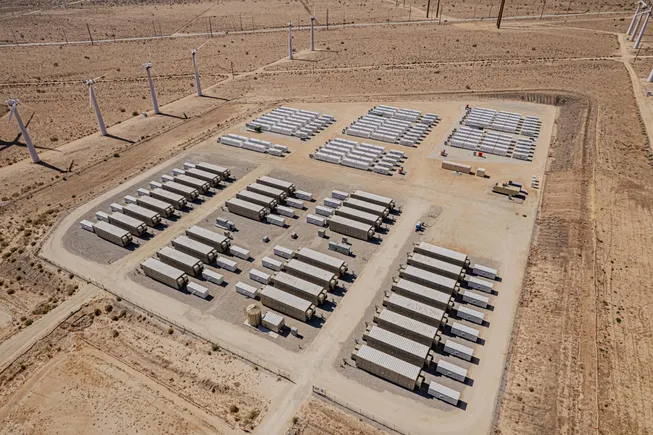
The financial package includes a $4.95 million fine and the disgorgement of $681,007 in profit, plus interest. The dispute covers conduct from July 2020 through April 2022 involving a 58-megawatt wind facility and a 65-megawatt battery system in Kern County, California, near Los Angeles.
What regulators say happened
According to FERC, Terra-Gen offered the wind and battery resources into CAISO’s day-ahead market to provide ancillary services. When those offers were accepted, the awards became binding in the real-time market and required the resources to remain on automatic generation control so CAISO could dispatch them directly.
The enforcement office alleged that when CAISO issued regulation-down awards that ordered Terra-Gen to buy power and store it in the batteries, the company sometimes claimed the battery system was unavailable or removed it from the grid operator’s control if real-time locational marginal prices were high. In practical terms, regulators say the company avoided a costly obligation by treating the battery as if it could not respond when market conditions made compliance expensive.
FERC also said Terra-Gen violated its duty of candor by submitting a compliance report that failed to disclose new concerns raised by CAISO’s market monitor about the company’s conduct. That separate admission matters because market oversight depends not only on dispatch behavior but also on complete and accurate reporting to regulators.

Why this case matters beyond one company
Battery storage is increasingly central to modern grid operations. Storage assets can absorb power, discharge quickly, and provide ancillary services that help balance the system. That flexibility also means the rules governing battery participation are becoming more consequential. When a battery wins a market award, operators and regulators need confidence that it will perform as instructed, even in moments when doing so is economically unattractive for the asset owner.
This case puts a spotlight on that tension. Storage owners operate in markets where prices can swing sharply. But FERC’s view, as reflected in this settlement, is that dispatch obligations cannot be treated as optional when price signals turn unfavorable. The alleged conduct involved claiming outages or disconnecting from automatic generation control during high-price periods, while not doing so when prices were lower. That pattern is what turned an operational question into a market manipulation case.
The details regulators emphasized
The report says a former vice president of origination, who was later fired, devised and oversaw the scheme. That point suggests FERC viewed the behavior not as a random compliance lapse but as something organized within the company’s trading or market strategy.
The alleged conduct also involved battery charging during regulation-down awards, which can be easy to overlook outside power-market circles. But this is exactly the kind of moment where storage can materially affect system balancing and price formation. If a participant sidesteps those instructions selectively, it can distort both market outcomes and confidence in dispatch reliability.
For developers and operators, the lesson is direct. Batteries are not exempt from the same enforcement standards that have long applied to other types of market participants. As storage becomes more embedded in wholesale electricity markets, enforcement scrutiny is likely to increase rather than soften.
A broader signal for the storage industry
The settlement arrives at a time when battery systems are moving from the margins of the grid to a more operationally essential role. That makes questions of availability, bidding behavior, and dispatch compliance more important to regulators, market monitors, and counterparties. It also raises the bar for internal controls, documentation, and escalation processes when equipment is genuinely unavailable.
Terra-Gen’s case is therefore about more than one financial penalty. It shows how regulators are interpreting the obligations attached to battery market participation and how seriously they are treating omissions in follow-up reporting. Companies that own or optimize storage assets will likely read the settlement as a reminder that market conduct enforcement now extends deeply into how batteries are scheduled, controlled, and described to oversight bodies.
That matters in California first, but not only in California. Other markets are watching similar questions as battery fleets expand. The more storage shapes reliability and price formation, the less room participants will have to blur the line between technical unavailability and economically convenient nonperformance.
For the industry, that makes this settlement one of the more important regulatory markers in the continuing normalization of battery storage as a core market resource rather than a special case.
This article is based on reporting by Utility Dive. Read the original article.
Originally published on utilitydive.com