Brazil’s solar market kept growing, but the balance changed
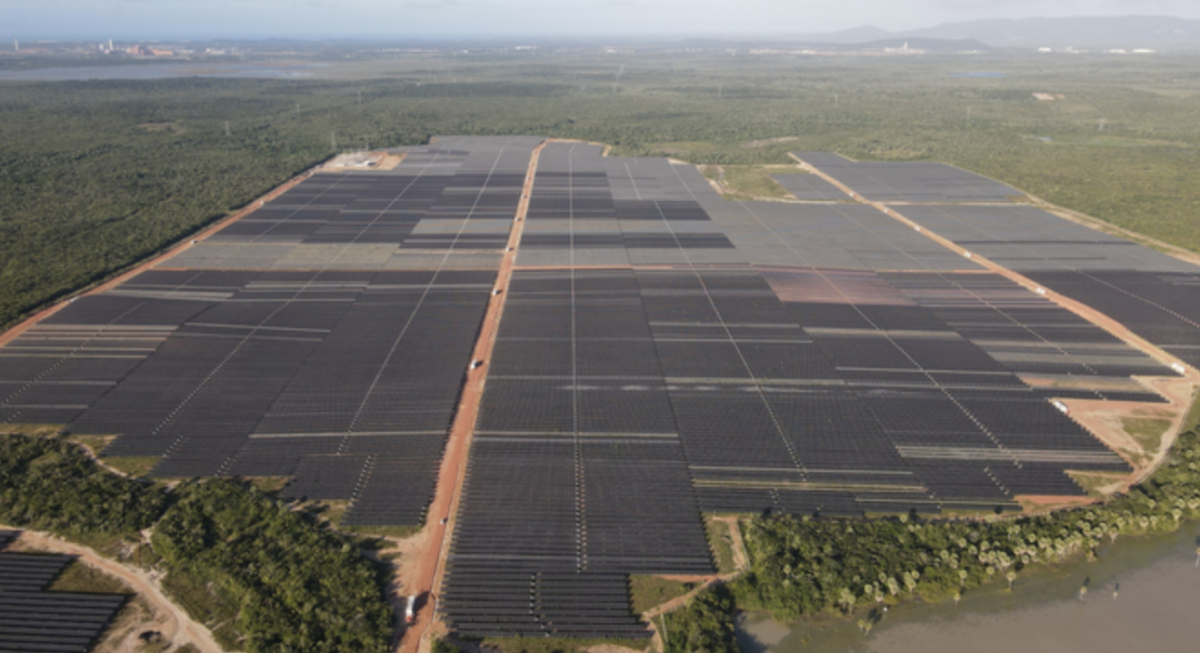
Brazil added 2,331 megawatts of solar capacity in January and February 2026, according to data cited by pv magazine from the National Electric Energy Agency, Aneel. The topline figure shows continued expansion, but the more important development is the shift underneath it: centralized, utility-scale generation slightly outpaced distributed generation, reversing the pattern that had previously made rooftop and small-scale systems the dominant growth engine.
In the first two months of 2026, distributed generation accounted for 1,145 megawatts of new capacity, while centralized generation contributed 1,186 megawatts. That means both segments continued to add substantial capacity, but utility-scale solar moved into the lead. The change is notable because Brazil’s solar story in recent years has often been defined by rapid distributed growth, especially in homes and businesses.
Distributed generation fell while utility-scale more than doubled
The source provides a sharp year-on-year contrast. Distributed solar additions fell 37% compared with the same period in 2025. At the same time, centralized solar capacity more than doubled. In January and February 2025, Brazil added 2,392 megawatts in total, including 1,825 megawatts of distributed generation and 567 megawatts of centralized installations.
That comparison shows two things at once. First, overall solar additions remained close to the previous year’s level, slipping only slightly in aggregate. Second, the composition of growth changed dramatically. What had been a heavily distributed market in early 2025 became a more evenly split market in early 2026, with utility-scale installations taking a narrow lead.
This kind of shift matters because distributed and centralized solar do not have the same economics, financing structures, installation timelines, or grid impacts. When utility-scale capacity accelerates while distributed growth cools, it can change where capital flows, how developers prioritize projects, and what kinds of infrastructure and policy questions move to the forefront.

Residential solar still led the distributed segment
Even with the slowdown, residential systems remained the largest contributor within distributed generation. The source says residential installations accounted for 739 megawatts of new connections in early 2026. Commercial projects followed with 220 megawatts, and rural projects added 93 megawatts.
Those figures show that households continue to anchor Brazil’s distributed solar market, even during a softer period. But the year-on-year comparison is revealing. In the same period of 2025, residential additions reached 1 gigawatt, meaning the household segment alone was materially stronger a year earlier. The source text does not explain why distributed growth slowed, so any detailed causal interpretation would go beyond the supplied evidence. Still, the data is clear that distributed momentum has cooled relative to the previous year.
Why the market mix matters
A market where centralized solar more than doubles while distributed additions decline is not necessarily a weaker market. It may instead be a market entering a different phase of development. Utility-scale projects tend to come in larger blocks, depend on different financing and offtake structures, and can quickly alter national capacity figures when a cluster of projects reaches completion.
For policymakers and grid operators, this changing mix can have practical implications. Centralized projects may place stronger emphasis on transmission planning and wholesale market integration, while distributed systems often raise questions around retail tariffs, local grid hosting capacity, and consumer economics. The source does not discuss those policy responses directly, but it supports the conclusion that Brazil’s solar expansion is becoming more balanced across segments than it was a year ago.
Growth remains substantial despite the slowdown in one segment
It is also important not to overstate the distributed slowdown as a collapse. Brazil still added more than 1.1 gigawatts of distributed solar in just two months. That is a large amount of capacity by any conventional standard. What changed is that utility-scale activity accelerated enough to overtake it.
The total addition of 2,331 megawatts in January and February means Brazil continues to build solar at a strong pace. The difference from 2025 is that the market is no longer leaning as heavily on one segment. From a development standpoint, that can be read as diversification rather than simple deceleration, even if one part of the market has clearly softened.
What to watch next
The candidate text gives an early snapshot rather than a full-year outlook. Two months of data can reveal direction, but not the final shape of the year. Several questions therefore remain open. Will distributed generation recover later in 2026? Will utility-scale continue at this elevated pace? And will the overall market exceed 2025 despite the early cooling in rooftop and other distributed installations?
The source does not answer those questions, but it does establish the baseline for them. Brazil started 2026 with robust solar deployment, and the lead growth driver changed. That is enough to make the update consequential for anyone tracking the evolution of one of the world’s most dynamic solar markets.

A more complex solar story is emerging
The early-2026 data suggests Brazil’s solar market is entering a more complex stage. Distributed generation remains large, especially in the residential sector, but no longer dominates additions to the same extent. Utility-scale projects, by contrast, appear to be moving from supporting role to leading growth engine, at least in the opening stretch of the year.
If that pattern continues, Brazil’s solar expansion will increasingly be shaped by the interaction between mass-market distributed systems and larger centralized plants rather than by rooftop adoption alone. The first two months of 2026 do not close the debate over where the market is heading, but they do show that the balance of growth has already begun to shift.
This article is based on reporting by PV Magazine. Read the original article.
Originally published on pv-magazine.com