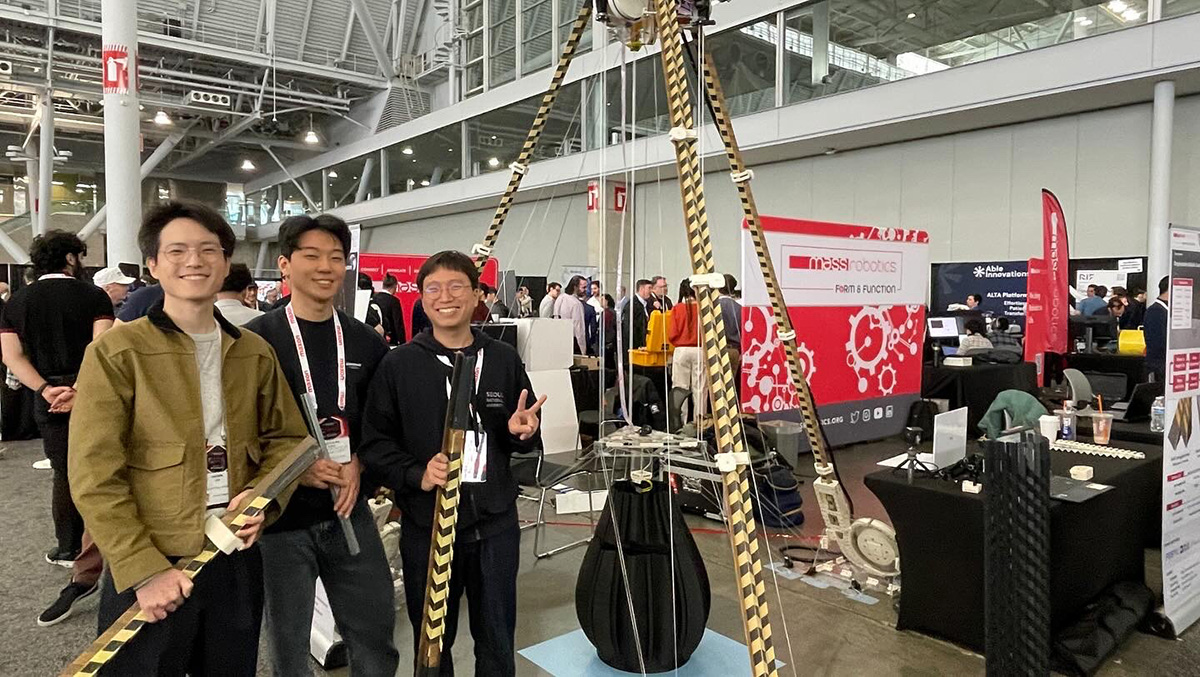
MassRobotics is framing robotics as an ecosystem story
MassRobotics plans to use the 2026 Robotics Summit & Expo as a platform to highlight the range of organizations and people moving through its network. Based on the available event description, the organization will spotlight resident startups, physical AI companies, healthcare startups, women in robotics, and university teams. Even in a short announcement, that mix says a lot about how the robotics sector increasingly presents itself: not as a single market, but as a stack of overlapping communities, technologies, and talent pipelines.
The announcement is not a product launch or a research paper. It is more structural than that. What it offers is a view into how robotics institutions want to define growth in 2026. The emphasis is on ecosystem development, and that term matters. It signals that the story is not only about individual machines or singular breakthroughs. It is also about how startups, research groups, founders, and underrepresented communities are connected and given visibility.
Why the showcase matters
Robotics has long suffered from a mismatch between public imagination and commercial reality. Outside the industry, attention often clusters around humanoids, viral demos, or sweeping claims about general automation. Inside the industry, progress is usually more distributed. It takes shape through testing environments, startup formation, investor networks, domain-specific applications, and the slow assembly of capable teams. An event showcase that groups together resident companies, physical AI, healthcare robotics, women in the field, and university teams is a way of making that distributed progress legible.
MassRobotics appears to be leaning into that role. By promoting multiple slices of the field at once, it can present robotics as a living pipeline rather than a series of isolated companies. That framing can be valuable for investors, corporate partners, researchers, and policymakers alike because it highlights where the next generation of organizations may emerge from and how different parts of the sector reinforce one another.
Physical AI stands out as a current point of focus
One of the categories called out in the announcement is physical AI. That is significant because it reflects a broader shift in how robotics is being described. Instead of treating robotics as separate from the current AI wave, the term physical AI places robots directly inside it. The implication is that perception, planning, autonomy, and embodied interaction are increasingly part of the same commercial and technical conversation.
Even without program details, the decision to feature physical AI companies suggests that the summit will try to capture that convergence. It is a useful reminder that robotics is no longer being pitched only as hardware plus control systems. It is also being framed as AI expressed through action in the physical world. For many founders and institutions, that is likely to be one of the most investable narratives in the sector right now.
Healthcare and universities show the pipeline from research to use case
The inclusion of healthcare startups is equally important. Healthcare robotics has often served as one of the clearest examples of why robots succeed in some domains and stall in others. The setting is demanding, but the value proposition can be concrete when systems solve real workflow problems or improve precision, logistics, or support functions. A summit showcase that gives healthcare a defined place indicates that practical deployment areas remain central to the robotics growth story.
University teams, meanwhile, represent the upstream end of the pipeline. Academic groups are often where technical capability, talent development, and early experimentation converge before ideas move into startups or partnerships. By highlighting university teams alongside resident startups, the event description effectively draws a line from education and research into commercialization. That continuity matters in a field where the handoff from lab work to reliable real-world deployment is often difficult and slow.

Visibility for women in robotics is part of the industry story, not a side note
The announcement also explicitly says MassRobotics will spotlight women in robotics. That is worth noting because ecosystem growth is not just about company count or funding volume. It is also about who gets seen, who gets backed, and who is treated as part of the field’s future leadership. Calling out women in robotics within the summit program turns representation into part of the event’s structure rather than an afterthought.
That approach has strategic value as well as social value. Talent competition in robotics is intense, and any organization trying to build a durable innovation hub needs to show that participation is broad, visible, and connected to opportunity. Showcasing women in the field at a high-profile summit is one way to make that commitment public.
A summit can help define what counts as momentum
Industry gatherings often function as narrative machines. They do not just display progress; they help determine which kinds of progress get recognized. In that context, MassRobotics’ plan to feature resident startups, physical AI, healthcare companies, women in robotics, and university teams is a choice about what momentum should look like. It is not confined to one subsector, one demographic, or one commercialization stage.
That broad framing may be especially useful at a time when robotics is benefiting from renewed AI attention but still needs durable institutional scaffolding. Events can provide that scaffolding by connecting investors to startups, founders to researchers, and public narratives to real technical communities. The more coherent that ecosystem appears, the easier it becomes for outside stakeholders to treat robotics as a serious long-term domain rather than a sequence of disconnected demos.
The available source text is brief, so the full scale of MassRobotics’ summit presence remains to be seen. But the priorities are already visible. The organization wants to show not only companies, but a community; not only technology, but pathways; not only products, but the people and institutions that make those products possible.
That is a sensible message for robotics in 2026. The field’s future will depend as much on ecosystems that can sustain development as on any single machine unveiled on a conference floor. If MassRobotics succeeds in making that ecosystem visible at the Robotics Summit, it will be promoting more than an event. It will be promoting a model of how robotics grows.
This article is based on reporting by The Robot Report. Read the original article.
Originally published on therobotreport.com