SpaceMore in Space→
Science Through Shadows: How Eclipses, Occultations, and Transits Reveal the Universe
Key Takeaways
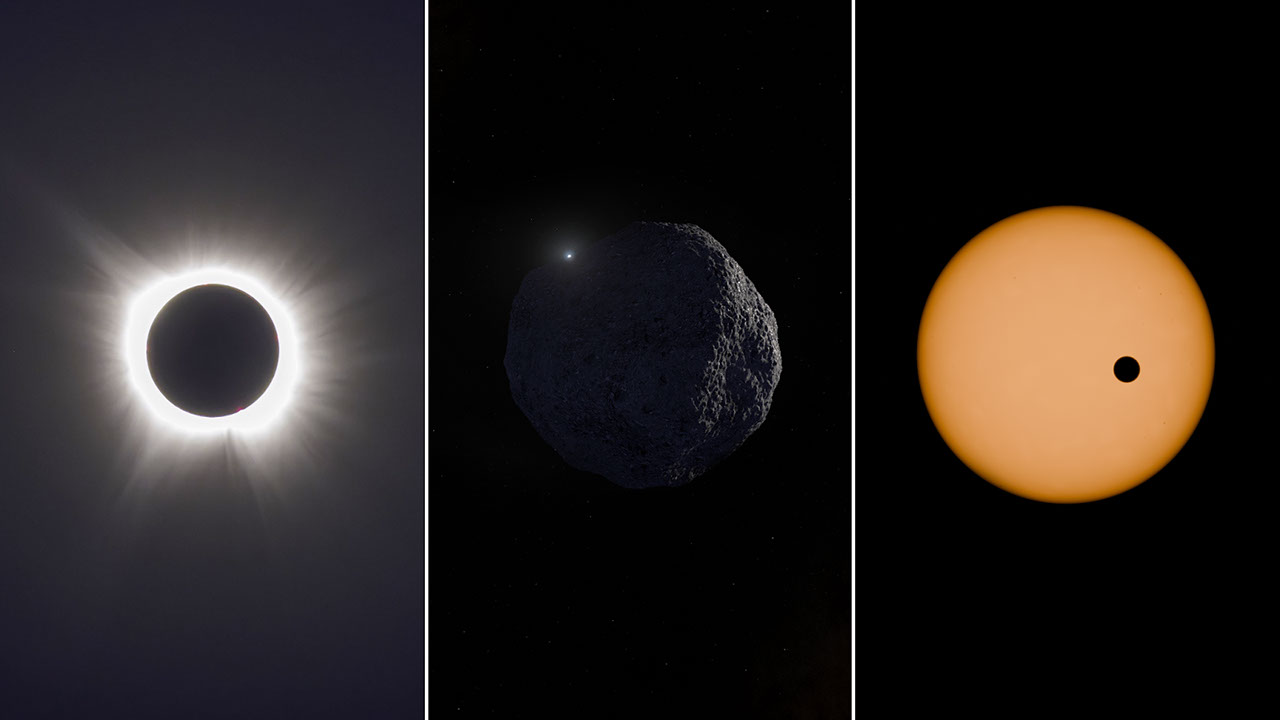
- Eclipses, occultations, and transits encode scientific information about the size, shape, and atmospheric composition of celestial bodies
- Stellar occultations revealed Pluto's atmosphere and the rings of Uranus and Neptune before spacecraft visits
- The transit method drove the exoplanet revolution, with Kepler cataloguing thousands of confirmed worlds
- Transmission spectroscopy with JWST enables direct detection of molecules including CO2 in exoplanet atmospheres
- The technique stretches from Eratosthenes calculating Earth's circumference to modern searches for biosignatures on habitable-zone planets
DE
DT Editorial Team··via science.nasa.gov