The Quest for Quiet Supersonic Flight
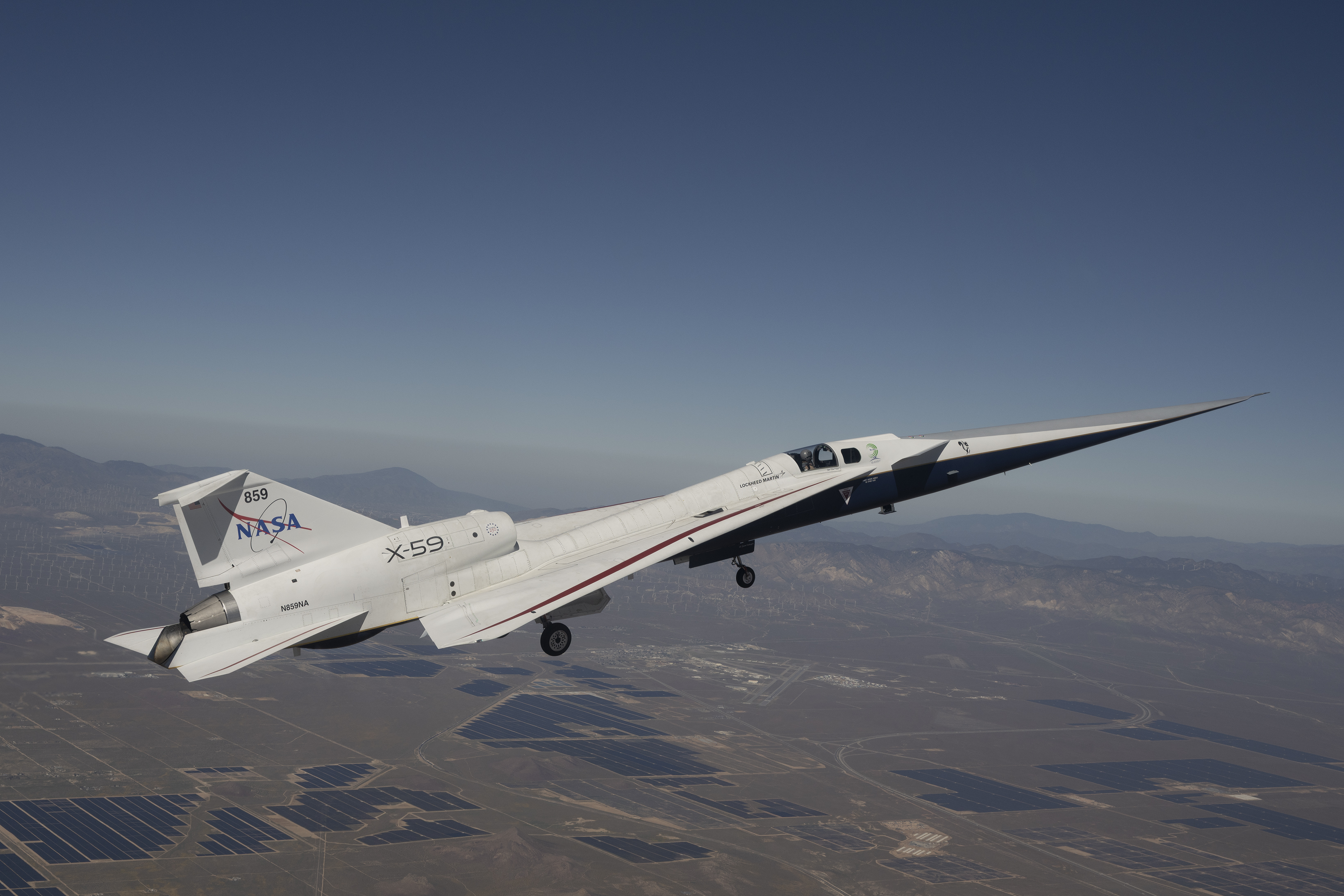
NASA's X-59 experimental aircraft has completed its second test flight, kicking off an intensive series of dozens of planned test flights that will build toward the program's ultimate goal: demonstrating to regulators that commercial supersonic flight over land is technically achievable without generating the ground-level sonic booms that led to the ban on overland supersonic transport operations in the United States more than five decades ago.
What Makes the X-59 Different
Conventional supersonic aircraft generate sonic booms because of the way shock waves interact with each other and stack into a sharp pressure signature that reaches the ground as a disruptive double boom. The X-59 is designed to prevent this stacking through a highly elongated fuselage shape and carefully engineered external geometry that causes the shock waves generated at different parts of the aircraft to reach the ground at different times, spreading the pressure pulse rather than concentrating it.
The result—if the design performs as predicted—is a much quieter low-level thump rather than a startling boom. NASA has been calling this the low-boom signature, and the X-59's specific geometry is optimized to produce a thump that might be heard at approximately 75 perceived decibels at ground level—roughly equivalent to the sound of a car door closing, compared to the 90+ decibels of a conventional supersonic aircraft's boom.

The QueSST Mission Framework
The X-59 is the centerpiece of NASA's Quiet SuperSonic Technology, or QueSST, program. The mission has two phases. The first is demonstrating that the aircraft's low-boom design actually works as predicted—that the acoustic signature at the ground is substantially quieter than that of conventional supersonic aircraft. The second phase involves flying the X-59 over selected communities across the United States and gathering data on how residents perceive and respond to the low-boom signature.
This community response data is the critical output that regulators need. The Federal Aviation Administration and the International Civil Aviation Organization have maintained a ban on overland supersonic commercial flight based on the disruptive nature of the conventional sonic boom. If the X-59 can demonstrate that its low-boom signature generates an acceptably low level of community annoyance, it provides the scientific foundation for regulators to potentially revise those rules and open the door to overland supersonic commercial operations for the first time since the Concorde era.
Progress in the Flight Test Program
The second flight represents an early milestone in what will be an extensive flight test campaign. Each flight builds the engineering team's understanding of how the aircraft performs and validates computational models used to predict the acoustic signature. The test flights focus initially on aircraft performance, handling, and systems before progressing to acoustic measurements that will require chase aircraft and ground-based microphone arrays to characterize the boom precisely.
The timeline to community overflight testing—which requires not just a working aircraft but FAA authorization, community selection, and extensive acoustic instrumentation—is measured in years rather than months. The second flight is a necessary and encouraging early step, but the program's ultimate scientific output is still several years away.

Commercial Supersonic's Broader Landscape
The X-59 program is running in parallel with commercial supersonic development efforts from companies like Boom Supersonic, which is developing the Overture passenger aircraft. Boom's program targets transatlantic routes initially—where overland boom restrictions are irrelevant—but would benefit enormously from regulatory changes that allow overland supersonic operations on transcontinental routes like Los Angeles to New York.
The X-59's success or failure will directly shape the regulatory environment that determines whether those overland routes are ever accessible to commercial supersonic aircraft. If the low-boom technology works as predicted and communities find the quieter signature acceptable, it could trigger a revision of FAA rules that has been anticipated since the Concorde's retirement in 2003. The second flight is a small but meaningful step toward that potential outcome.
This article is based on reporting by NASA. Read the original article.
Originally published on nasa.gov