Coal to Fusion: An Energy Transition Landmark
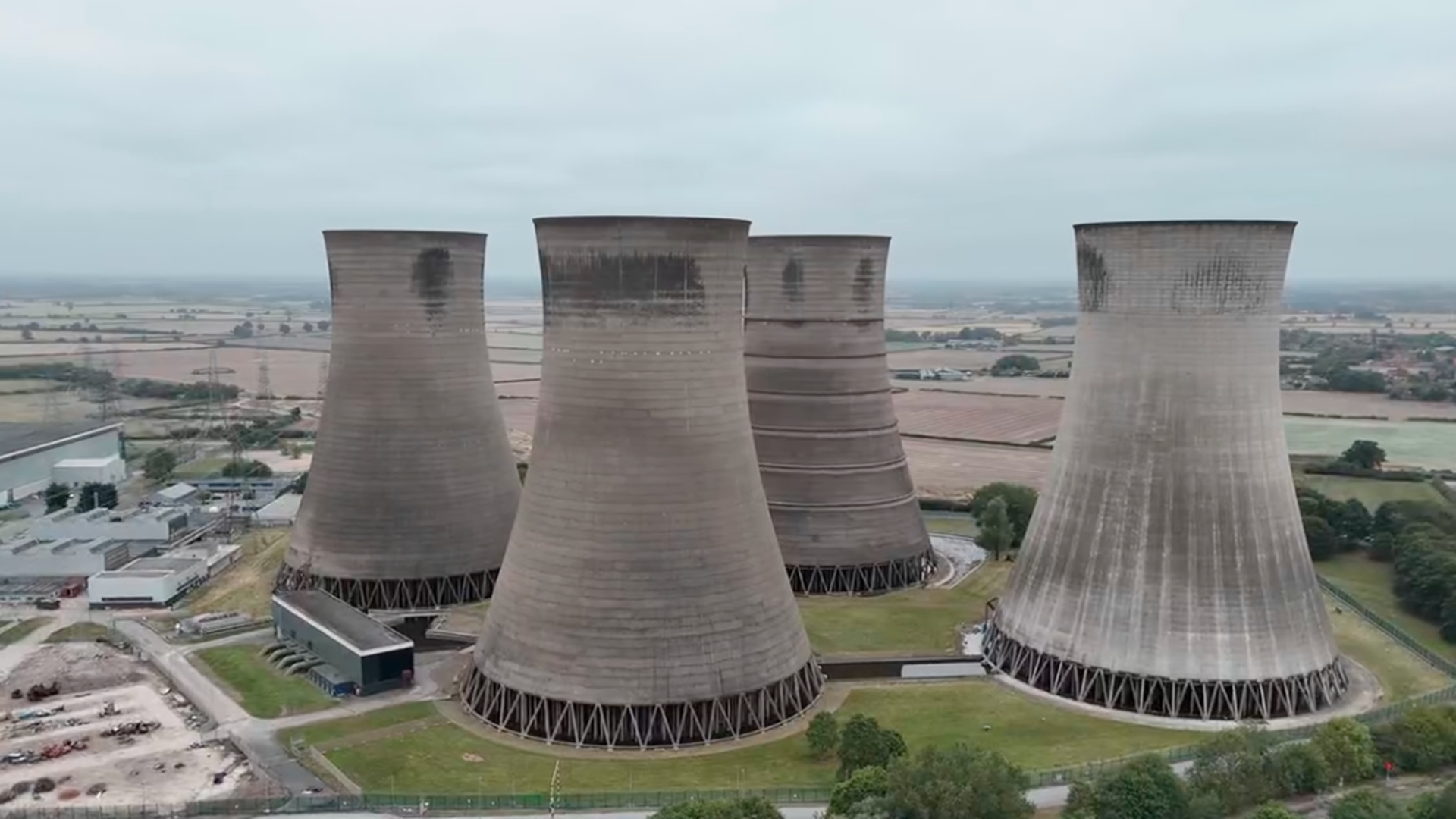
The former West Burton Power Station in Nottinghamshire, which burned coal for electricity from 1966 until its closure in 2023, has been selected as the site of the UK's first fusion power plant. The announcement marks a pivotal transition for the Spherical Tokamak for Energy Production program — known as STEP — from an extended research and design phase into active construction planning.
Lord Patrick Vallance, the UK's Minister of State for Science, Research and Innovation, announced the appointment of a construction partner and the commencement of a £200 million ($266 million) revitalization of the West Burton site — the initial investment that will transform a decommissioned coal infrastructure site into a world-class nuclear research and eventual power generation destination.
The STEP Program
STEP is the UK's flagship effort to develop a commercially viable fusion power plant by approximately 2040. Unlike the international ITER project in France — which aims to demonstrate fusion's scientific feasibility on a large tokamak — STEP is explicitly designed to produce a prototype power plant that generates net electricity. It is an engineering and commercial ambition, not purely a scientific one.
The spherical tokamak design at the heart of STEP differs from the conventional tokamak geometry used in ITER. A spherical tokamak has a more compact, spherical plasma chamber rather than the donut-shaped torus of a conventional design. The UK has deep expertise in spherical tokamak research through the Culham Centre for Fusion Energy, which has operated the MAST Upgrade device — and the STEP program draws directly on that experience.
Why West Burton?
The selection of a former coal power station site is not coincidental. Industrial power generation sites offer infrastructure assets — grid connections, cooling water systems, heavy load transport access, and community relationships with energy sector employment — that would take years and significant capital to establish on a greenfield site. West Burton's existing grid connection to the National Grid high-voltage transmission system is particularly valuable; connecting a new power plant to the grid is a major logistical and regulatory undertaking that the West Burton site significantly simplifies.
The symbolic dimension is also significant. Coal was the energy foundation of the Industrial Revolution, and Britain has been systematically decommissioning its coal fleet as part of its net-zero commitments. Positioning fusion energy on a former coal site creates a narrative of energy continuity that both the government and the STEP program have leaned into deliberately.
The Fusion Timeline
A target of commercial fusion power by 2040 is ambitious by the standards of large-scale energy infrastructure development. Nuclear fission plants have typical construction timelines of 10-15 years from approval to first power, and fusion presents additional engineering challenges — plasma control, tritium breeding, materials that can withstand intense neutron bombardment — that fission plants do not face.
Critics of the 2040 target note that fusion has historically been described as 30 years away for the past 70 years. Proponents counter that the last decade has seen more progress in fusion science and engineering than the preceding four, driven by advances in high-temperature superconducting magnet technology that are enabling more compact, powerful tokamak designs.
Global Competition
The UK is not alone in pursuing fusion on an accelerated timeline. The US, China, South Korea, and several private fusion companies — including Commonwealth Fusion Systems, TAE Technologies, and Helion Energy — are all targeting commercial fusion on timelines between 2030 and 2045. The STEP program gives the UK a credible government-backed entry in what is becoming a global fusion race with both energy security and economic development dimensions.
This article is based on reporting by Interesting Engineering. Read the original article.
Originally published on interestingengineering.com