A central land-use fear gets tested
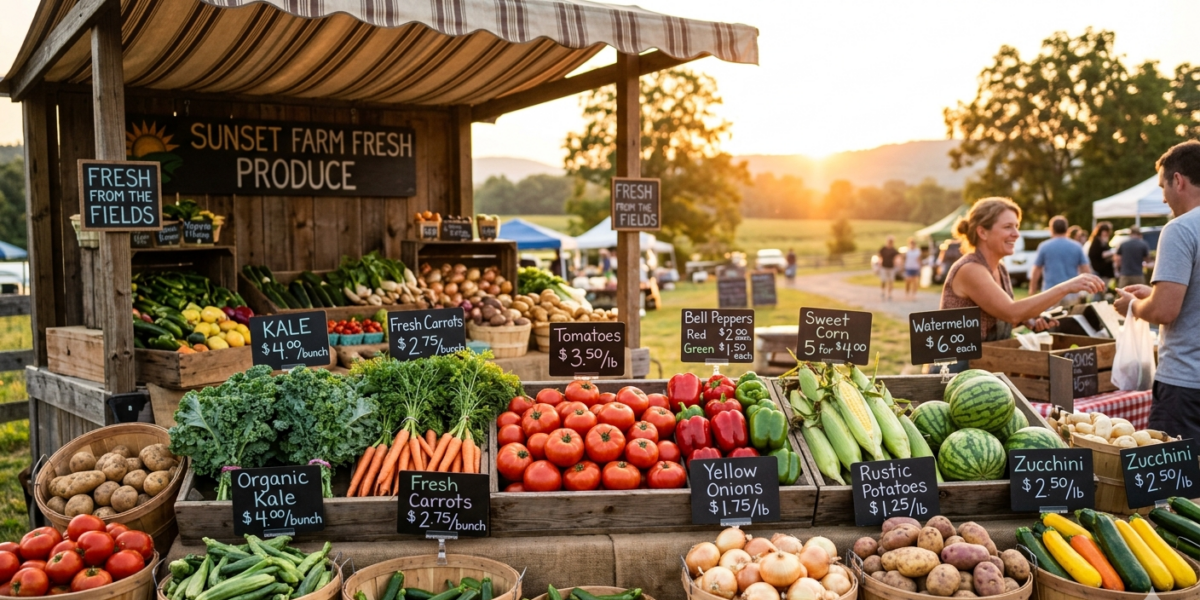
As utility-scale solar expands across the United States, one of the most persistent objections has been that putting panels on farmland will undermine food production and push crop prices sharply higher. New research from Indiana University suggests that concern is often overstated. Using a county-level agricultural model, researchers found that if 40% of future solar development occurs on cropland, a share the paper says is consistent with historical patterns, prices for maize, soybeans and wheat would rise by less than 5.6%.
That is not zero impact, and the study does not argue otherwise. But it does suggest that the tradeoff between clean energy development and food security is smaller than many critics claim. In the context of US agriculture, where land allocation already shifts in response to multiple market and policy pressures, the modeled effect of solar appears comparatively modest.
What the study examined
The research looked at how replacing cropland with utility-scale solar farms could affect land allocation, crop prices, agricultural production and farm revenue for major crops across the country. Rather than treating all farmland as equally vulnerable or all solar deployment as uniformly disruptive, the model examined impacts at the county level. That matters because solar development tends to cluster in places with suitable land, infrastructure access and favorable economics rather than spreading evenly across the map.
The baseline scenario in the study assumes a future in which 40% of additional solar buildout takes place on cropland. Under that pathway, the resulting price increases remain limited, and the source notes that the effect is around one-third of long-term estimates associated with biofuel production. That comparison is useful because it places solar’s land-use impact alongside another energy-related agricultural pressure that policymakers and farmers already understand well.

Why the findings matter politically
Solar projects often face local opposition framed around the preservation of agricultural land. In some cases, those concerns are rooted in landscape change or local identity as much as commodity economics. But crop price and food-security arguments have become especially prominent because they convert a local land-use dispute into a national public-interest claim. Research showing only modest price effects weakens that broader argument.
It does not eliminate legitimate questions about where solar should be sited. Prime farmland, grid constraints, habitat concerns and community acceptance still matter. Yet the findings suggest that blanket claims about solar making US agriculture materially unable to feed the country are not well supported under historically consistent deployment patterns. That is an important distinction for regulators and state lawmakers who are weighing restrictions on where utility-scale solar can be built.
Land competition is real, but not singular
The study also fits a larger reality: agriculture is already shaped by competing land uses, changing commodity incentives, conservation programs and urban expansion. Solar enters that environment as one more demand on land, not as the first or only one. Treating it as uniquely destructive can distort policy choices, especially if the actual economic impacts are relatively small compared with other forces already accepted in the farm economy.
There is also a difference between gross acreage converted and system-level market effects. Losing cropland in a specific location may matter a great deal to a community or farm operator, but national crop markets can absorb some land-use shifts through changes in planting decisions, yields, regional reallocation and pricing. The Indiana University modeling suggests that this broader adaptive capacity helps contain the market effect of solar buildout.
What the research does not claim
The findings should not be misread as an argument that solar placement is irrelevant. A large expansion scenario could still produce stronger effects than the baseline, and localized impacts can be more intense than national averages imply. The research instead addresses a narrower but highly influential claim: whether cropland solar deployment on a historically plausible trajectory is likely to cause large price shocks for major staple crops. Its answer is that the effect appears limited.
That leaves room for better planning rather than false choice. Policymakers can still encourage siting strategies that reduce conflict, including use of lower-value land, disturbed land or co-location approaches where feasible. But the study suggests those decisions can be made from a more grounded understanding of tradeoffs rather than from the assumption that solar expansion and food security are inherently at odds.
A more useful frame for the debate
The clean energy transition requires land, and that reality should not be obscured. Utility-scale solar cannot be built at national scale without affecting landscapes and local economies. The question is whether those effects are manageable and how they compare with the benefits of additional low-carbon electricity. Research indicating that crop prices for maize, soybeans and wheat would rise by less than 5.6% under a baseline cropland deployment scenario strengthens the case that the impacts are manageable in aggregate.
For the solar industry, the study offers evidence against one of the sector’s most politically potent criticisms. For agriculture, it suggests that fears of severe nationwide commodity disruption may be misplaced. And for decision-makers, it provides a clearer basis for distinguishing between local siting concerns, which may still be significant, and national market claims, which appear much weaker.
That does not settle every conflict over solar on farmland. It does, however, move the conversation toward evidence. If utility-scale solar on cropland is likely to produce only modest commodity price increases under historically consistent buildout patterns, then the challenge becomes one of smart land-use governance, not a binary choice between energy development and food security.
This article is based on reporting by PV Magazine. Read the original article.

Originally published on pv-magazine.com