Amazon's Home Robot Bet
Amazon has made its most direct move yet into consumer humanoid robotics, acquiring Fauna Robotics, a New York-based startup whose product is explicitly designed to be approachable, human-scaled, and deployable in residential environments. The acquisition, which closed in mid-March 2026, comes as competition in the humanoid robot sector reaches an intensity not seen in any prior technology cycle, with Amazon now joining Tesla, Figure, Boston Dynamics, Agility Robotics, and a dozen venture-backed entrants in a race that most analysts believe will produce the most consequential consumer product category of the coming decade.
Financial terms of the deal were not disclosed. Fauna Robotics was founded in 2024 by engineers who had previously worked on hardware and AI projects at Meta and Google, giving the startup a founding team with experience at the hyperscaler scale that consumer robotics will ultimately require.
Meet Sprout
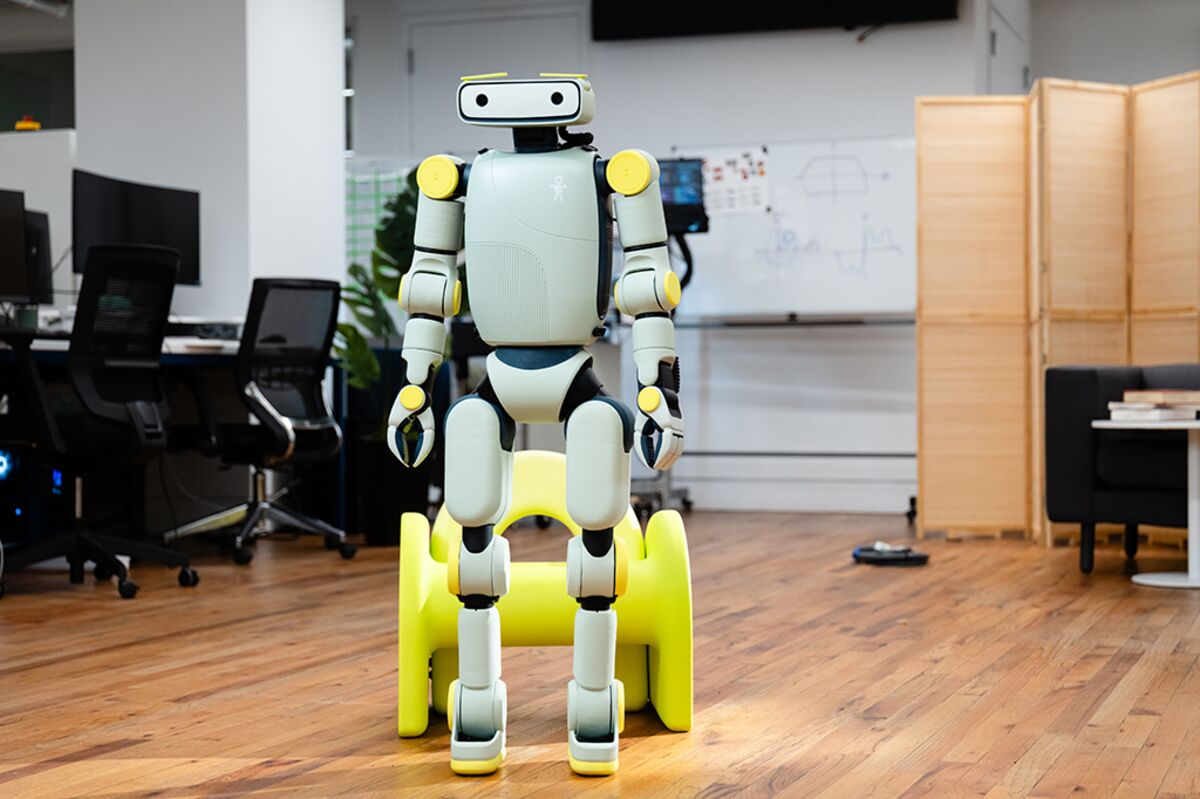
Fauna's product, Sprout, was designed from the outset with a different philosophy than the warehouse-focused humanoids that have dominated robotics headlines. At 3 feet 6 inches tall and 50 pounds, Sprout is sized for the environments where actual humans spend most of their time — residential kitchens, living rooms, and hallways designed for a 5-foot person rather than an industrial ceiling height. The weight and dimensions were chosen to make the robot manageable for ordinary consumers to receive, set up, and interact with daily without the kind of facilities preparation that industrial robots require.
The pricing is $50,000 — a figure that positions Sprout firmly outside consumer reach in its current form but consistent with where early professional robotics products have launched before volume production drives prices down. Sprout launched in January 2026 not as a consumer product but as a software developer platform, sold to academic research labs and corporate R&D departments exploring home robotics use cases. Early customers included Disney, which was apparently exploring animatronic and entertainment applications alongside its now-cancelled AI content partnership with OpenAI.
Amazon's Broader Robotics Strategy
The Fauna acquisition fits a pattern Amazon has been building for several years. The company operates one of the world's largest fleets of industrial robots in its fulfillment centers — a network that has grown through both organic development and acquisitions including Kiva Systems in 2012 and iRobot in 2022. The iRobot acquisition, which included the Roomba line, represented Amazon's first meaningful entry into consumer home robotics before European regulatory pressure forced a divestiture in 2024.
In recent months Amazon has also acquired Rivr, a Swiss company developing autonomous machines for last-mile doorstep delivery — a use case that requires robots capable of navigating human-scale outdoor environments with the kind of dexterity and situational awareness that warehouse robots do not need. The combination of Rivr's outdoor mobility work and Fauna's indoor humanoid platform suggests Amazon is building toward a vision of robots that can operate continuously across the full range of environments where packages and household tasks intersect.
The strategic logic is straightforward even if the execution timeline is not. Amazon's core business is getting things to people's homes as quickly and cheaply as possible. A humanoid robot that could receive a package, bring it inside, and integrate with smart home systems represents the ultimate extension of that business model — eliminating the final human labor touchpoint in the delivery chain while simultaneously opening a new market for physical task automation in the home.
Why Humanoid Form Factor
The humanoid form factor — bipedal, with manipulators at the end of arms positioned at human height — is increasingly seen by robotics researchers as the practical optimum for environments designed by and for humans. Doorknobs, stair railings, countertop heights, and the spatial layout of rooms all assume a user between 5 and 6 feet tall with two hands positioned at specific heights. A robot designed to operate in these environments without modification is necessarily human-shaped in its basic dimensions.
The counterargument — that specialized robots optimized for specific tasks outperform generalist humanoids at those tasks — remains valid for industrial environments where tasks can be standardized and environments can be designed around the robot. It is less compelling in home environments, where the range of tasks is enormous, the environment was designed around humans, and a separate specialized robot for each task class is neither economically nor spatially feasible for most households.
The Road to Consumer Pricing
The path from a $50,000 developer platform to a product that ordinary consumers can consider follows the same cost-reduction trajectory that has characterized every major consumer electronics category — from personal computers to smartphones to electric vehicles. The critical variable is whether the technology matures fast enough, and volumes scale quickly enough, to drive manufacturing costs below a threshold where consumer adoption becomes self-sustaining.
For humanoids, the most optimistic forecasts from robotics analysts suggest sub-$10,000 consumer pricing by the early 2030s if current learning curves hold. More conservative estimates put mass consumer adoption a decade or more away. Amazon's acquisition of Fauna gives the company a position in this race with a founding team that has already built and shipped a product, a platform that is generating real-world data from developer deployments, and a brand strategy around approachability that differs meaningfully from the industrial-robot aesthetics of most competing platforms.
What Amazon brings in return is distribution at a scale that no robotics startup could independently access, the logistics infrastructure to support hardware products requiring ongoing service and software updates, and the consumer relationship that makes a high-trust product like a home robot more credible coming from an established brand than from a startup that most consumers have never heard of.
This article is based on reporting by The Robot Report. Read the original article.