A routine cargo run with strategic significance
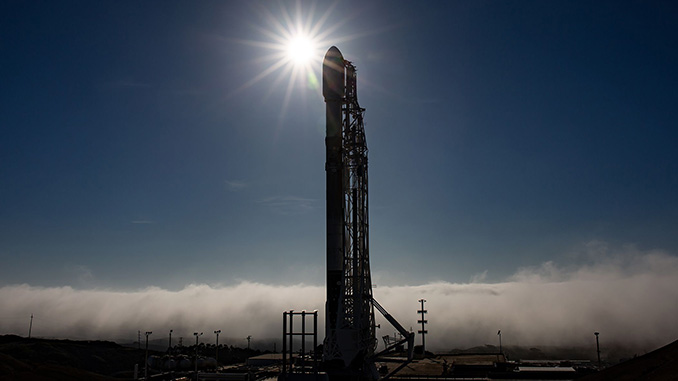
SpaceX launched its CRS-34 cargo mission to the International Space Station on May 15, sending nearly 3,000 kilograms of cargo into orbit aboard a Dragon spacecraft. According to the supplied source text, the Falcon 9 lifted off from Space Launch Complex 40 at Cape Canaveral Space Force Station at 6:05 p.m. Eastern.
The mission followed a delayed start. A May 12 launch opportunity was postponed because of forecast poor weather, and a May 13 attempt was scrubbed in the final minute because of weather-criteria violations. The eventual launch restored the cadence of one of NASA’s most operationally important logistics partnerships.
Dragon separated from the Falcon 9 upper stage nearly 10 minutes after liftoff, and was scheduled to dock with the station’s Harmony module at about 7 a.m. Eastern on May 17.
A first for cargo Dragon reuse
CRS-34 also marked a reusability milestone. The spacecraft on this mission, designated C209, is flying for the sixth time. The supplied source text says this makes it the first cargo Dragon capsule to reach that number of missions, though Crew Dragon spacecraft Endeavour has also flown six times.
That matters because reuse is no longer just a launch-vehicle story. It is increasingly a spacecraft-operations story too. SpaceX officials said the company had already done much of the certification work for six flights when it extended Crew Dragon, leaving a more limited “delta certification” process for hardware unique to the cargo configuration.
In practical terms, that suggests cargo servicing is becoming more standardized and more mature. When a spacecraft class reaches repeated-flight milestones without being treated as exceptional, it signals operational confidence from both the provider and the customer.

The payload mix reflects the ISS’s remaining role
The mission is carrying 2,948 kilograms of cargo, including an 816-kilogram external payload. Among the external hardware is Space Test Program-Houston 11, a joint NASA and U.S. Space Force effort that includes experiments such as STORIE, an instrument intended to study charged particles in orbit.
Another notable payload is CLARREO Pathfinder, an Earth science instrument designed to make highly accurate measurements of sunlight reflected by Earth and the moon in order to improve Earth-observation calibration. The source text notes that the instrument had previously faced proposed cancellation more than once and that NASA’s 2026 budget request proposed placing the completed instrument into storage. Its launch therefore carries significance beyond a standard manifest line item.
NASA also said there are more than 50 science investigations aboard CRS-34 involving the agency, international partners, and the ISS National Lab. According to the source text, those include work supporting NASA exploration programs as well as commercial initiatives.
The station may be nearing retirement, but the research flow has not stopped
One of the more revealing details in the supplied reporting is not a payload specification but an institutional signal. NASA officials indicated they are not yet seeing a shift away from station research even as the ISS moves toward retirement near the end of the decade. That suggests the station remains a heavily used platform for science, technology demonstration, and commercial experimentation rather than a facility in wind-down mode.
CRS-34 reinforces that point. The cargo list spans basic science, Earth observation, military-linked experimentation, and work connected to future exploration architectures. In other words, the ISS is still functioning as shared national infrastructure, not merely as a legacy orbital outpost waiting for succession.
- Launch: May 15 from Cape Canaveral Space Force Station.
- Cargo mass: 2,948 kilograms.
- External payload mass: 816 kilograms.
- Spacecraft: Dragon C209 on its sixth mission.
- Science aboard: more than 50 investigations.
For SpaceX, the mission underscores how reusable launch and spacecraft systems are steadily turning cargo delivery into a repeatable service. For NASA, it is another reminder that the ISS still supports a broad and politically diverse research portfolio. And for the space sector more broadly, CRS-34 shows how much strategic activity can be packed into what might otherwise look like a routine resupply run.
This article is based on reporting by SpaceNews. Read the original article.
Originally published on spacenews.com