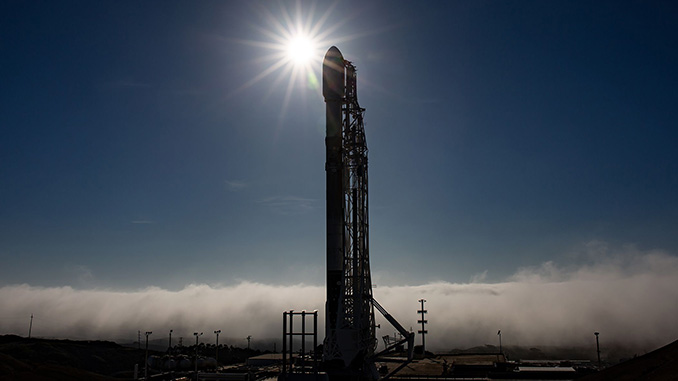
NASA is about to put names on the next major lunar test flight
NASA says it will announce the Artemis III crew on June 9 during a live event at the Johnson Space Center in Houston, alongside a broader mission progress update. According to the supplied source text, the event will begin at 11 a.m. EDT and stream on NASA+ and the agency’s YouTube channel. The announcement marks a new public milestone for the Artemis program after the successful Artemis II crewed test flight in April.
The importance of the event lies not only in who will fly, but in what Artemis III is meant to prove. NASA describes the mission as a four-astronaut test flight launching from Kennedy Space Center in Florida aboard Orion and the Space Launch System rocket. Its job is to test rendezvous and docking capabilities between Orion and commercial human landing systems, capabilities that the agency says are critical for eventually delivering astronauts to the lunar surface.
That makes Artemis III a mission with both symbolic and technical weight. Crew announcements are naturally public-facing moments, but this one is attached to a specific operational challenge: integrating NASA’s deep-space vehicle with commercial landing hardware in a way that supports future surface expeditions. In that sense, June 9 is not just about personnel. It is about confidence in the next stage of the architecture.
The mission sits at the center of NASA’s return-to-the-Moon strategy
The supplied text frames Artemis III as the mission that will build on Artemis II and pave the way for later lunar surface operations. NASA says it will send four astronauts aboard Orion, which will launch on SLS from Florida. The purpose is to test the rendezvous and docking sequence required to connect Orion with the commercial systems intended to take astronauts down to the Moon.
This is an important distinction. Artemis III is not being presented merely as a repeat crewed deep-space flight with additional complexity. It is being presented as the bridge between the initial demonstration phase and the future operational model NASA hopes to use for increasingly ambitious missions. If the docking and coordination pieces work as intended, they validate one of the most difficult elements of the broader exploration plan.
NASA’s wording in the source material also emphasizes continuity. Artemis III follows a successful Artemis II crewed test flight in April, and the agency describes the new mission as part of a longer effort to establish an enduring human presence on the lunar surface and to build toward the first crewed missions to Mars. That means the June crew reveal will inevitably be read as another measure of momentum in the program.
The announcement is also a program-management signal
Major crew assignments are about more than public engagement. They often communicate confidence that a mission has progressed far enough in planning, training, and systems integration to move into a more defined phase. By setting a date for the Artemis III crew reveal and pairing it with a progress update, NASA is signaling that it wants to present both a human story and a status report at once.
The source text notes that following the event, the Artemis III crew will be available for limited in-person and virtual interviews. Media accreditation and interview procedures are already defined, with deadlines for both domestic and international press. Those details reinforce that NASA sees this as a major milestone event rather than a routine briefing.
There is also a strategic communications dimension. Artemis is a long-running, high-visibility program with technical, political, and commercial dependencies. A crew announcement creates a focal point for public attention while allowing NASA to restate the mission’s place inside a larger exploration sequence. The agency does exactly that in the source text, describing Artemis missions as part of a “Golden Age of innovation and exploration” and tying lunar operations to future Mars ambitions.
Commercial partnerships remain central to the architecture
One of the clearest messages in the supplied material is that Artemis III depends on rendezvous and docking with commercial human landing systems. NASA is not describing a standalone government-only stack that handles every phase internally. Instead, the mission is built around coordination between Orion and outside landing hardware.
That detail matters because it reflects how the Artemis program is structured. NASA’s role includes the core launch and crew vehicle, but the path to the lunar surface involves commercial providers. Artemis III therefore serves as a test not only of flight systems but also of the partnership model itself. If the docking architecture is validated, it strengthens the case for future missions that rely on the same division of responsibilities.
It also raises the stakes of the technical work. Docking is already demanding. Docking between systems developed across multiple organizations inside a broader lunar mission architecture is more so. NASA’s decision to highlight this capability in advance of the crew announcement suggests it understands that Artemis III will be judged at least as much by systems integration as by the symbolic value of the astronauts assigned to it.
June 9 will define the next public phase of Artemis
NASA’s June 9 event is likely to be remembered for the names it reveals, but its larger significance is programmatic. Artemis III is the mission NASA says will test the docking and rendezvous capabilities needed to turn a sequence of demonstration flights into a pathway back to the lunar surface. By pairing the crew reveal with a mission progress briefing, the agency is telling the public that personnel, hardware, and mission design are now advancing together.
If Artemis II showed that NASA could send astronauts around the Moon again, Artemis III is being framed as the mission that begins proving how those astronauts will work with the systems intended to take them farther. That makes the upcoming announcement more than ceremonial. It is the next checkpoint in the architecture of lunar return.
- NASA will announce the Artemis III crew on June 9, 2026.
- The agency will also provide a mission progress update during the live event.
- Artemis III is designed to test rendezvous and docking between Orion and commercial human landing systems.
- NASA says the mission will launch four astronauts from Kennedy Space Center aboard SLS and Orion.
- The flight is positioned as a key step toward future lunar surface missions and later Mars exploration.
This article is based on reporting by NASA. Read the original article.
Originally published on nasa.gov