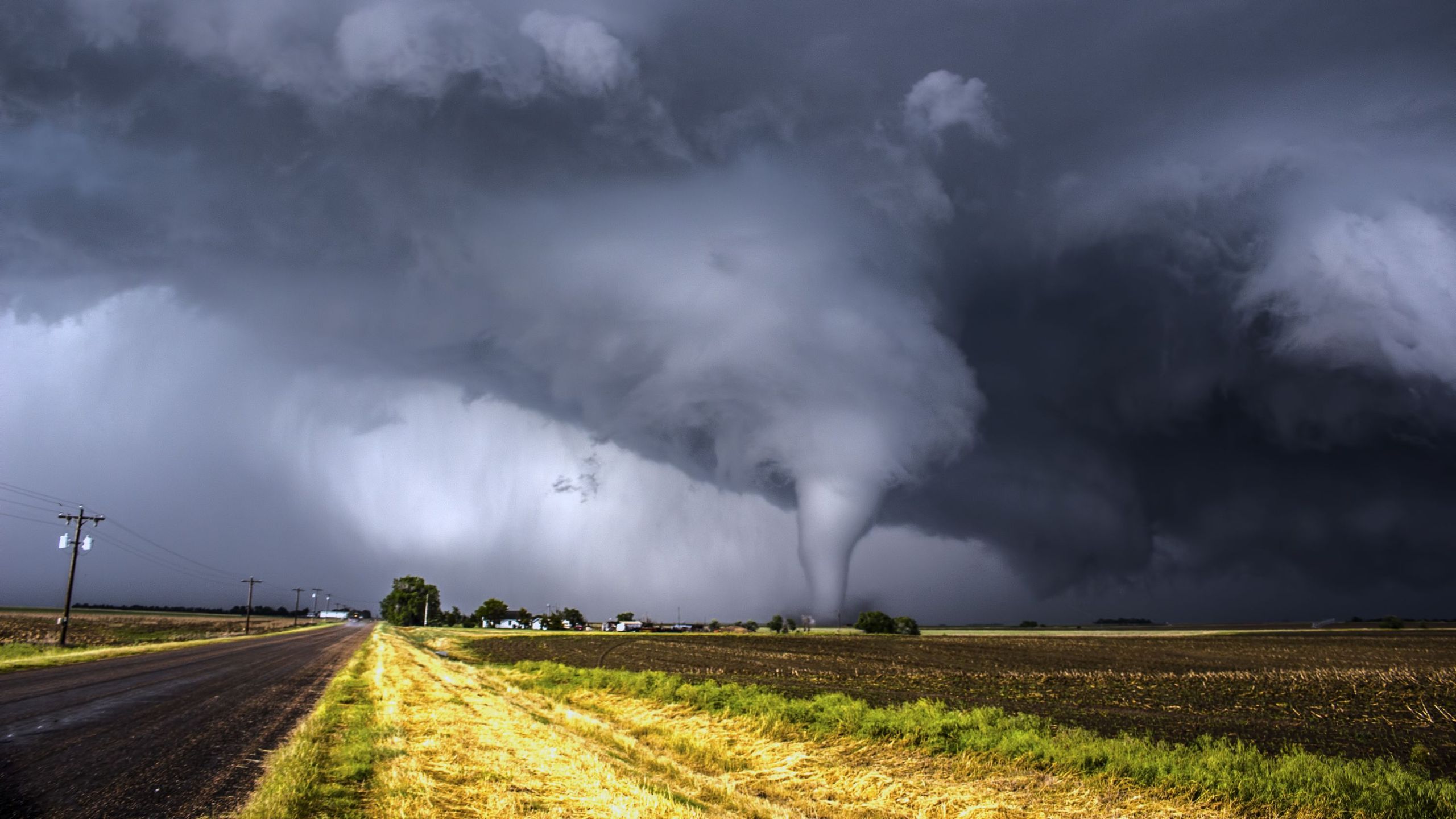
A field research trip became a survival story
Tornadoes are among the most violent weather events on Earth, and one atmospheric scientist’s experience in Kansas has brought renewed attention to just how fast conditions can change when researchers are working near severe storms.
The account comes from Perry Samson, who was helping students conduct field experiments on supercell storms in Kansas in 2008 when one of those storms suddenly developed into a tornado and pulled him in. The experience is recounted in an interview highlighted by Live Science, which frames the episode as a rare firsthand account of surviving direct contact with one of the world’s most destructive atmospheric phenomena.
The science is inseparable from the danger
The report emphasizes a basic fact that explains why tornado encounters are so feared by scientists and the public alike: tornadoes produce the fastest wind speeds in the world and can cause monumental destruction. That combination makes them both scientifically important and operationally unforgiving.
Researchers study supercells and related storm structures because those systems can produce some of the most dangerous weather on the planet. Fieldwork can improve forecasting, deepen understanding of storm behavior, and ultimately help protect communities. But the same work can place scientists close to rapidly changing systems where small shifts in storm structure can have life-or-death consequences.
Samson’s experience underscores that danger. He was not a bystander caught unaware in a random event. He was an atmospheric scientist participating in storm-related field experiments. If someone with that level of situational awareness can still be overtaken when a supercell turns into a tornado, the story becomes a reminder of how limited control can be once severe weather intensifies.

Why survivor accounts matter
Extreme-weather stories often focus on damage totals, radar signatures, or dramatic footage. Survivor accounts add something different: a direct human measure of how abruptly a storm can shift from object of study to immediate physical threat.
The headline itself captures the emotional reality of the event. Samson recalled thinking, “I’ve seen the movies. What a horrible way to die,” a line that reflects how cultural imagery around tornadoes intersects with the real fear of being exposed to them. For most people, that scenario exists in fiction or in secondhand footage. In his case, it became a lived event during scientific work.
Such accounts can help communicate risk in a way technical warnings sometimes do not. Tornadoes are familiar enough in public discourse that they can become abstract, especially outside peak outbreak periods. But a story centered on a scientist unexpectedly caught in one restores the sense that these storms remain highly dynamic hazards, even for people who understand them professionally.
Supercells remain central to severe-weather research
The report identifies the storm Samson was studying as a supercell, the rotating thunderstorm structure most associated with powerful tornado formation. These storms are a core target of atmospheric research because they can evolve rapidly and produce a wide range of dangerous conditions, including violent winds.
That research mission matters. Better understanding of supercells supports better forecasting, and better forecasting can improve lead times and public response. The work often involves direct observation and field experiments precisely because laboratory conditions cannot fully reproduce the complexity of the atmosphere at storm scale.
At the same time, field research near supercells always carries a balance-of-risk question. The closer the observation, the better the data may be. But the closer the observation, the less margin there may be if a storm reorganizes or intensifies unexpectedly.
What this account highlights for the wider public
Samson’s story lands at a moment when extreme weather communication is under increasing scrutiny. Public warnings are only effective if people appreciate both the seriousness and the speed of the threat. Tornadoes can move quickly from ominous possibility to active emergency, and the damage they cause reflects wind speeds that rank among the most extreme in nature.
That is why individual experiences matter alongside meteorological data. They remind audiences that tornado risk is not cinematic exaggeration. It is a physical reality that can overtake even trained observers in the field.
The account also serves as a bridge between scientific investigation and public understanding. The same researchers who chase better knowledge of storms are not separate from the danger those storms pose. In some cases, as with Samson, they confront it directly.
A narrow escape with a broader lesson
Only limited details from the interview are available in the supplied text, but the central facts are enough to make the broader point clear. An atmospheric scientist conducting research on supercell storms in Kansas was suddenly dragged into a tornado and survived. Tornadoes produce the fastest wind speeds in the world and can cause extraordinary destruction.
That alone is enough to show why severe-storm research commands both respect and caution. It also shows why firsthand testimony still carries weight in science coverage. Data explains the mechanism. A survivor explains the stakes.
As severe-weather science continues to improve forecasting and deepen understanding of storm systems, stories like this one keep the human dimension visible. They remind readers that the atmosphere is not only a subject of study. At its extremes, it is a force that can overwhelm preparation, compress decision time to seconds, and leave even experts confronting the raw violence of weather.
This article is based on reporting by Live Science. Read the original article.

Originally published on livescience.com