The Long Search for Triplet Superconductivity
For decades, physicists have been hunting for a specific type of material that exists at the intersection of two of the most powerful phenomena in condensed matter physics: superconductivity and spintronics. This material, known as a triplet superconductor, would be capable of transmitting not only electrical current without resistance but also spin current, the flow of electronic spin information, with perfect efficiency. It is a combination that could revolutionize quantum computing, and scientists at the Norwegian University of Science and Technology now believe they may have found it.
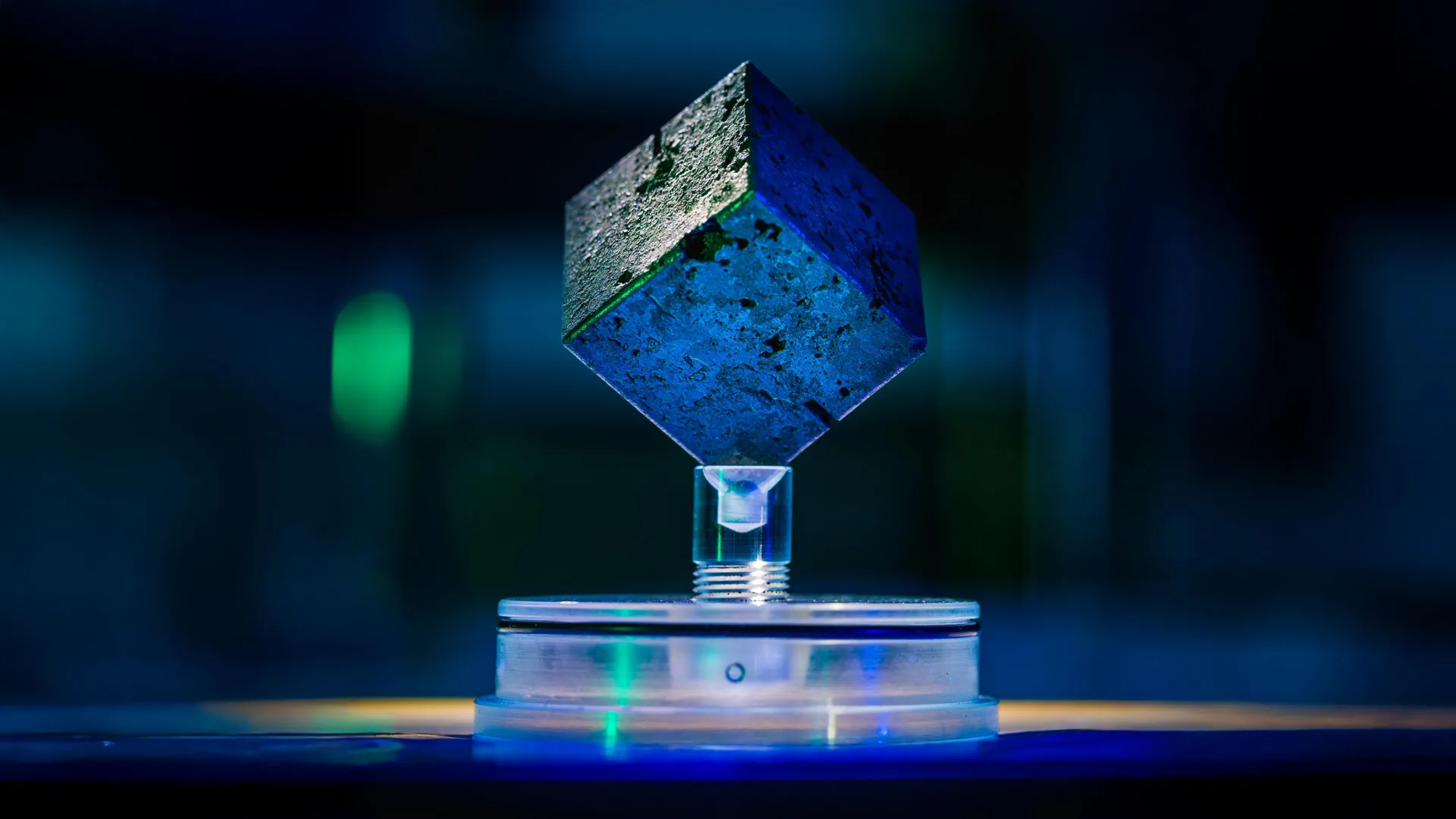
The material in question is NbRe, an alloy of niobium and rhenium. While both elements have been studied extensively by physicists, their combination appears to produce something remarkable: evidence of triplet superconductivity at a temperature of 7 kelvins, which is relatively warm by the standards of exotic superconductors that often require cooling to within a fraction of a degree above absolute zero.
Understanding Superconductivity and Spin
To appreciate why this discovery matters, it helps to understand what conventional superconductors can and cannot do. In a standard superconductor, electrons form pairs called Cooper pairs, which flow through the material without encountering any electrical resistance. This property has enabled technologies ranging from MRI machines to particle accelerators.
However, in conventional Cooper pairs, the two electrons have opposite spins. Spin is a fundamental quantum property of electrons, analogous to the direction of rotation in a classical object. When the two electrons in a Cooper pair have opposite spins, they form what is called a singlet state. The net spin of the pair is zero, meaning that while the pair carries electrical charge perfectly, it carries no spin information.
Spintronics, a separate field of technology, exploits the spin of electrons to encode and process information. Spintronic devices offer potential advantages over conventional electronics in terms of speed, energy efficiency, and data density. But existing spintronic technologies still dissipate energy as spin currents encounter resistance in conventional materials.
A triplet superconductor bridges these two worlds. In triplet Cooper pairs, both electrons have the same spin orientation, giving the pair a net spin. This means the material can carry both electrical current and spin current simultaneously, and it can do so with zero resistance for both. The researchers at NTNU emphasized this point: they can now potentially transport not only electrical currents but also spin currents with absolutely zero resistance.

Why NbRe Stands Out
Previous candidates for triplet superconductivity have been identified, but they have generally required cooling to temperatures near 1 kelvin, which is just one degree above absolute zero. Achieving and maintaining such extreme temperatures is enormously expensive and technically demanding, placing severe practical limitations on any technology built around these materials.
NbRe's superconducting transition occurs at approximately 7 kelvins. While still extremely cold by everyday standards, this temperature is significantly more accessible than 1 kelvin. The factor-of-seven improvement in operating temperature may not sound dramatic, but in cryogenic engineering, every degree matters enormously. Higher operating temperatures translate to simpler, less expensive, and more reliable cooling systems, which in turn make practical applications more feasible.
The evidence for triplet superconductivity in NbRe comes from a series of experimental measurements that the NTNU team performed, examining how the material responds to magnetic fields, how its superconducting properties change with temperature, and how it interacts with adjacent materials in carefully designed heterostructures. The data are consistent with the presence of triplet Cooper pairs, although the researchers acknowledge that definitive confirmation will require additional verification by independent research groups.
Implications for Quantum Computing
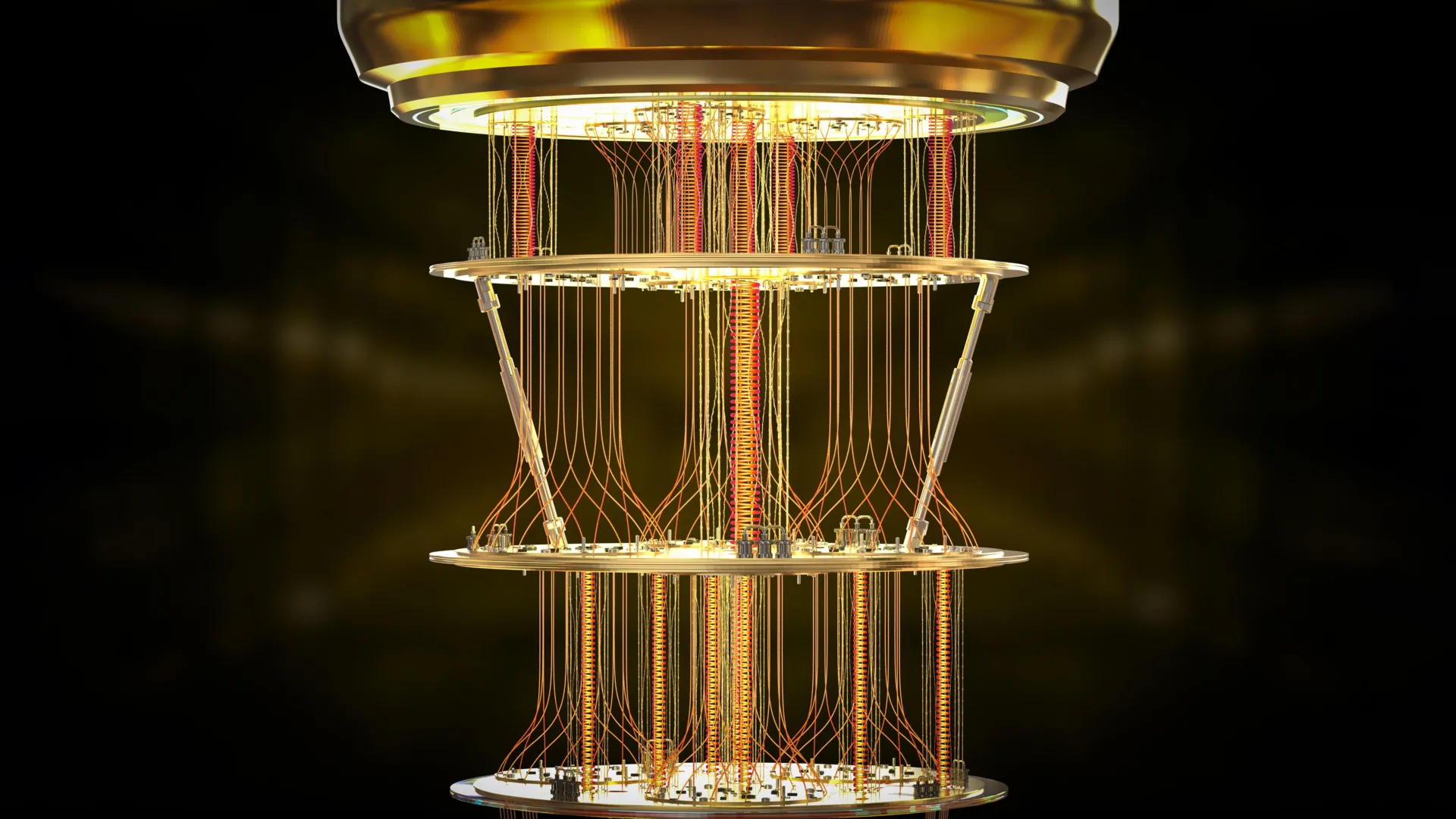
The potential significance of triplet superconductors for quantum computing is profound. Current quantum computers face a fundamental challenge: performing computational operations with sufficient accuracy. Quantum bits, or qubits, are extraordinarily sensitive to environmental noise, which introduces errors that accumulate as computations proceed. This error problem is widely considered the single greatest barrier to building practical, large-scale quantum computers.
Triplet superconductors could address this challenge in several ways:
- By enabling spin-based information processing with zero energy dissipation, triplet superconductors could allow quantum operations to be performed with far less thermal noise than current technologies generate
- The dual ability to carry both charge and spin currents could enable new qubit architectures that are inherently more resistant to certain types of errors
- The energy efficiency of a lossless spin transport mechanism could dramatically reduce the power consumption of quantum processors, making larger systems more practical
- Topological properties associated with certain types of triplet superconductors could provide natural protection against decoherence, the process by which quantum information is lost to the environment
The researchers described the potential outcome in ambitious terms: ultra-fast quantum computers that run on almost no power. While such devices remain far from realization, the identification of a material that might serve as their foundation represents a concrete step toward that vision.

The Spintronics Connection
Beyond quantum computing, triplet superconductors hold significant promise for the broader field of spintronics. Current spintronic devices, including magnetic random-access memory (MRAM) and spin-transfer torque oscillators, are limited by the resistance that spin currents encounter as they flow through materials. This resistance generates heat and limits the speed and efficiency of the devices.
A triplet superconductor could serve as the perfect interconnect material for spintronic circuits, carrying spin information between components with zero loss. This would represent a qualitative leap in spintronic device performance, enabling applications that are currently impractical due to energy dissipation constraints.
The marriage of superconductivity and spintronics into a single material platform could also enable entirely new device concepts that have no analog in current technology. Researchers in the field have long speculated about such possibilities, and the identification of NbRe as a potential triplet superconductor brings those speculations closer to experimental reality.
Caution and Next Steps
The NTNU team has been careful to present their findings with appropriate scientific restraint. While the evidence for triplet superconductivity in NbRe is compelling, superconductivity research has a history of premature claims and subsequent disappointments. The field learned hard lessons from the cold fusion controversy of the late 1980s and has since maintained high standards for extraordinary claims.
Independent replication is the critical next step. Other research groups around the world will need to synthesize NbRe samples and perform their own measurements to confirm or challenge the NTNU findings. This process will likely take months to years, as the experiments involved require specialized equipment and expertise.
If the findings are confirmed, the scientific community will then face the challenge of understanding the microscopic mechanism responsible for triplet pairing in NbRe. This theoretical understanding will be essential for optimizing the material's properties and potentially discovering other materials with even more favorable characteristics.
Regardless of the ultimate outcome, the research represents a meaningful contribution to the quest for materials that could underpin the next generation of quantum and spintronic technologies. In a field where progress often comes in incremental steps, the identification of a triplet superconductor candidate operating at a relatively accessible temperature qualifies as a significant stride forward.
This article is based on reporting by Science Daily. Read the original article.
Originally published on sciencedaily.com