Roman’s launch is close, but the science campaign starts later
NASA’s Nancy Grace Roman Space Telescope is scheduled to launch on Sunday, August 30, from Kennedy Space Center in Florida, marking the start of one of the agency’s most ambitious astrophysics missions of the decade. The observatory is set to ride a SpaceX Falcon Heavy and, if the launch proceeds on time, will begin a mission expected to stretch for years as it surveys exoplanets, distant galaxies, dark matter and the large-scale structure of the universe.
The near-term headline is the launch itself. The more important long-term story is what Roman is designed to do once it reaches space and completes its early commissioning work. For astronomers, Roman is not just another telescope deployment. It is a wide-field observatory intended to gather data at a scale that complements narrower, more targeted instruments and expands the reach of space-based sky surveys.
According to the supplied source material, liftoff is scheduled for 7:26 a.m. EDT on August 30 from Launch Complex 39A. NASA has also identified a backup launch window on Monday, August 31, at 7:22 a.m. EDT. Weather is a live variable: as of Thursday morning, August 27, the National Weather Service forecast a 50% chance of thunderstorms at Kennedy Space Center for the primary launch date.
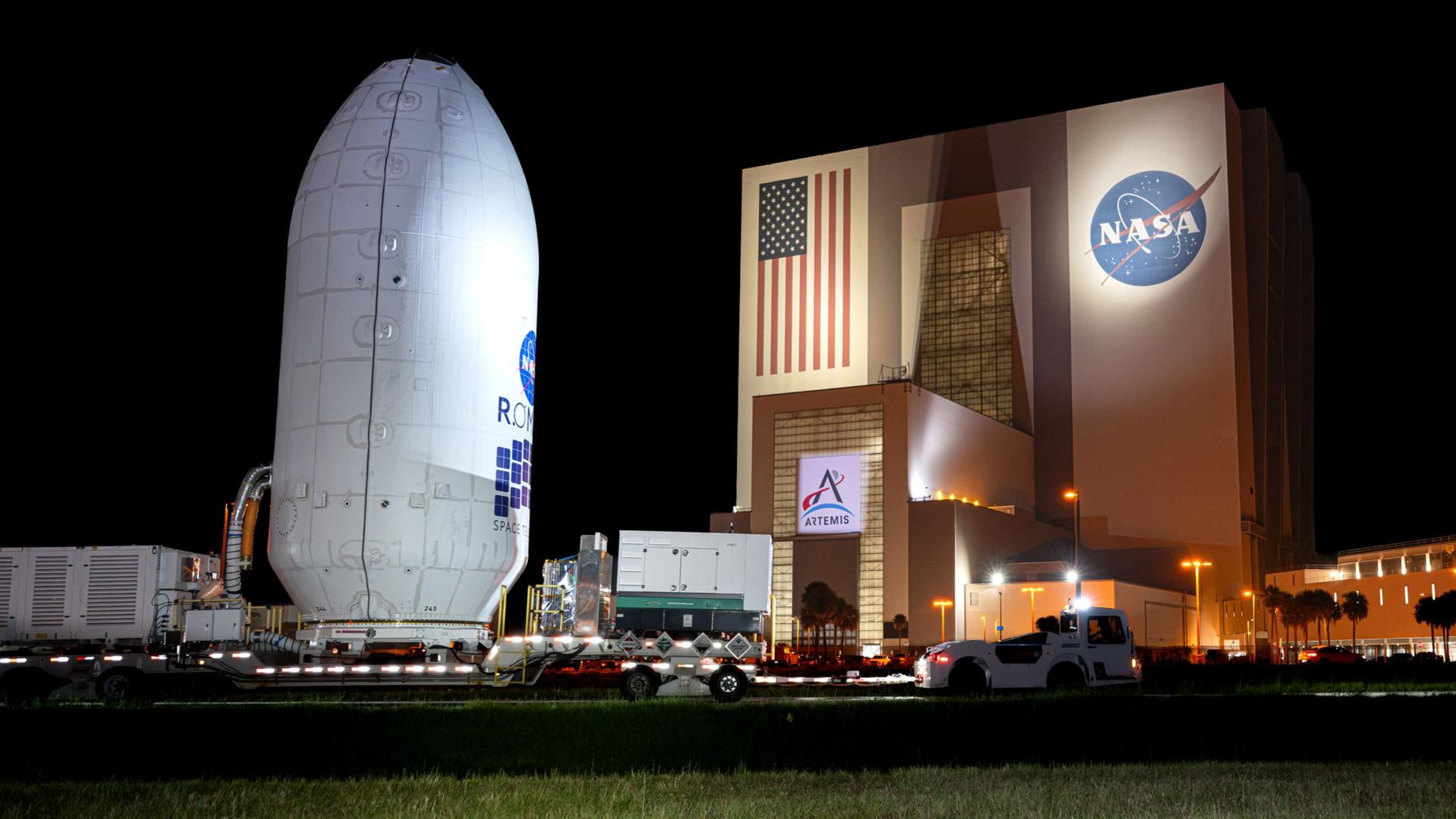
That uncertainty is routine in Florida launches, but it matters because Roman has already advanced through visible prelaunch milestones. The spacecraft has been loaded into its payload fairing and moved toward the launch complex, signaling that the mission is in its final ground phase.
What Roman is built to study
Roman is aimed at several of modern astronomy’s central questions. The telescope will help researchers search for distant exoplanets, map the Milky Way, observe faraway galaxies and contribute data relevant to investigations of dark matter. That combination gives the mission unusual breadth. Some observatories are optimized for a narrow slice of science; Roman is being positioned as a platform for multiple large-scale investigations at once.
Its value lies partly in coverage. The source describes Roman as a next-generation cosmic observatory, and the mission’s role reflects that framing. Wide surveys allow scientists to identify patterns and anomalies that are difficult to see in smaller datasets. In practice, that can mean finding new planetary systems, tracing how galaxies are distributed across cosmic time, or collecting the observational evidence needed to test models of unseen matter shaping the universe.
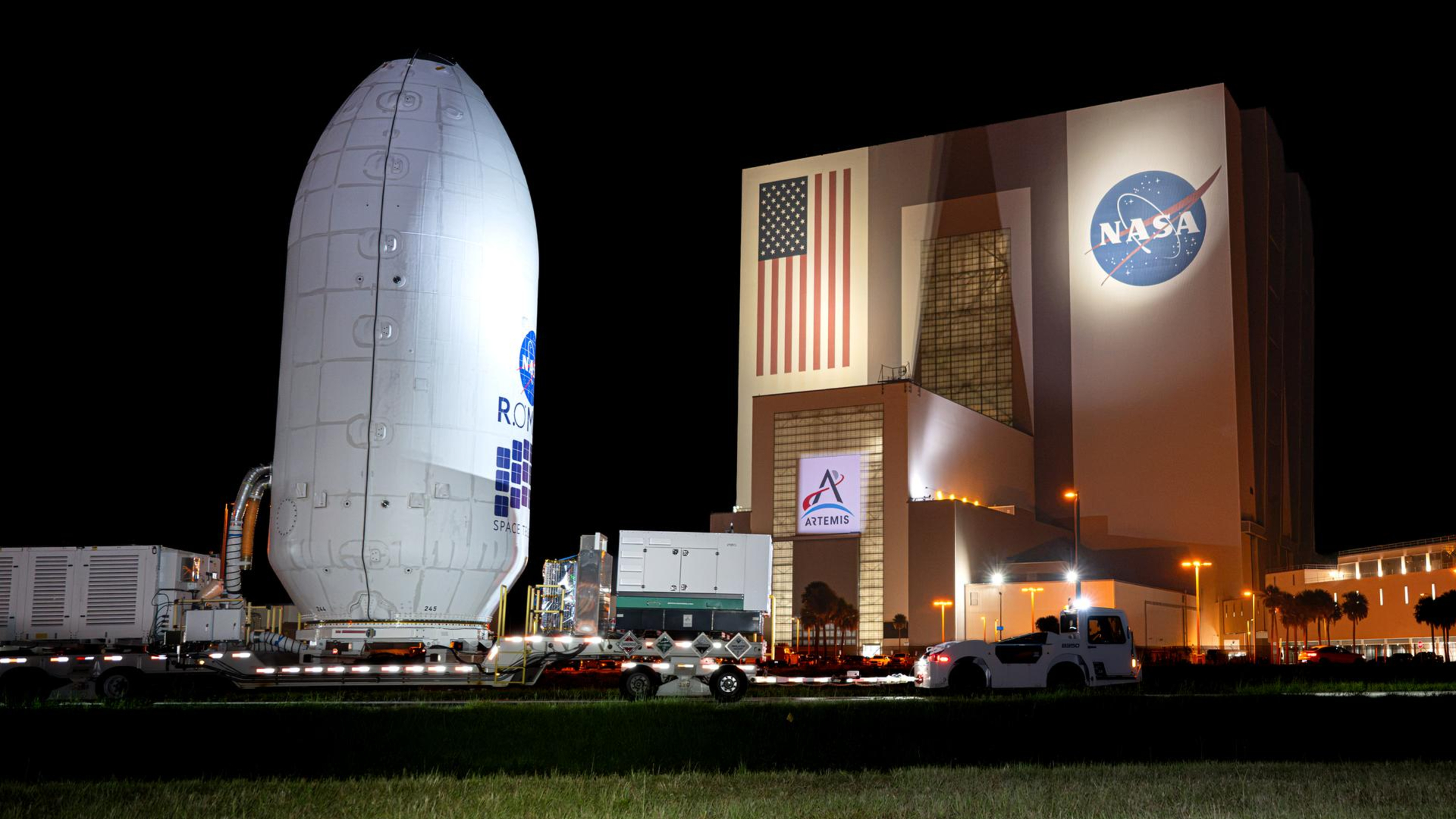
The telescope’s scale also underscores the mission’s significance. The supplied report says Roman stands 42 feet tall and weighs about as much as a fully grown Tyrannosaurus rex. Those details do not change the science, but they capture the engineering scale involved in launching and deploying a flagship-class instrument designed for a multi-year research program.

Why the first images will take time
A public misconception often follows major space launches: once a telescope reaches orbit, first-light images should appear almost immediately. Roman is unlikely to follow that expectation. Even if launch and separation go smoothly, the observatory will still need to go through early space operations before it begins returning the kind of science imagery the public associates with a successful mission.
The source makes that explicit. After launch, Roman will be released from the rocket’s second stage and exposed to space for the first time a few hours later. But observers should still expect a wait before the first major images are published. That gap is normal for a complex observatory. Space telescopes must stabilize, deploy systems, verify instrument health and complete calibration steps before their data is ready for scientific use.
That waiting period is not dead time. It is part of the mission. Calibration determines whether the observatory can deliver the precision needed for sensitive measurements of distant objects and faint signals. For a mission expected to contribute to exoplanet research and cosmology, those early checks are foundational rather than procedural.
In that sense, Roman’s “first photos” are a less important milestone than operational readiness. The real measure of success will be whether the telescope enters its science phase with instruments performing to specification and survey plans intact.
A different role in NASA’s astronomy fleet
Roman arrives at a moment when space astronomy is increasingly defined by specialization. Some missions focus on close inspection of a small number of targets. Others emphasize broad mapping and statistical power. Roman appears positioned in the second group, with a mission profile geared toward collecting large datasets that can support many kinds of inquiry.
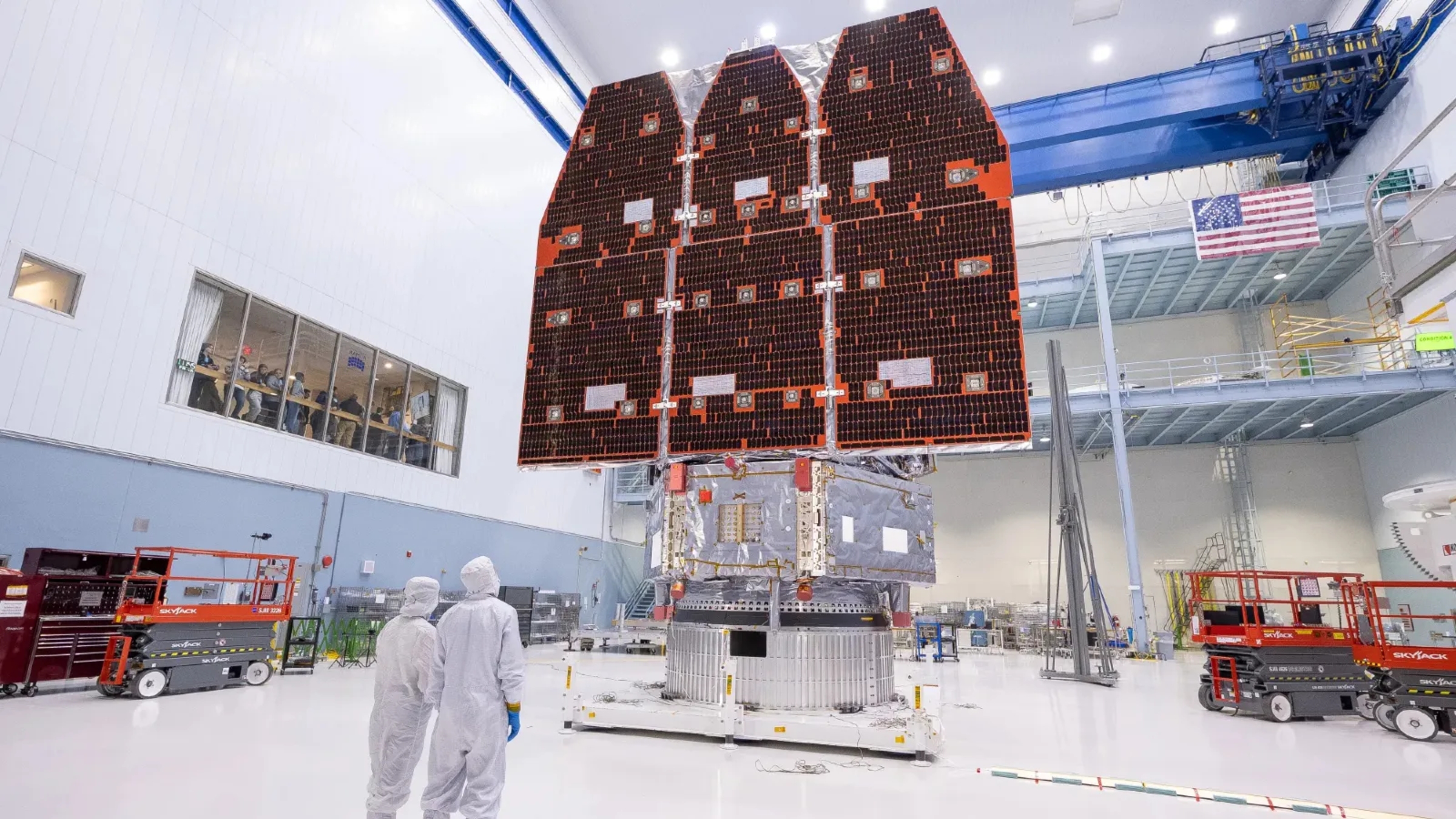
That matters for exoplanet science and galactic mapping alike. A wide-field mission can reveal where to look more closely next. It can identify unusual systems, under-sampled regions and large structural trends that narrower missions might miss. In effect, Roman can act as both a discovery engine and a context builder for follow-on science.
The mission also reflects a broader pattern in space science: increasingly, the most important advances come from fleets of complementary instruments rather than a single telescope trying to do everything. Roman’s contribution will likely be strongest where scale, coverage and systematic surveys are more valuable than ultra-detailed observation of one object at a time.

What to watch next
The immediate checkpoints are straightforward. First comes the weather outlook. Then comes liftoff, stage performance and spacecraft separation. After that, attention will shift from launch coverage to engineering updates, commissioning milestones and the slower confirmation that Roman is transitioning from spacecraft to scientific observatory.
For the public, the launch is the visible event. For researchers, the key question is when Roman becomes fully operational and starts producing usable science data. Those are related milestones, but they are not the same. A successful Sunday or Monday launch would begin the mission, not complete it.
If the telescope reaches orbit on schedule, Roman will join the small set of observatories expected to shape astrophysics for years. Its eventual images may draw the headlines, but the more consequential outcome will be the steady flow of survey data that helps scientists investigate some of the hardest open questions in astronomy.
That is why the upcoming launch matters. Roman is not being sent up for a single dramatic reveal. It is being deployed as infrastructure for discovery.
This article is based on reporting by Live Science. Read the original article.
Originally published on livescience.com


