A new model for one of Mercury’s biggest puzzles
Mercury is the closest planet to the sun, yet its poles contain thick deposits of water ice in permanently shadowed craters. New simulations now suggest that much of that ice may have arrived during a single major impact around 100 million years ago.
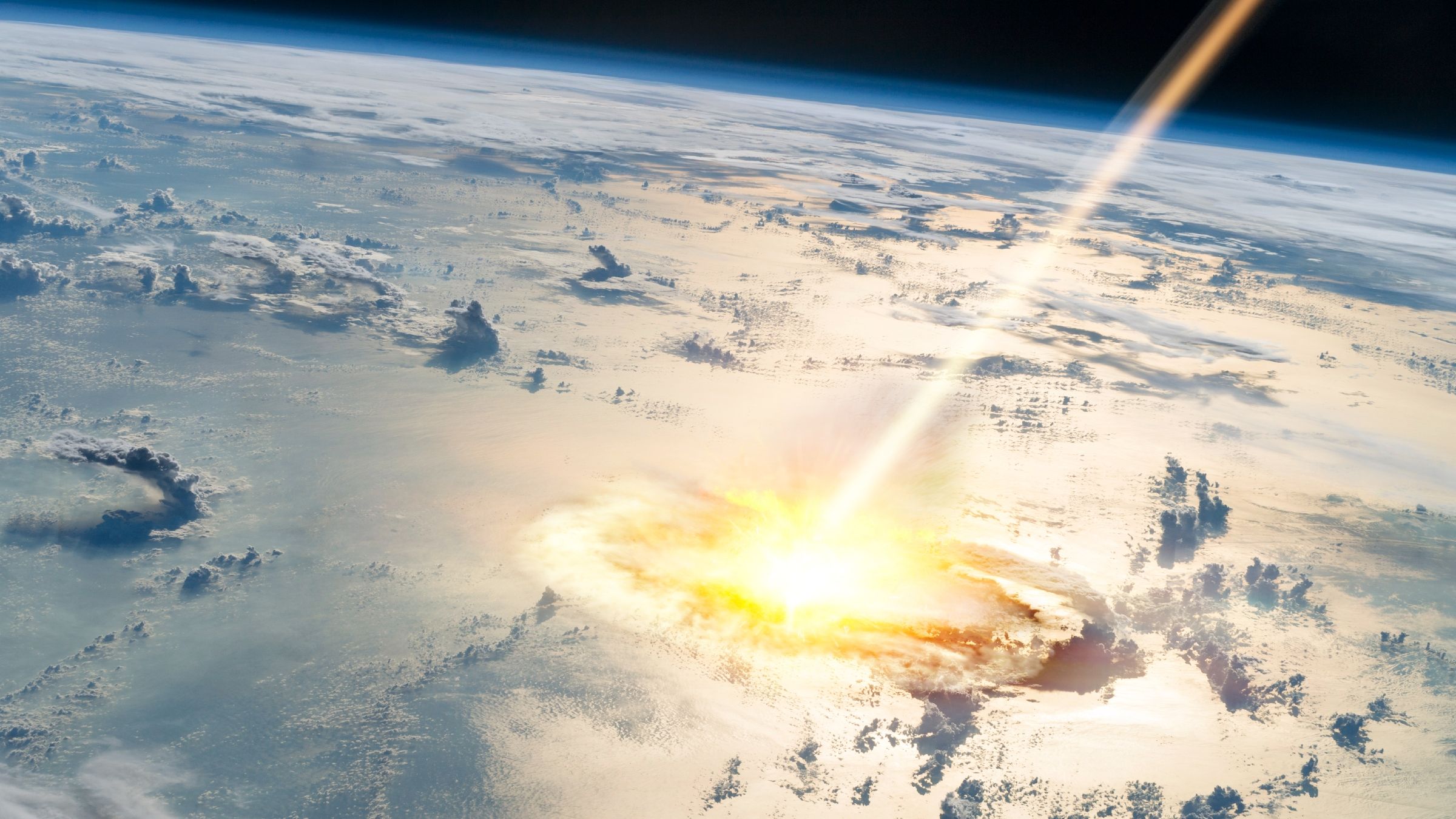
According to the supplied source text, the work comes from Parvathy Prem at the Johns Hopkins Applied Physics Laboratory and colleagues. Their model proposes that a large, relatively slow impactor struck Mercury, creating the Hokusai crater and briefly leaving the planet with a tenuous but water-rich atmosphere.
Why the idea stands out
Previous research had already raised the possibility that a comet-like impactor delivered water to Mercury. The new work differs in the specifics. Instead of a smaller body traveling at very high speed, the researchers modeled a larger, slower collision and followed the process in detail from impact through atmospheric evolution and polar trapping.
Prem said in the source text that the team visualized how the full sequence may have played out, from the moment of impact to the redistribution of vapor. That level of modeling matters because the basic puzzle has never been just whether water could arrive on Mercury, but how it could survive on a world where daytime surface temperatures can exceed 430 degrees Celsius.
What the simulations indicate
The scenario begins with a large icy and rocky object slamming into Mercury and vaporizing almost completely. That event would have created a thin atmosphere rich in water vapor. Most of that vapor, the source says, would have been quickly stripped away by solar radiation. But just over one-fifth could have migrated to the poles and become trapped in permanently shadowed regions that never receive sunlight.
Those cold traps are the key. Messenger, the NASA spacecraft that orbited Mercury from 2011 to 2015, confirmed that some polar craters contain ice deposits several meters deep. The new model offers a mechanism that could explain how a substantial amount of water was delivered and preserved on a planet otherwise associated with extreme heat and dryness.
A planetary change in a single Mercurian day
One of the most striking details in the source text is the timescale. The researchers suggest the transformation from a relatively dry, ice-free surface to one with major polar deposits may have unfolded over a single Mercurian day. That does not mean the ice was permanently secure everywhere, but it does imply that the critical delivery-and-trapping event may have been geologically abrupt.
The work also highlights how violent impacts can shape planetary surfaces in ways that remain visible long after the atmosphere from the event disappears. In this case, a fleeting water-rich atmosphere may have left behind stable ice reserves that persisted for millions of years.

What it changes
The study does not erase uncertainty around Mercury’s history, but it narrows one important question: whether the planet’s unexpected ice requires a slow accumulation process or can be explained by a single dramatic event. Based on the source text, the new simulations strengthen the case for the latter.
That makes Mercury’s poles look less like a contradiction and more like a record of impact history, thermal extremes and the peculiar physics of permanent shadow. On a world defined by solar exposure, the most revealing places may be the ones sunlight never reaches.
- New simulations suggest Mercury’s polar ice may come from one major impact.
- The impact may have created the Hokusai crater about 100 million years ago.
- Researchers say just over one-fifth of the water vapor could have reached polar cold traps.
- Messenger previously confirmed thick ice deposits in permanently shadowed craters.
This article is based on reporting by New Scientist. Read the original article.
Originally published on newscientist.com