Breaking Through Quantum Computing's Biggest Barrier
Quantum computing has long been haunted by a fundamental problem: qubits, the basic units of quantum information, are extraordinarily fragile. Environmental noise — stray electromagnetic fields, thermal fluctuations, even cosmic rays — can destroy the delicate quantum states that encode information, causing errors that accumulate and render calculations useless. For decades, physicists have pursued a radical solution: topological qubits that store information in a way that is naturally protected from noise. Now, a team led by Ramón Aguado at the Madrid Institute of Materials Science has achieved a breakthrough that brings this vision closer to reality, successfully reading the quantum states of Majorana qubits for the first time.
The research, published in the journal Nature in February 2026, represents a collaboration between the Madrid Institute of Materials Science, which is part of the Spanish National Research Council, and Delft University of Technology in the Netherlands. The team not only engineered a physical device capable of hosting Majorana modes but also developed a novel measurement technique that can extract the quantum information stored within them — a capability that has eluded researchers until now.
What Makes Majorana Qubits Special
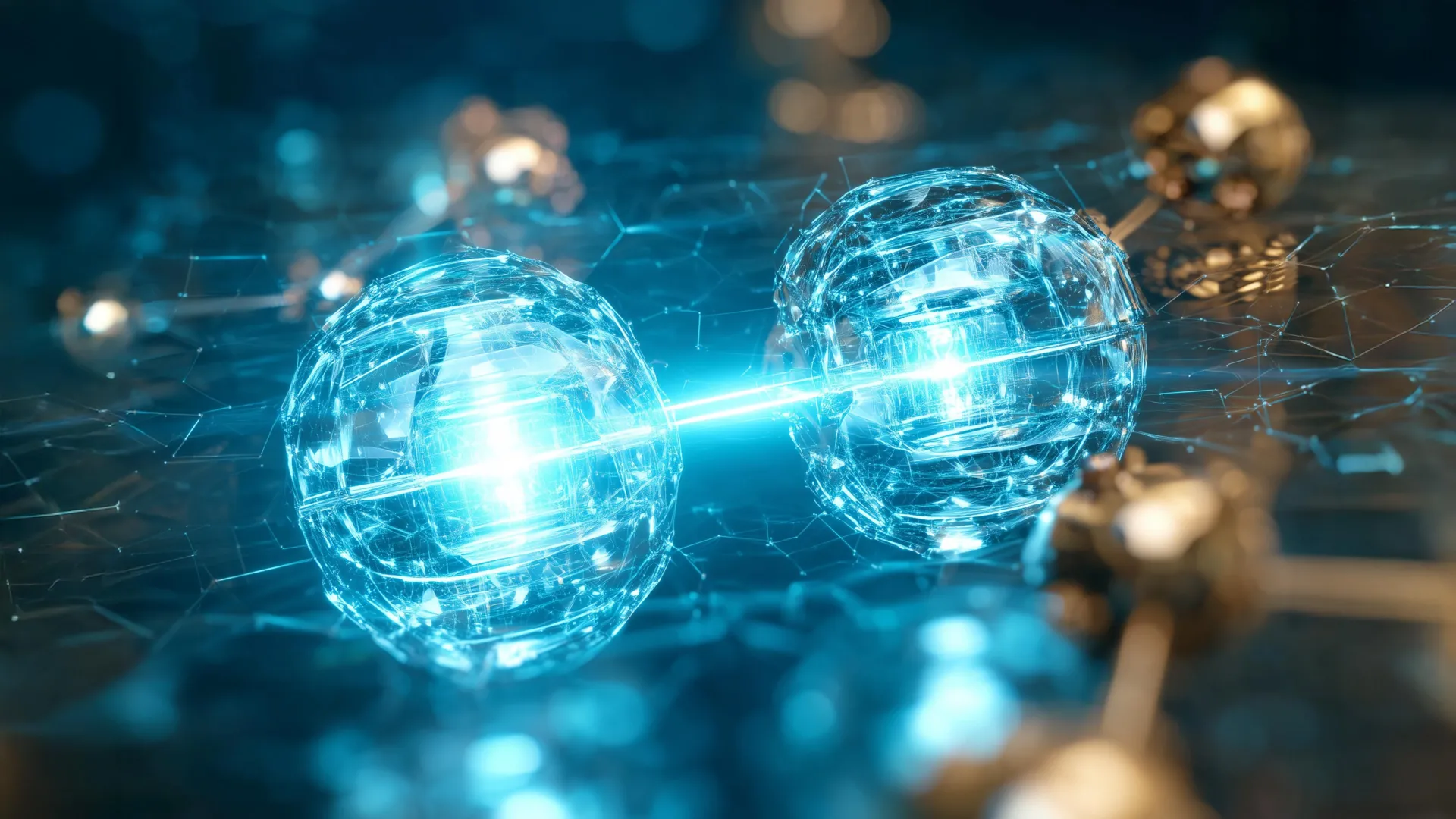
Majorana particles are named after the Italian physicist Ettore Majorana, who predicted their existence in 1937. Unlike ordinary particles, Majorana particles are their own antiparticles — a property that gives them unusual quantum mechanical characteristics. When Majorana modes are created in a solid-state system, they emerge in pairs at opposite ends of a specially engineered nanostructure, with the quantum information distributed across both particles simultaneously.
This distributed encoding is the source of topological protection. Because the information is not stored in any single location but is instead spread across the paired Majorana modes, local disturbances — the noise that devastates conventional qubits — cannot easily corrupt it. To destroy the quantum information, noise would need to simultaneously affect both Majorana particles, which is far less probable than disrupting a single qubit. This natural resilience is what makes topological qubits so attractive for building practical quantum computers.
However, the same property that makes Majorana qubits robust also makes them extremely difficult to read. The quantum information is, by design, hidden from local measurements. Developing a way to access this information without destroying it has been one of the central challenges in topological quantum computing.
Building a Kitaev Chain From Scratch
To tackle this challenge, the research team constructed what they call a Kitaev minimal chain — a modular nanostructure inspired by the theoretical model proposed by physicist Alexei Kitaev in 2001. The device consists of two semiconductor quantum dots connected through a superconductor, arranged to generate Majorana modes in a controlled and reproducible manner.
The researchers describe the architecture as resembling Lego blocks — modular components that can be assembled and configured to produce the desired quantum states. The semiconductor quantum dots act as artificial atoms, confining electrons to discrete energy levels, while the superconductor mediates the interactions between them that give rise to Majorana physics. This bottom-up approach allows the team to engineer the system precisely, tuning parameters to bring the device into the topological regime where Majorana modes appear.
Building this device required advances in nanofabrication, materials science, and cryogenic engineering. The experiments were conducted at temperatures near absolute zero — just millikelvins above minus 273 degrees Celsius — where quantum effects dominate and thermal noise is minimized. The Delft University team, which has extensive experience in semiconductor-superconductor hybrid devices, provided the experimental platform, while the Madrid group contributed the theoretical framework that guided the device design and data interpretation.
The Quantum Capacitance Breakthrough
The key innovation was the development of a readout technique based on quantum capacitance. Unlike conventional measurement approaches that probe the local properties of individual quantum dots, quantum capacitance acts as what the researchers describe as a global probe sensitive to the overall state of the system. This is critical because the information in a Majorana qubit is inherently nonlocal — it resides in the relationship between the paired Majorana modes rather than in either mode individually.
The quantum capacitance measurement works by detecting whether the combined quantum state of the Majorana pair has even or odd parity — a property that reveals whether the qubit is in its zero state or its one state without collapsing the delicate quantum superposition that enables computation. This parity measurement is the fundamental operation required for reading topological qubits, and demonstrating it experimentally is a significant milestone.
The team reported that the parity coherence — the duration for which the quantum information remains intact and readable — exceeded one millisecond. While this may sound brief, it is a promising timescale for quantum operations. Modern quantum processors perform gate operations in nanoseconds, meaning that a one-millisecond coherence time potentially allows for millions of operations before the quantum state degrades.

Confirming Topological Protection
Beyond the readout achievement, the experiment provided direct evidence that the topological protection mechanism works as theorized. The researchers demonstrated that the Majorana qubit's quantum state was substantially more robust against local perturbations than conventional qubit states would be. This confirmation is important because while the theoretical arguments for topological protection are well-established, experimental verification in real devices has been challenging and sometimes controversial.
The field of Majorana research experienced a significant setback in 2021 when a high-profile paper claiming evidence of Majorana particles was retracted due to data analysis concerns. Since then, the community has adopted more stringent standards for experimental claims. The current study's publication in Nature, combined with its comprehensive theoretical analysis and independent experimental verification, reflects this higher bar and lends confidence to the results.
The Road to a Topological Quantum Computer
While this breakthrough demonstrates the ability to create and read Majorana qubits, building a practical topological quantum computer requires several additional capabilities. Researchers must demonstrate the ability to manipulate Majorana qubits — performing the quantum gate operations that constitute computation — and to scale the system from a single qubit to the thousands or millions required for useful calculations.
The modular Kitaev chain architecture offers a natural path toward scaling, since additional quantum dots and superconductors can be added to create longer chains and more complex qubit configurations. Microsoft, which has invested heavily in topological quantum computing, announced in 2025 that it had achieved key milestones in Majorana-based devices, and the approach described in this new study is compatible with those efforts.
For the broader quantum computing industry, the Majorana qubit readout represents a proof of principle that topological quantum computing is not merely a theoretical curiosity but an experimentally viable approach to building fault-tolerant quantum processors. The journey from this first successful readout to a working topological quantum computer will be long, but with this result, the field has crossed a critical threshold — from promising theory to demonstrated practice.
This article is based on reporting by Science Daily. Read the original article.

Originally published on sciencedaily.com