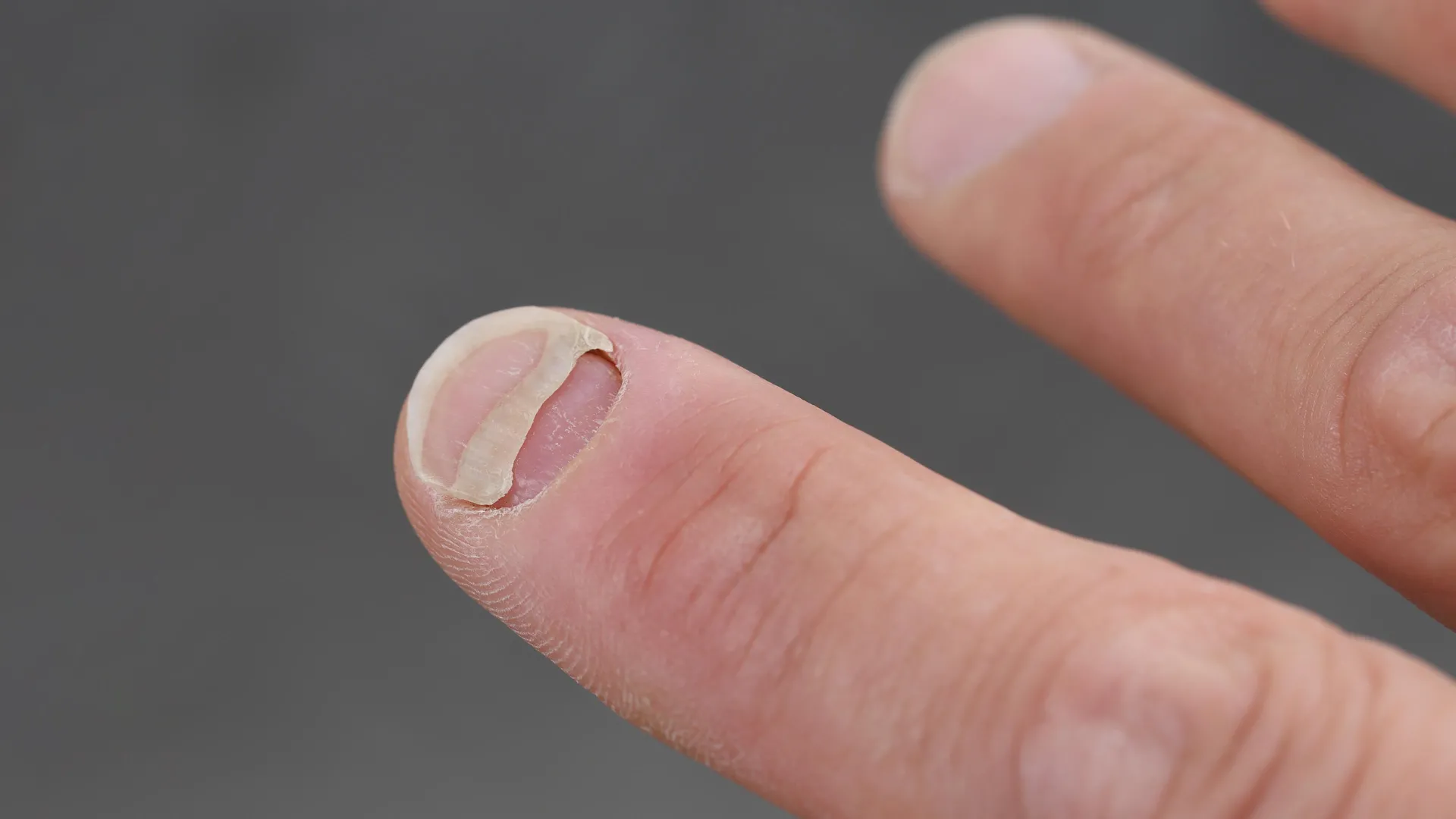
Popular GLP-1 medicines used for weight loss and type 2 diabetes were associated with higher self-reported rates of nail disorders in a multinational controlled study presented at the European Academy of Dermatology and Venereology Congress 2026. The researchers also reported more frequent hair loss and scalp inflammation among people using the medicines.
The findings add a dermatological question to a class of drugs that has become central to the treatment of obesity and diabetes. They do not establish that the medicines caused the reported conditions. But the controlled comparison suggests that weight loss alone may not fully explain the differences observed between GLP-1 users and people with obesity and/or type 2 diabetes who had not used the drugs.
What the researchers compared
The study examined 575 people using GLP-1 medications and compared them with 1,329 people who had type 2 diabetes and/or obesity but had never used the medicines. Participants were recruited in France, the United States, Brazil and Mexico.
GLP-1 receptor agonists act on a hormone-signaling system involved in blood-sugar regulation and appetite. That makes them useful tools for metabolic health and weight loss. The class includes medicines used under names such as Ozempic, Wegovy, Mounjaro, Zepbound, Victoza and Trulicity.
Before this controlled comparison, information about nail changes during GLP-1 treatment had largely come from individual reports of possible adverse reactions. A comparison group is therefore an important feature of the new research: the people not taking GLP-1 medicines still had obesity and/or diabetes, conditions that can themselves affect health outcomes.

Nail detachment stood out in the results
The most striking reported finding involved nail detachment, a condition in which a nail separates from the skin beneath it. Thirty-nine percent of GLP-1 users reported nail detachment, compared with 9% of participants who had never taken the medications. The researchers described GLP-1 users as more than four times as likely to report the condition.
Other nail concerns were also more common among users of the medicines. The study reported that 66% of GLP-1 users had experienced at least one nail disorder, compared with 53% of the control group. Nail discoloration was likewise reported considerably more often among people using the drugs.
These figures should be interpreted carefully. The source material describes reported symptoms and a controlled association, not a clinical diagnosis proving that a drug caused a particular condition in a particular person. The results were also presented at a medical congress, which is a meaningful scientific venue but is not the same as a completed peer-reviewed publication.
Why the association matters
Nail changes can be easy to dismiss as a cosmetic issue, but nail detachment and discoloration can be distressing and may affect daily comfort. For people using long-term treatment for diabetes or weight management, identifying an unexpected pattern could help clinicians and patients decide what symptoms deserve attention during follow-up.
The study is also notable because it looks beyond well-known effects of weight change. The researchers found that weight loss alone could not fully account for the differences between groups, suggesting that there may be more to investigate about the relationship between GLP-1 treatment and changes involving nails, hair and the scalp.
That is not yet an explanation of the mechanism. The supplied findings do not show why the associations appeared, whether they vary by individual medicine, or whether other factors contributed. Those questions will require further investigation. For now, the study identifies a signal that may otherwise be overlooked in a rapidly expanding category of medicines.

What patients should take from early findings
The report is not a reason for people to stop prescribed GLP-1 treatment on their own. These medicines can play an important role in managing obesity and type 2 diabetes, and treatment decisions depend on an individual’s health, goals and medical history.
Instead, the findings give patients and clinicians a specific set of symptoms to notice. Nail separation, changes in nail color, hair loss and scalp inflammation are worth raising with a healthcare professional, especially if they emerge after starting or changing treatment. A clinician can assess the symptoms in context and consider other possible causes.
For prescribers, the study may support more complete conversations about side effects and monitoring. A patient who knows that nail, hair or scalp changes are worth mentioning is more likely to report them early rather than assuming they are unrelated or insignificant.
A useful signal, not a final answer
GLP-1 medicines have been adopted at extraordinary scale, making careful surveillance of unexpected effects increasingly important. Research that compares users with people who share underlying conditions but do not take the drugs can help distinguish possible treatment-related patterns from the effects of obesity, diabetes and weight change themselves.
This study’s central contribution is to put nail health into that discussion. Its findings indicate that nail disorders were common in both groups but reported more often among people using GLP-1 medicines, with a large difference in reported nail detachment. The accompanying reports of hair loss and scalp inflammation broaden the question from nails alone to a cluster of dermatological symptoms.
The next steps are clear: researchers will need to confirm the observations, assess whether risks differ across medications and study potential biological explanations. Until then, the results are best viewed as a prompt for awareness and further research rather than a definitive account of a drug effect. For patients and clinicians, that awareness may be the most immediately useful outcome.
This article is based on reporting by Science Daily. Read the original article.

Originally published on sciencedaily.com


