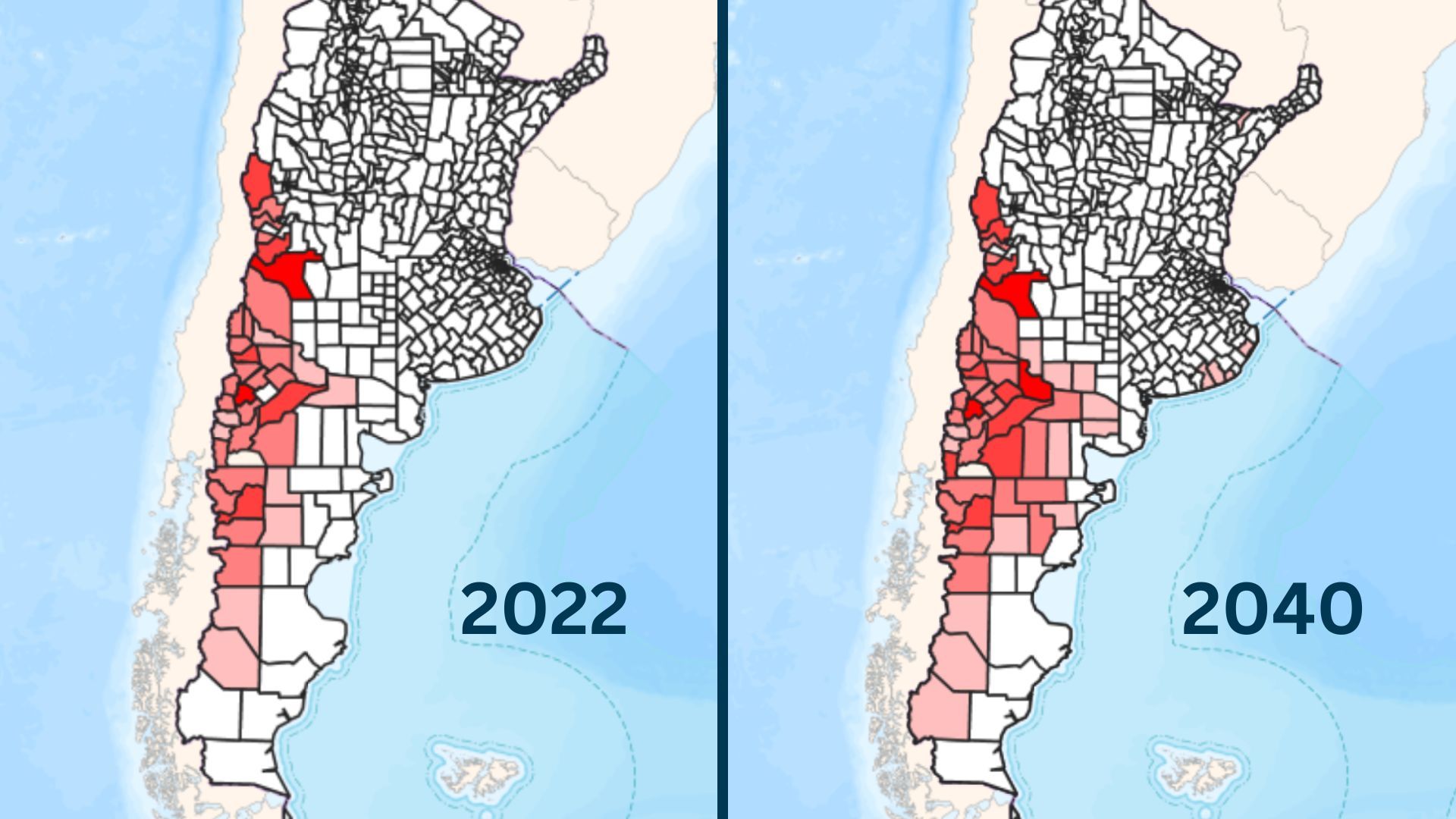
A disease risk map is changing with the climate
Climate change may be altering where hantavirus risk can emerge by shifting the range of infected rodents, according to new modeling highlighted by Live Science. The work focuses on Argentina and suggests that weather-driven ecological change could expose more people to spillover events, particularly in places with little previous experience managing the disease.
The warning arrives at a moment of heightened attention around hantavirus. The source report notes a recent increase in infections in Argentina, with more than 100 cases of hantavirus disease recorded between June 2025 and early May 2026, roughly double the number recorded in the previous year. It also points to the hantavirus cluster linked to the cruise ship MV Hondius, an outbreak that pushed the virus back into global headlines.
The study’s broader message is not limited to one ship or one season. As climate patterns change, the habitats of disease-carrying rodents may change with them.
Why rodents are central to the threat
Hantaviruses are rodent-borne viruses found across the Americas, Europe, and Asia. In the Americas, so-called New World hantaviruses can cause hantavirus cardiopulmonary syndrome, or HCPS, a severe illness that begins with symptoms such as headache, fever, and gastrointestinal problems before potentially progressing to dangerous respiratory complications.
The report notes that HCPS can carry a mortality rate of up to 50%, making it one of the most serious forms of hantavirus disease. It also highlights a major epidemiological detail: the Andes virus, the culprit in the MV Hondius cluster, is the only hantavirus known to spread between people.
That combination of rodent spillover risk and limited human-to-human transmission potential makes Andes virus especially important in South America. It means ecological changes that increase exposure to infected rodents may also create conditions for secondary transmission under some circumstances.
What the models suggest
The source material says researchers produced new models charting how virus-carrying rodents may spread across Argentina as climate change reshapes weather patterns. Specifically, the report references the long-tailed pygmy rice rat and compares its range in 2022 with a projected range for 2040.
The implication is that suitable habitat for the host species may move or expand, shifting the geography of disease contact. That does not guarantee an outbreak everywhere the rodents appear. Human behavior, housing conditions, land use, public health surveillance, and viral prevalence all affect whether animal presence turns into human infection. But changing host distribution is a fundamental risk factor because it changes where contact becomes possible in the first place.
Researchers warn that populations may be exposed to diseases they have not encountered before. That is one of the most difficult public health challenges created by climate-linked disease redistribution. Communities with little familiarity may have lower awareness, fewer targeted prevention strategies, and slower recognition of early cases.
Argentina as an early warning case
Argentina and Chile have dealt with hantavirus for decades, but the current modeling gives that experience a new dimension. The concern is no longer only where the virus has historically circulated. It is where future weather conditions may allow the host species to move.
That matters for surveillance. Public health systems often rely heavily on known hotspots and historical patterns. If those patterns become less stable, risk mapping has to become more dynamic. Climate-informed forecasting may be needed to anticipate not only seasonal variation but structural geographic change.
The recent rise in cases in Argentina reinforces that need. Case counts alone do not prove climate-driven expansion, but they underscore why ecological modeling deserves close attention. When severe zoonotic disease is already causing more infections, even incremental shifts in exposure risk become more consequential.
What this means for prevention
The study’s warning should not be read as fatalism. Climate-linked disease risk can be monitored, and spillover is not random. If rodent host ranges shift, health officials can target education, surveillance, and environmental management in newly vulnerable regions.
Still, the challenge is substantial because the drivers cross disciplinary boundaries. Climate change affects weather patterns. Weather affects vegetation, water availability, and habitat suitability. Those ecological changes influence rodent populations. Human settlement and behavior determine exposure. Public health capacity shapes how quickly cases are detected and contained.
That cascade means outbreak prevention cannot rely only on clinical response after infections appear. It requires earlier ecological intelligence.
A broader pattern in emerging disease
The hantavirus findings fit a wider pattern that scientists have been warning about for years: climate change can rearrange the geography of infectious disease by changing where vectors and hosts can survive. In some cases that means mosquitoes. In others, it means ticks, bats, or rodents.
What makes the hantavirus case particularly sobering is the severity of HCPS and the possibility that populations with little experience of the disease could face new exposure. The more that host ranges become mobile, the less dependable yesterday’s disease maps become.
The new modeling does not say where the next outbreak will occur. It says something arguably just as important: the map of risk itself may be moving. For health systems and policymakers, that should be reason enough to treat rodent ecology and climate adaptation as part of the same emerging-disease conversation.
This article is based on reporting by Live Science. Read the original article.
Originally published on livescience.com


