A New Frontier in Space Biology
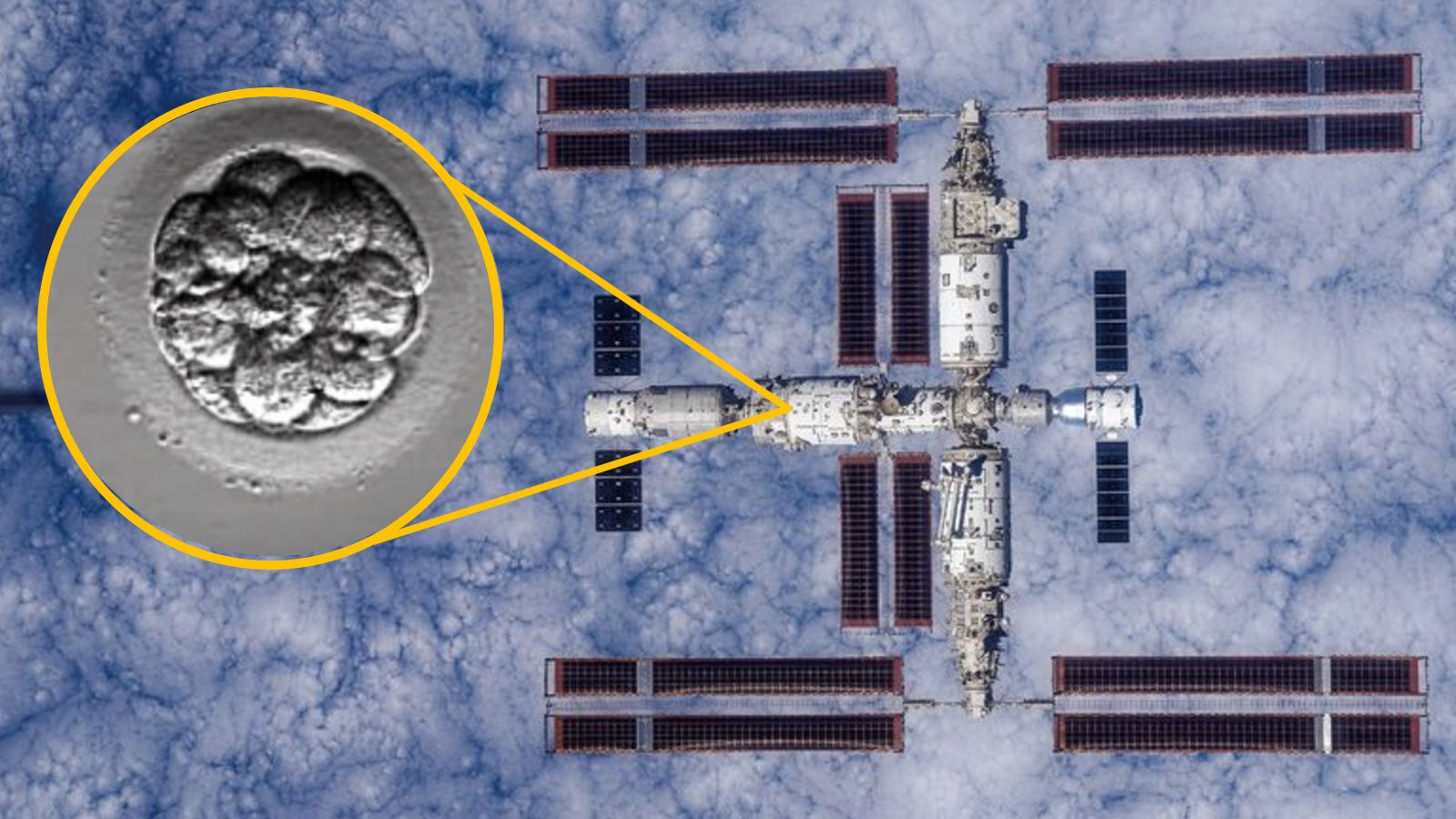
China has sent what researchers describe as "human artificial embryos" to space for the first time, opening a new line of inquiry into one of the least understood questions in long-duration spaceflight: whether human reproduction can be supported away from Earth.
According to reporting from Live Science, the embryo-like structures arrived at the Tiangong space station on May 11 aboard the Tianzhou-10 resupply mission. Chinese officials say the experiment is meant to help researchers understand how microgravity and cosmic radiation influence early developmental processes. The results could shape future thinking about whether self-sustaining settlements on the moon or Mars are biologically feasible.
What Was Actually Sent
The experiment does not involve a conventional human embryo. The structures were made from living human stem cells and are described as collections capable of dividing and multiplying in ways that resemble a normal embryo. However, the project's lead researcher, Leqian Yu of the Chinese Academy of Sciences' Institute of Zoology, said in a statement that the structures are not real human embryos and do not have the ability to develop into an individual.
That distinction is central to both the science and the ethics. Using embryo-like models allows researchers to probe early biological development while reducing some of the ethical concerns that would accompany experiments involving viable human embryos. Even so, the work sits in a sensitive area of modern bioscience, where advances in stem-cell modeling are rapidly expanding what can be studied and what policymakers may need to regulate.
Why Reproduction in Space Matters
Human spaceflight has made major advances in habitation, propulsion, robotics, and life support, but reproduction remains a largely unresolved challenge. Missions beyond low Earth orbit would expose human biology to microgravity, radiation, confinement, and other stressors over extended periods. If future exploration eventually aims at permanent or semi-permanent off-world communities, questions about fertility, embryonic development, and generational health become unavoidable.
The Tiangong experiment targets that uncertainty at an early stage. Understanding how stem-cell-based embryo models behave in orbit could offer clues about how basic developmental processes respond to an environment very different from Earth's surface. It will not answer every question about reproduction in space, but it could begin to map where the biological constraints are likely to emerge.
The Mission Context
Tianzhou-10 launched from Wenchang Space Launch Site at 8:14 p.m. EDT on May 10 and delivered roughly 7 tons of cargo to the Tiangong station around five hours later, according to the report. Alongside food, fuel, spacesuits, and other scientific payloads, the embryo-model experiment was included as part of the station's growing life-science portfolio.
That context matters because it shows the work is being folded into a broader and increasingly capable orbital research program. Tiangong is not simply a destination for symbolic national milestones. It is becoming a platform for experiments that touch long-term strategic questions in medicine, human performance, and deep-space habitation.
Scientific Promise and Limits
The immediate value of the experiment lies in controlled observation. Researchers can compare how these cell-based structures behave under spaceflight conditions versus Earth-based controls, looking for changes in division, organization, or other developmental markers. Because the models do not proceed toward full fetal development, they offer a narrower window into biology than a complete reproductive system would. But that window may still reveal meaningful vulnerabilities.
Microgravity can alter cell behavior, fluid dynamics, and tissue organization. Cosmic radiation introduces another layer of concern, especially for fragile early developmental processes. If either factor disrupts critical steps at the embryo-model stage, it would suggest that reproduction in space faces deeper technical obstacles than habitat engineering alone can solve.
At the same time, caution is warranted in interpreting results. Artificial embryo models are proxies, not full organisms. Findings from them may illuminate mechanisms without directly predicting what would happen in actual human reproduction. The science is important precisely because it narrows uncertainty, not because it delivers a final verdict.
An Ethical and Strategic Signal
The experiment also signals how quickly countries with active space programs are broadening the scope of orbital research. For years, discussions about living beyond Earth have often focused on launch vehicles, lunar infrastructure, or Mars transit. This work shifts attention to a more fundamental issue: whether human biology can sustain multigenerational life away from the planet where it evolved.
That shift carries ethical implications. Research involving human developmental models is already closely watched on Earth. Moving such work into orbit adds new questions about oversight, international norms, and public transparency. The fact that the experiment uses nonviable embryo-like structures may ease some concerns, but it is unlikely to end the debate.
What Comes Next
The report says the structures will soon return to Earth, suggesting that post-flight analysis may become as important as whatever can be observed in orbit. Once back on the ground, scientists may be able to compare the space-exposed models with baseline samples and look more closely at how radiation and microgravity affected their development.
The broader significance of the mission is that it moves a once-speculative question into an experimental domain. Space agencies and commercial players increasingly talk about long-term presence on the moon and Mars. Those visions usually emphasize transportation, construction, and life support. China's new experiment is a reminder that another question sits underneath all of them: not just whether people can survive in space, but whether human life can begin there in any meaningful biological sense.
That question is still far from answered. But with Tiangong now hosting embryo-model research, it has moved closer to the center of the space agenda.
This article is based on reporting by Live Science. Read the original article.
Originally published on livescience.com