A challenge to a long-standing collapse scenario
Antarctica's ice cliffs can retreat more rapidly than existing models predict, but dramatic retreat does not necessarily turn into an unstoppable collapse of the ice sheet. That is the central finding of new research from the Massachusetts Institute of Technology and the Woods Hole Oceanographic Institution, based on satellite observations of more than 15,000 Antarctic ice cliffs over four years.
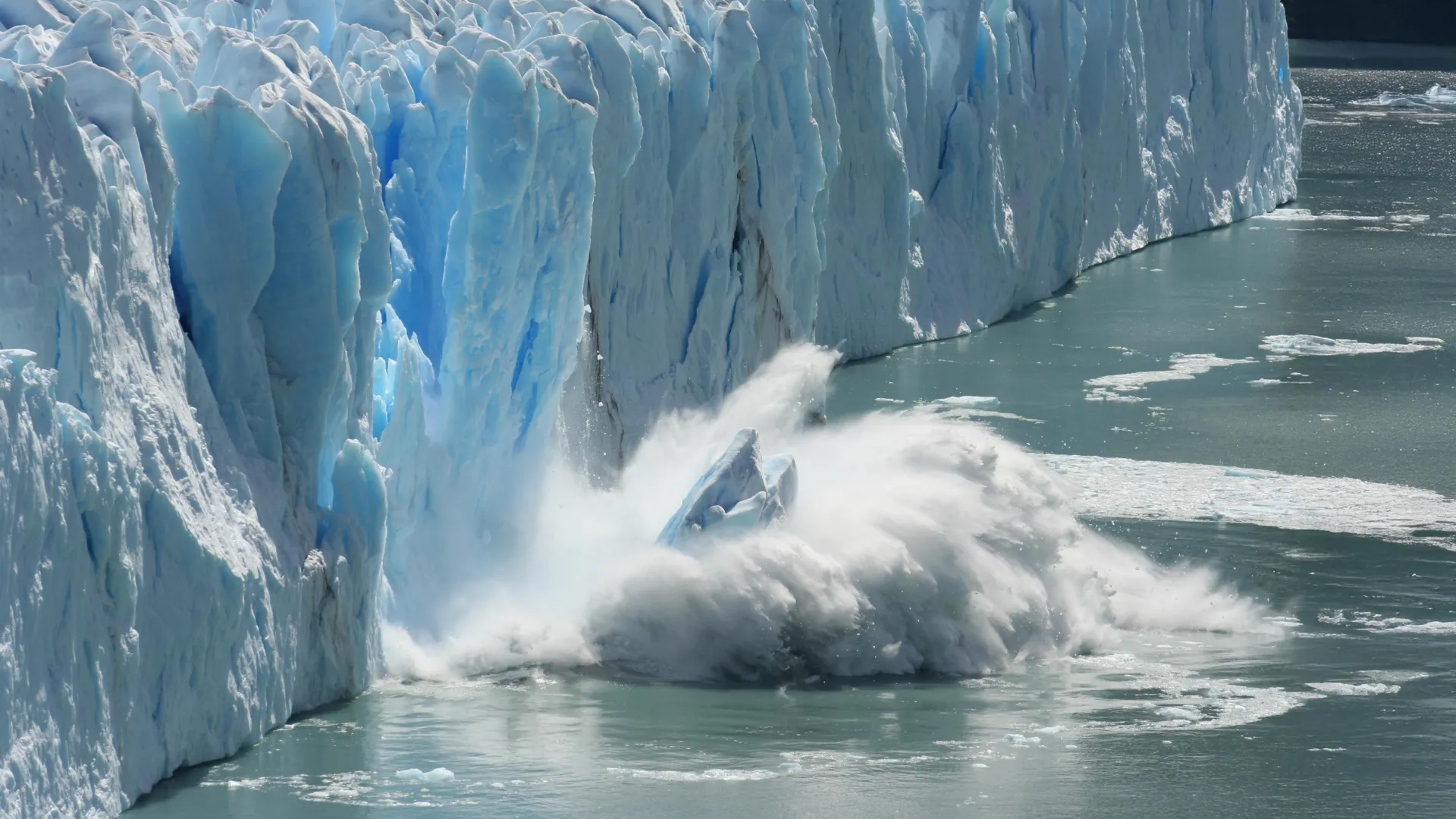
The work, published in Science, examines a critical uncertainty in projections of Antarctic ice loss and future sea-level rise. As floating ice shelves melt and break apart, they can expose tall faces of grounded ice. Scientists have long worried that sufficiently high cliffs could fail under their own weight, exposing another taller cliff farther inland and setting off a self-sustaining retreat.
The new observations do not say that cliff failure is harmless. Instead, they show a more complicated pattern: some cliffs retreated much faster than models had projected, yet the glaciers involved later stabilized. That combination suggests that cliff height alone cannot determine whether a collapse develops into a much larger and continuing retreat.
Why ice cliffs matter for sea-level projections
Ice shelves act as floating extensions of the Antarctic ice sheet and help restrain the flow of inland ice toward the ocean. When they are lost, the grounded ice behind them can be left with exposed, steep faces. The potential failure of those cliffs is a major concern because Antarctica contains enough ice to make its behavior globally consequential.
A widely discussed theory has held that cliffs taller than roughly 100 meters can become mechanically unstable. Once one collapses, the theory goes, the newly exposed ice face farther inland may be even taller, triggering another collapse. In the most severe version of that scenario, repeated failures could cause rapid retreat of parts of the ice sheet.
The MIT-WHOI analysis complicates that picture. The researchers found that retreating cliffs could move inland at rates faster than previously modeled. That result indicates a possibility for greater ice loss and sea-level contribution during active retreat than models might capture. But the retreat was short-lived in the observed cases, and the glaciers eventually stabilized.

What the researchers observed
The study drew on four years of satellite observations across more than 15,000 ice cliffs. Rather than relying only on a theoretical threshold, the analysis used the real behavior of Antarctic glaciers to ask what happens after failures occur.
The answer was not a simple choice between stable cliffs and a runaway collapse. The research found that even tall cliffs can experience rapid local retreat without initiating an indefinite chain reaction. That outcome points to physical conditions that can slow or halt retreat after a failure.
According to the study summary, underwater ridges, surrounding water, and broken ice can function as natural defenses against further collapse. These features can alter the local setting of a glacier and help limit continued retreat. Their presence helps explain why a cliff's height, although important, is not the sole control on its future behavior.
Faster than models, but not necessarily runaway
This dual result is especially important for climate modeling. A model that assumes all cliff collapses immediately produce an unstoppable retreat could overstate the persistence of that process in some places. A model that misses the short periods of rapid retreat, however, could understate how quickly ice loss can occur while a collapse is underway.
Caroline Needell, a graduate student in the MIT-WHOI Joint Program and an author of the study, said the observations showed retreat faster than modeled, which would imply more ice loss and a greater contribution to sea-level rise. At the same time, she said the fact that all of the observed glaciers stabilized suggests the outcome will not necessarily be an unbounded collapse.
That does not resolve Antarctica's future. The study concerns the ice cliffs and conditions observed during its four-year satellite record, not a guarantee about how every glacier will respond as warming continues and ice shelves change. But it provides evidence that the mechanisms governing cliff retreat are more varied than a single height threshold can capture.

Better local detail could improve forecasts
The findings put a premium on representing local geography and ice-ocean interactions in projections. Underwater ridges, the water in front of an ice face, and fragmented ice may appear secondary in broad continental models, yet the research suggests they can influence whether a retreat continues or stalls.
For scientists, the work offers a route toward more realistic estimates: incorporate the possibility of rapid initial retreat while accounting for stabilizing features that vary from glacier to glacier. For policymakers, it is a reminder that uncertainty in sea-level projections does not mean there is no risk. It means the processes producing risk must be modeled with greater precision.
Antarctica's ice shelves are changing as temperatures rise, and exposed cliffs remain a serious concern. This research sharpens the question from whether a cliff is tall enough to fall to what happens after it falls. In the observed record, nature sometimes supplies brakes that prevent a dramatic failure from becoming a lasting cascade.
This article is based on reporting by Science Daily. Read the original article.
Originally published on sciencedaily.com