The Army’s vision for a unified battlefield picture is running into the realities of warfighting
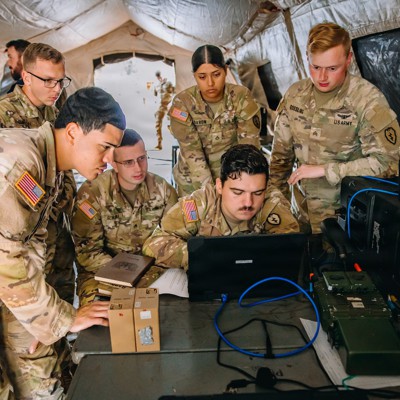
The U.S. Army’s push to build a next-generation command-and-control system is now being shaped in a practical way by soldiers who are using early versions of the technology in the field. Reporting from Defense One shows that the 25th Infantry Division in Hawaii is helping identify what works, what does not, and what still needs to be fixed as the service tries to connect its many separate data systems into a single operating picture.
At the center of the effort is the Army’s Next Generation Command and Control program, or NGC2. The goal is straightforward in principle but difficult in practice: pull together information that now sits in separate systems covering intelligence, surveillance, targets, munitions levels, and other battlefield functions, then display it in one place so commanders and units can make faster decisions. The Army wants to eliminate the need for troops to swivel between disconnected systems and manually stitch together a coherent picture.
That promise of consolidation is one reason command-and-control modernization has become such a high priority. The more sensors, networks, and weapons a force fields, the more value there is in getting the right information to the right person without delay. But the Defense One report makes clear that creating a technically integrated platform is only the first step. Soldiers also need the system to present information in a usable way under real operational conditions.
Too much data can be as much of a problem as too little
One of the clearest lessons from the 25th Infantry Division’s Lightning Surge exercises is that information overload can undermine the value of a unified data environment. Lt. Col. Adam Brinkman, the division’s head of communications and network, said troops were dealing with data volumes in the thousands of objects and lacked a way to control what flowed from Palantir. In practice, that meant users were forced into an all-or-nothing choice: receive everything or receive nothing.
That kind of design problem matters because a system intended to improve speed can instead create drag if operators must sort through too much clutter. The Army’s challenge is not simply aggregating data but filtering it. A common operational picture only helps if it is tailored enough to support decisions rather than bury them. Between the first and second Lightning Surge events, Brinkman said there was a close collaboration between Lockheed Martin and Palantir to develop an application that would let users select specific information and push only what was needed to the data layer.
That response is notable because it shows the Army is using these exercises as a live feedback loop, not just a demonstration venue. The report suggests developers moved quickly to address a problem raised directly by troops. That is exactly the sort of iteration the service says it wants from its Transformation-in-Contact model, where operational units test capabilities early enough to influence the technology rather than simply receive finished products.
Classified and unclassified data still create friction
Another issue emerging from the Hawaii exercises is the divide between classified and unclassified information. Brinkman said the next step after Lightning Surge 2 will require an application that separates and organizes those two streams as they enter the system. That may sound like a technical detail, but it points to one of the oldest obstacles in military command-and-control: information moves at different speeds and under different rules depending on its classification level.
Maj. Gen. John Bartholomees, commanding the 25th Infantry Division, described the problem in practical terms. He said the force communicates often and well with the joint force, but that doing so still takes hours and energy that should be automated. His reference to eliminating the “swivel chair” captures a familiar military frustration: personnel shifting back and forth between systems instead of working through a seamless workflow. If NGC2 is supposed to compress decision cycles, this sort of manual bridge between networks has to shrink dramatically.
The problem is bigger than user interface design. It goes to the credibility of the Army’s broader modernization case. A command platform that fuses data on paper but still depends on labor-intensive handoffs between classification domains will struggle to deliver the time advantage the service is seeking. The 25th Infantry Division’s input therefore matters beyond a single exercise series. It is exposing whether the architecture can handle the routines of daily military operations, not just the concept slide.
Automation is becoming the next demand signal
The report also points to another important expectation: soldiers want more automation in how the system handles communications pathways. The division is looking for an automatic way for NGC2 to select which type of spectrum or communication method to use, rather than relying on manual choice every time conditions change. In a contested or fluid environment, that capability could become central to keeping units connected without constant intervention from operators.
That request fits the broader trajectory of modern military networking. Command-and-control systems are no longer judged only by whether they can display data. They are increasingly expected to help manage the conditions under which that data is moved, prioritized, and delivered. If the Army succeeds, NGC2 would not just serve as a dashboard. It would begin to act as a coordinating layer that reduces routine decision burdens on human users.
Still, the Defense One account shows the Army is not there yet. What the service has today is a promising but unfinished effort whose limits become visible as soon as soldiers begin relying on it during exercises. That is not necessarily a failure. In some ways it is the point of the current experimentation model. But it does mean the service’s path to a truly integrated battle management environment will depend on how quickly it can turn field complaints into usable improvements.
Why the Hawaii experiments matter
The 25th Infantry Division’s work offers a grounded look at how the Army is trying to modernize one of its most consequential digital systems. The biggest takeaway is that command-and-control reform is no longer just about connecting platforms. It is about making those connections manageable for the people who have to fight with them. Soldiers want cleaner information flows, better separation of data types, and automation that reduces needless manual effort.
Those demands are reasonable, but they are also demanding. They raise the bar for what NGC2 has to become if it is going to replace the Army’s current patchwork. The exercises in Hawaii suggest the service is getting useful answers early, before the system hardens around bad assumptions. Whether that turns into a durable advantage will depend on whether developers can keep pace with the feedback coming from the field.
For now, the Army’s next-generation command system remains a work in progress. What makes the current moment significant is that the gap between concept and use is being tested openly. That may be the most important sign of progress so far.
This article is based on reporting by Defense One. Read the original article.