A New Label Enters the Domestic Security Vocabulary
Federal intelligence and law enforcement agencies in the United States are reportedly circulating internal material that frames “anti-technology extremists” or “anti-tech violent extremism” as an emerging threat category. According to the supplied source text, the reporting is based on more than 1,000 pages of unpublished documents from the Department of Homeland Security, the FBI, and fusion centers obtained by WIRED and cited by Ars Technica.
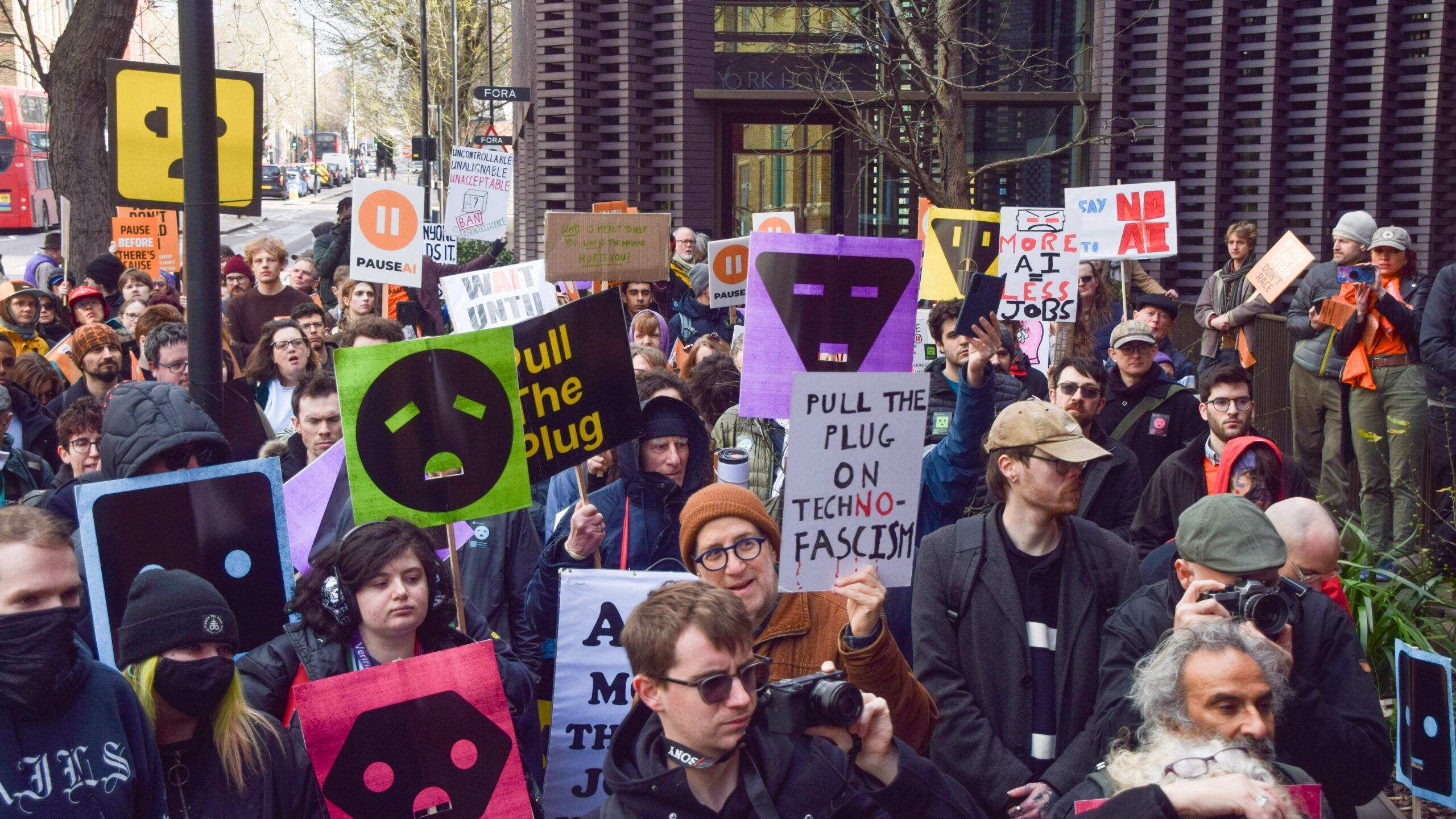
The significance of the story is not just that agencies are monitoring a new area of concern. It is that the category appears to be broad, politically charged, and closely tied to social conflict around AI adoption, data center expansion, executive power, and fears of job displacement. The source text says the shift comes amid attacks on CEOs, a protest movement targeting data centers, and rising anxiety over what AI may do to work and everyday life.
That context makes the new terminology especially consequential. Threat classifications are not neutral labels once they move into law enforcement and intelligence reporting. They shape who gets monitored, what kinds of assemblies are seen as potentially dangerous, and how dissent can be interpreted before any criminal act occurs.
What the Documents Reportedly Show
The source text says one New York Intelligence and Counterterrorism Bureau report warned that the “chaotic atmosphere” that may result from emergent AI technology in the next five years could fuel large-scale protests that devolve into civil unrest and anti-tech violent extremist activity, especially in major urban areas such as New York City. That phrasing matters because it links a technology transition directly to security forecasting.
The article also says the term “anti-tech violent extremism” does not appear in publicly available DHS or FBI domestic extremism reports or guides. If accurate, that would suggest the label is emerging first in unpublished or nonpublic reporting channels rather than through an openly debated public framework. That gap between internal categorization and public vocabulary is one reason the story has drawn attention.
The source further situates the development within broader Trump administration directives, including a National Security Presidential Memo and a public counterterrorism strategy that, according to the article, directs federal attention toward ideological categories the administration opposes. Within that framing, the new anti-tech label does not appear as an isolated bureaucratic invention. It appears as part of a wider expansion in how the state may define threat around political or social resistance.
Why Technology Politics Are Becoming Security Politics
The deeper issue is that AI and infrastructure buildout are no longer confined to industry or regulatory debates. They are becoming flashpoints in public life. Data center construction can trigger local opposition over land, water, energy, and noise. AI deployment can trigger worker fears over replacement, surveillance, or loss of control. When those concerns scale up, governments face a choice about whether to treat them primarily as democratic conflicts, public-order challenges, or security threats.
The reporting described in the source text suggests at least some agencies are moving toward the third frame. That does not automatically mean all protest is being criminalized, but it does mean authorities may be preparing to interpret anti-tech agitation through a counterextremism lens. For civil liberties advocates, that is a serious threshold, because the distance between monitoring unrest and surveilling protected speech can narrow quickly when categories are broad.
The article’s importance lies partly in timing. The AI boom has been accompanied by unusually forceful state and corporate rhetoric about speed, competitiveness, and strategic necessity. In that environment, communities or activists who oppose parts of the buildout may increasingly be seen not just as critics, but as obstacles. Security language can harden that perception.
Whether the new label remains limited, expands, or draws formal public scrutiny will matter. If “anti-tech extremism” becomes an established concept in domestic security practice, it could reshape how opposition to AI systems and supporting infrastructure is understood by the state.
At a minimum, the reporting shows that resistance to technology deployment is now being watched through a national-security lens. That marks a significant turn in the politics of AI, and one that reaches beyond the technology sector itself.
This article is based on reporting by Ars Technica. Read the original article.
Originally published on arstechnica.com


