Booking a Flight Like Booking a Ride
Uber is bringing its ride-hailing model to the skies. The company has previewed its air taxi booking service, which will allow passengers to reserve electric vertical takeoff and landing (eVTOL) flights through the same Uber app they use to call a car. The service, developed in partnership with electric aircraft manufacturer Joby Aviation, is set to launch in Dubai later in 2026, marking the beginning of what both companies hope will become a global urban air mobility network.
The booking experience has been designed to be as familiar as hailing an UberX. Passengers enter their destination in the app, and if their route is eligible, "Uber Air" appears as a transportation option alongside existing car service tiers. Selecting it books both the eVTOL flight and an Uber Black car to transport passengers to and from Joby's vertiport facilities, creating a seamless door-to-door experience.
"We've spent years thinking about how to make this feel like a natural extension of the Uber experience," the company said in its preview event. The goal is to remove the complexity traditionally associated with air travel, no check-in counters, no security lines, just an app booking and a ride to the vertiport.
The Aircraft: Joby's Electric Air Taxi
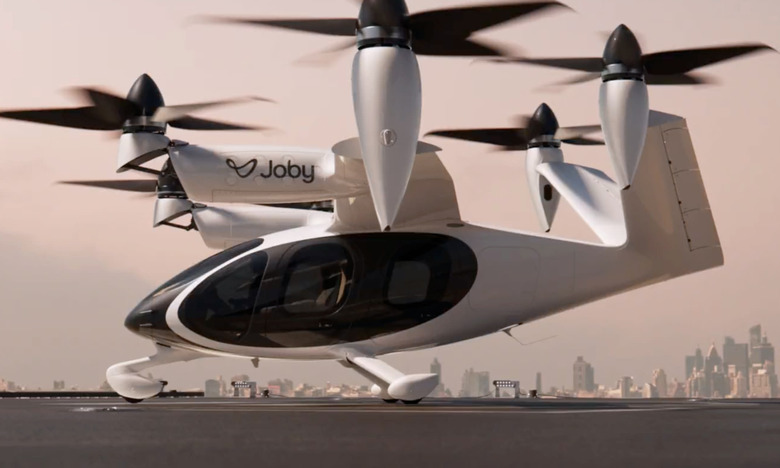
The flights will use Joby Aviation's purpose-built eVTOL aircraft, which accommodates up to four passengers plus luggage in an interior the company compares to an SUV with panoramic windows. The aircraft is powered by electric motors, making it significantly quieter than a traditional helicopter, an important consideration for operations over densely populated urban areas.
Joby's aircraft specifications are impressive on paper. The vehicle has a maximum speed of 200 miles per hour, a range of up to 100 miles on a single charge, and features four redundant battery packs alongside a triple-redundant flight computer. A human pilot will be aboard for all flights, a requirement that both companies view as essential for building public trust during the initial deployment phase.
The aircraft takes off and lands vertically, eliminating the need for runways and enabling operations from compact vertiport facilities that can be built on rooftops, parking structures, or dedicated ground-level pads. This vertical capability is what makes the concept viable for urban transportation, where available land for traditional airports or helipads is extremely limited.

Why Dubai First
Dubai's selection as the launch market is strategic rather than accidental. The city has actively courted urban air mobility companies, offering a regulatory environment that is more permissive and faster-moving than those in the United States or Europe. Dubai's Road and Transport Authority has been working with multiple eVTOL developers and has established frameworks for integrating air taxis into the city's existing transportation network.
The city's geography also lends itself to air taxi service. Dubai's urban sprawl, combined with frequently congested roadways and a climate that discourages walking or cycling, creates strong demand for faster point-to-point transportation. Flights that could replace a 45-minute ground trip with a 10-minute aerial one have obvious appeal to both business travelers and affluent residents.
Dubai also offers something that more established aviation markets do not: a willingness to be first. While the Federal Aviation Administration in the United States continues to work through the certification process for eVTOL commercial operations, Dubai's aviation authority has moved more quickly, giving companies like Uber and Joby the opportunity to demonstrate their service in a real market before US operations begin.
Pricing and Practicality Questions
Uber has suggested that air taxi fares will be comparable to its Uber Black premium car service, a claim that has drawn skepticism from aviation industry observers. Operating an aircraft, even an electric one, involves significantly higher costs than operating a car: pilot salaries, aircraft maintenance, vertiport infrastructure, insurance, and the capital cost of the aircraft itself all contribute to a cost structure that is fundamentally different from ground transportation.
Critics have questioned whether commercially viable pricing is achievable without government subsidies, particularly in the early years when flight volumes will be low and infrastructure costs are being amortized across a small number of operations. The economics of air taxis will likely depend on achieving high utilization rates, with aircraft making many short flights per day rather than sitting idle between bookings.
For Uber, the air taxi service does not need to be profitable immediately. The company has a history of subsidizing new services during their launch phase to build demand and achieve scale. If the Dubai launch demonstrates consumer interest and operational viability, it could justify the investment needed to expand to larger and more profitable markets.

The Global Ambition
Dubai is intended as the first stop, not the final destination. Joby Aviation has publicly targeted New York and Los Angeles as its initial US markets, with plans for operations in the United Kingdom and Japan as well. Uber's platform, with its global user base and established payment infrastructure, provides a natural distribution channel for air taxi services as they expand to new cities.
The eVTOL industry more broadly has attracted billions of dollars in investment from a range of companies including Archer Aviation, Lilium, and Volocopter, each pursuing slightly different aircraft designs and business models. Uber's partnership with Joby gives it a leading position in the race to commercialize urban air mobility, but the technology and regulatory landscape remain dynamic.
For now, the Dubai preview offers a glimpse of what urban transportation could look like in the near future: open the same app you use to get a ride to dinner, but instead of a car pulling up to your doorstep, a quiet electric aircraft is waiting at a vertiport a few minutes away. Whether that vision becomes routine reality or remains a novelty for the wealthy will depend on the economics, safety record, and regulatory progress that emerge from this first commercial deployment.
This article is based on reporting by Engadget. Read the original article.
Originally published on engadget.com


