Rivian is deepening the software identity of its vehicles
Rivian has added a new in-car AI assistant to its latest software update, extending the feature across both Gen1 and Gen2 vehicles for owners with a Connect+ subscription or trial. The rollout underscores how aggressively the electric vehicle maker continues to treat software as a core product layer rather than a supporting feature.
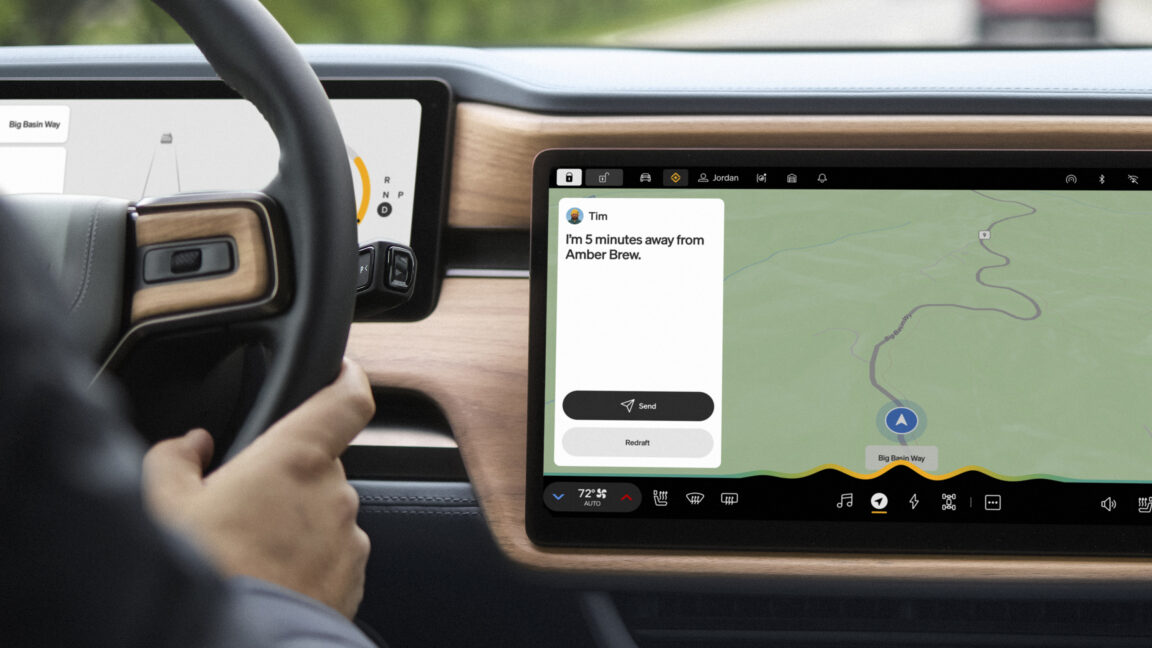
The assistant can be triggered by a steering-wheel button, an infotainment icon or wake phrases including “Hey Rivian” and “OK, Rivian.” According to the company’s reported feature list, it can control climate, navigation, media, messaging, calling and vehicle settings, answer questions, reference the owner’s manual and explain alerts or help troubleshoot problems.
A replacement for missing phone mirroring
The update matters partly because Rivian has chosen not to support Apple CarPlay or Android Auto. That decision has long made the company an outlier in a market where many drivers expect their phone’s voice assistant and app ecosystem to follow them into the dashboard. By adding its own AI helper, Rivian is trying to fill that gap with a more deeply integrated system rather than conceding the interface to Apple or Google.
This is a different strategic bet from simply reproducing smartphone functions on a bigger screen. Rivian is arguing that a native assistant connected directly to vehicle systems can do more useful work because it is built around the car itself, not just around the phone.
Cloud integration expands what the assistant can do
The assistant reportedly runs within Rivian’s private cloud, which gives it broader access to the vehicle’s subsystems than generic off-the-shelf in-car AI. That puts Rivian closer to the approach taken by premium automakers that are building branded assistants tied tightly to navigation, diagnostics and personalization.
Rivian also says owners can personalize the assistant through the mobile app, connecting it to calendar data and allowing it to learn recurring destinations and preferences such as routine drives, music tastes or favorite restaurants. That moves the product from command-and-control voice input toward a more context-aware software layer.
Why this launch matters for the EV market
The EV industry has spent years talking about cars as software-defined platforms, but the phrase often translates into basic over-the-air updates and better infotainment responsiveness. Rivian’s move is more specific. It suggests the next stage of software competition in cars may center on assistants that sit across navigation, climate, media, communication and diagnostics at once.
That is especially relevant for a company that already has a strong reputation for software polish. Rivian’s clean-sheet electronic architecture has been widely praised and was influential enough to help support a major Volkswagen Group investment. A native assistant is therefore not an isolated gimmick. It is a logical extension of the company’s broader product strategy.

The open question is utility
The success of the Rivian Assistant will depend less on whether it exists and more on whether owners find it reliably useful. Voice interfaces in vehicles have a long history of underdelivering, and consumer tolerance for awkward or inconsistent assistants is low. Because Rivian is withholding CarPlay and Android Auto, expectations may be even higher: owners will judge the assistant against both smartphone ecosystems and premium in-car systems.
Still, the update marks a meaningful shift. Rivian is no longer just offering one of the cleaner software stacks in the auto industry. It is using that stack to build a branded AI interface that could become central to how drivers operate the vehicle.
If it works well, the assistant will strengthen Rivian’s case that a tightly integrated software environment can be a selling point in its own right. If it falls short, it will revive the argument that drivers should be allowed to bring their preferred phone-based experience into the cabin. Either way, Rivian has made the contest more explicit.
This article is based on reporting by Ars Technica. Read the original article.
Originally published on arstechnica.com