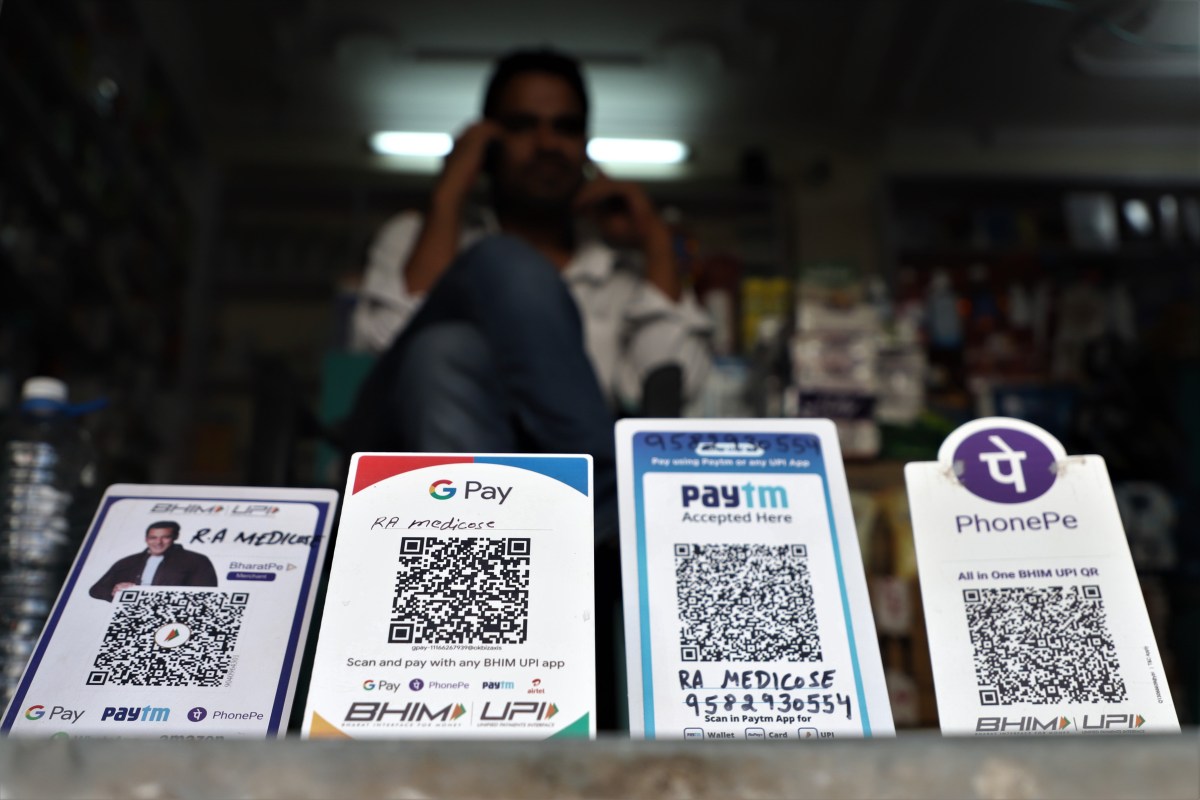
India’s instant-payments boom is running into a competition problem
India’s Unified Payments Interface has become one of the world’s most important digital-payment systems, processing billions of transactions each month and reshaping how consumers and merchants move money. Now its success is colliding with a familiar platform-era question: what happens when the network grows faster than competition within it?
According to TechCrunch, Amazon and Meta are among the companies preparing to press the National Payments Corporation of India, or NPCI, over the dominance of PhonePe and Google Pay. Executives from Amazon Pay, WhatsApp, CRED, MobiKwik and Flipkart’s Super.money are scheduled to meet the payments body on Thursday to argue that the current market structure is making it difficult for smaller apps to compete.
The concentration is substantial. PhonePe and Google Pay together handled roughly 80% of the 22.6 billion UPI transactions recorded in March, based on NPCI data cited in the report. That kind of share creates powerful feedback loops: users prefer the apps already accepted everywhere, while merchants prioritize the services with the broadest customer base.
A cap delayed, a market entrenched
The meeting also revives a regulatory issue India has already postponed once. Plans to cap any single app’s UPI market share at 30% were deferred for more than a year, with the deadline now pushed to December 31, 2026. The delay avoided disruption for hundreds of millions of users, but it also gave the two leading services more time to cement their advantage.
For challengers, that matters because UPI is not just another payments product. It is foundational digital infrastructure for consumer finance, commerce and app ecosystems in India. Companies that fail to gain traction on UPI risk being locked out of a major behavioral layer where users increasingly expect payments, mandates and recurring transactions to work seamlessly.
PhonePe’s own scale illustrates the challenge. The company said this week that it has crossed 700 million registered users and 50 million merchants across India, with merchant acceptance spanning more than 98% of the country’s postal codes. Numbers at that level are not merely signs of success. They become barriers that smaller entrants struggle to match through conventional marketing or product improvement alone.
What smaller platforms want changed
TechCrunch reports that an agenda reviewed ahead of the meeting includes complaints about user-acquisition practices, product design and monetization. The proposals reportedly include restrictions on how dominant apps onboard users and use contact data, along with demands for fairer access to features such as autopay and payment mandates.
Those details matter because digital-payment markets are often won through design choices that appear small at the surface but become decisive at scale. An onboarding flow, a default payment option, a contact-list advantage or preferential access to recurring-payment features can shape millions of user decisions long before price becomes relevant. In a system like UPI, where many services are low-friction and low-cost, distribution design can be the real battleground.
There is also a governance issue embedded here. NPCI operates the UPI network under the supervision of the Reserve Bank of India. That gives it a difficult balancing role. It must keep a widely used public-facing payments system reliable while also preserving competitive conditions inside the apps layered on top of it. Intervening too aggressively could disrupt a service used at enormous scale. Doing too little risks allowing the market to harden around a duopoly.
The dispute points to a broader policy shift in digital infrastructure: once a payment network becomes essential, the argument moves beyond innovation and into rules for access. India is no longer asking whether UPI works. It is asking whether the benefits of that success are being distributed across enough firms to preserve meaningful competition.
Thursday’s meeting is unlikely to settle that question immediately. But it signals that the ecosystem’s second phase has begun. The first phase was about adoption and trust. The next is about market design, gatekeeping and whether regulators can open room for challengers without destabilizing the country’s most important real-time payments rail.
For global technology companies, India’s answer will matter well beyond one market. UPI has become a model for digital public infrastructure. How India handles concentration inside that model could influence how other countries think about competition on top of state-backed or quasi-public payment networks.
This article is based on reporting by TechCrunch. Read the original article.
Originally published on techcrunch.com