A return to the minimalist tracker
Google is taking Fitbit back to its roots while also trying to redefine what its health platform looks like after years of overlap between fitness bands, smartwatches, and app ecosystems. The company has introduced the Fitbit Air, a $100 screenless wearable designed for continuous health tracking, alongside a new Google Health app that is set to replace the Fitbit app experience.
The move is notable because it cuts against the direction much of the wearables market followed over the last decade. Early activity trackers were simple devices focused on passive measurement. Then the market shifted toward smartwatches, which put displays, apps, and notifications on the wrist. Google is now betting that many people do not actually want a mini-phone on their arm all the time, especially if the tradeoff is frequent charging and inconsistent wear.
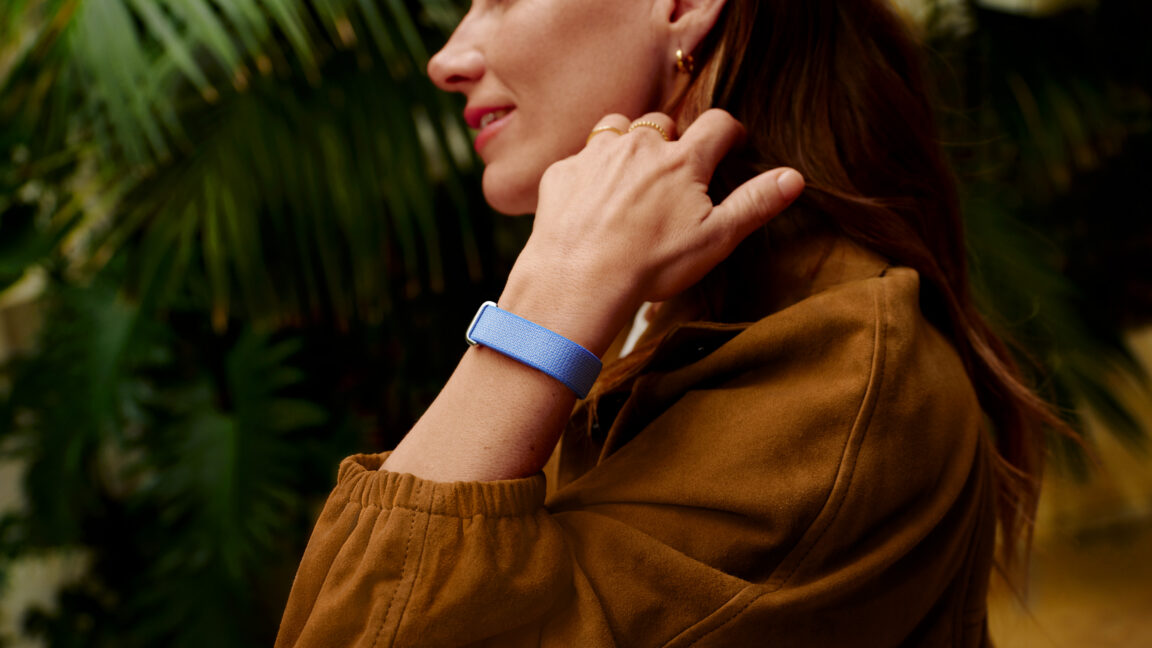
The Fitbit Air’s core premise is that health tracking works best when it fades into the background. There is no display. The device itself is a small plastic module that fits into different bands, with sensors mounted on the underside against the wrist. Instead of surfacing data on the wearable, Google sends it into a dedicated app environment where the information can be analyzed over time.
Hardware designed around comfort and persistence
The physical design is simple by intent. The Air is about 1.4 inches long and 0.7 inches wide, more like a sensor capsule than a traditional watch. That form factor allows Google to package the device into a range of band styles, including active, loop, and more fashion-oriented options. The company is also offering a special-edition Steph Curry version, signaling that it sees style and cultural branding as part of the product strategy rather than an afterthought.
But comfort is more than a marketing angle here. Continuous health tracking only works if people actually wear the device throughout the day and night. Smartwatches have repeatedly run into the same limits: they can be useful, but they also need regular charging, can feel bulky during sleep, and are not always ideal for exercise or recovery tracking. Google says the Fitbit Air lasts about a week on a charge while collecting continuous data, and it can store roughly a day of information without being connected to a phone.
That design directly targets the habits that make screenless trackers appealing. People may tolerate a weekly recharge if the device is lightweight and unobtrusive enough to stay on during sleep, workouts, and daily routines. In that sense, Google is less trying to build a cheaper smartwatch than trying to build a wearable that users forget they are wearing.

The app becomes the main interface
The more strategic piece may be software. Google is launching a new Google Health app to replace Fitbit’s app experience, consolidating the way health data is presented and interpreted. That signals a broader shift in brand architecture: Fitbit remains important as a hardware line, but Google appears increasingly interested in moving the data, coaching, and analytics layer under its own name.
The company is also leaning into AI-assisted interpretation. According to the source material, the new app includes an AI-powered health coach intended to explain what the data means. That is now a familiar product pattern across consumer health tech. Sensors can collect sleep, movement, and other wellness indicators, but most users do not want dashboards full of unexplained numbers. Companies are increasingly trying to turn raw measurements into guidance, summaries, and prompts.
Whether that becomes genuinely useful will depend on how well Google balances convenience with caution. A coaching layer can be valuable if it contextualizes patterns clearly and avoids overclaiming. It can become counterproductive if it produces vague motivational filler or suggests a level of medical authority the product does not actually have. The success of the software side will likely rest on whether users feel they are getting actionable insight rather than a generic AI wrapper around familiar fitness metrics.
Not a replacement for Pixel Watch, but a companion
Google is not presenting the Fitbit Air as an attack on smartwatches. Instead, it is positioning the product as complementary to the Pixel Watch and, eventually, to other wearables. Users can reportedly keep both a Pixel Watch and Fitbit Air paired to the same phone and switch between them over time. Google also says this multi-device capability is coming to more wearable products.
That matters because it suggests Google sees different wearable categories serving different jobs. A smartwatch is for notifications, glanceable information, and interactive features. A screenless tracker is for persistent sensing with minimal friction. For users who want both, Google wants to own both ends of that spectrum rather than forcing a single device to do everything imperfectly.
It is also an acknowledgment of a basic market reality: smartwatches never became universal. Plenty of consumers bought them, but many do not wear them consistently enough for longitudinal health tracking to be reliable. By splitting sensing from interface, Google may be trying to create a more durable relationship between users and their health data.
Why this launch matters beyond one device
The Fitbit Air is part of a larger reset in consumer health hardware. Screenless trackers from companies such as Whoop and Hume have helped reestablish the idea that wearables do not need to function like watches to be valuable. Google is now validating that category with a lower price point and a broader mainstream ecosystem.
At $100, the Air sits in a more accessible band than many premium tracking subscriptions and devices. That pricing could make it a meaningful mass-market test of whether consumers still want dedicated health wearables when phones and watches already cover so much adjacent ground. Google’s answer is that people will adopt a second device if it is cheaper, more comfortable, and more specialized.
The rebranding effort matters too. Replacing the Fitbit app with Google Health is not just a UI change; it is a statement about who owns the long-term relationship. Fitbit once stood for a distinct consumer fitness ecosystem. Under Google, it increasingly looks like a hardware label feeding a broader Google health-data platform.
A calculated shift in the wearables playbook
The launch of the Fitbit Air and Google Health app shows Google rejecting the idea that progress in wearables means adding more screens, more features, and more complexity. Instead, it is pursuing the opposite thesis: that better health tracking may come from removing the screen, simplifying the device, and making software do more interpretive work in the background.
That approach is not guaranteed to win. Consumers may still prefer all-in-one smartwatches, and AI health coaching remains an uneven proposition across the industry. But Google’s strategy is coherent. If the company can make the Air comfortable enough to wear continuously and the new app useful enough to trust, it may have found a more sustainable model for everyday health tracking than the smartwatch-first vision that dominated the previous era.
This article is based on reporting by Ars Technica. Read the original article.

Originally published on arstechnica.com