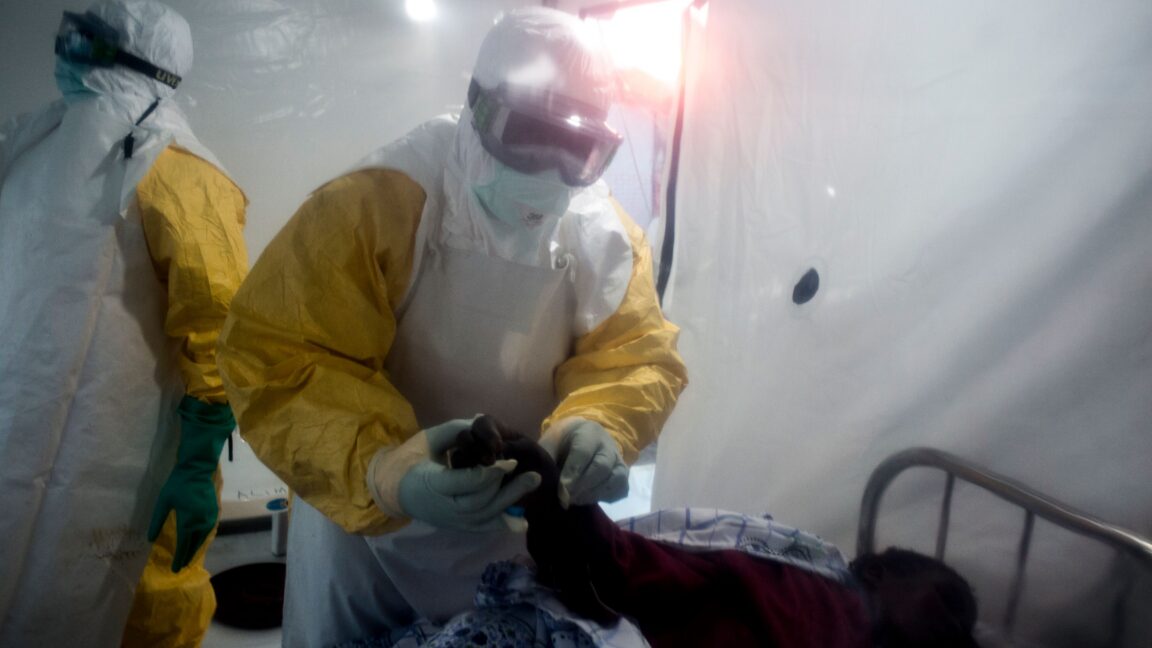
A major Ebola outbreak is already underway in Central Africa
Health authorities in Central Africa are confronting a substantial Ebola outbreak that appears to have been recognized publicly only after it had already grown to a dangerous size. According to the source text, the Democratic Republic of the Congo has reported 246 suspected cases and 65 deaths in the northeastern Ituri province, while Uganda has identified an imported confirmed case in Kampala, signaling that the outbreak has crossed an international border.
The scale alone makes the event significant. The source notes that the outbreak already ranks around the 10th largest recorded Ebola outbreak, even though the current reporting only surfaced in mid-May. For a disease that can spread rapidly under conditions of weak surveillance, insecurity, and high mobility, that timing matters. It suggests responders are entering the fight after transmission chains may already be well established.
The danger is compounded by uncertainty over the virus strain involved. Preliminary laboratory results indicate the outbreak may not be caused by the Zaire Ebola virus, which has been responsible for most of the DRC’s previous Ebola outbreaks and is the target for current licensed vaccines and treatments.
Why the possible strain matters
Ebola is not a single uniform pathogen in practical response terms. Four strains are known to cause disease in humans, and the strain involved affects how well existing medical countermeasures apply. The source says preliminary indications point away from the Zaire strain, while an early Reuters report from Uganda identified the Kampala case as involving the Bundibugyo strain.
If that assessment holds, response planning becomes more complicated. Current licensed vaccines and treatments were developed against disease caused by the Zaire strain, according to the source material. That does not mean public health systems are defenseless, but it does mean authorities may have fewer proven tools immediately available than they would in a more familiar Zaire-driven outbreak.
This distinction is critical because Ebola containment depends on speed, confidence, and operational clarity. When the causative strain is uncertain, every decision becomes harder: which therapeutics to prioritize, how to frame risk communication, and what expectations to set for health workers and the public.

Conditions on the ground favor spread
The Africa Centres for Disease Control and Prevention, as described in the source, highlighted several features that make this outbreak especially difficult to contain. One is geography and settlement pattern. The outbreak involves the urban context of Bunia and Rwampara, where population density and movement can amplify transmission. Another is mobility tied to mining activity, which can carry infections across communities and borders before surveillance systems catch up.
Conflict is another serious obstacle. Militia clashes in the area complicate travel, disrupt local health operations, and make sustained contact tracing harder. Even in stable conditions, tracing the contacts of a hemorrhagic fever patient is labor-intensive and time-sensitive. In an insecure region, that task becomes much more fragile.
The source also notes gaps in contact tracing and the risk of spillover beyond Uganda to South Sudan. That regional dimension is one reason officials are emphasizing coordination rather than a purely national response. Ebola does not respect administrative boundaries, and fragmented health systems can allow one missed chain of transmission to seed another outbreak zone.
Late visibility is a problem of its own
One of the more alarming aspects of the report is not only the case count, but the apparent lag between early awareness and broad reporting. The source says the World Health Organization learned of potential cases on May 5, while the U.S. Centers for Disease Control and Prevention said it had only just heard about the outbreak the day before the article was published.
That gap matters because outbreak control is fundamentally a race against time. The earlier cases are identified, isolated, and traced, the lower the probability that an outbreak becomes self-sustaining across multiple regions. Once the disease reaches an urban center and crosses a border, response complexity rises sharply.
Public trust also becomes harder to manage when information arrives in fragments. In Ebola responses, rumors and fear can spread faster than official updates. That can deter people from seeking care, cooperating with tracers, or reporting symptoms early.

The outbreak is a stress test for regional health coordination
The current outbreak is not only a clinical emergency. It is a test of whether regional health authorities can move quickly enough to synchronize surveillance, laboratory work, border monitoring, case management, and public messaging. The source quotes Africa CDC Director-General Jean Kaseya emphasizing the need for rapid regional coordination among the DRC, Uganda, South Sudan, and partners. That is the correct frame.
Ebola control is most effective when neighboring countries act as part of one response architecture instead of waiting for confirmed domestic spread. Shared alerts, cross-border contact tracking, and aligned clinical protocols can prevent imported cases from becoming local outbreaks. Uganda’s confirmed case in Kampala shows why that posture is necessary.
The coming days will likely hinge on two questions. First, can laboratories quickly confirm the strain and clarify which countermeasures are most relevant? Second, can field teams establish enough visibility into transmission chains to keep the outbreak from expanding into a wider regional event?
For now, the outbreak should be understood as serious on both counts: the numbers already reported are substantial, and the uncertainty around the underlying strain raises the stakes. This is not an isolated flare-up. It is a fast-moving public health emergency unfolding under conditions that favor escalation unless coordination improves quickly.
This article is based on reporting by Ars Technica. Read the original article.
Originally published on arstechnica.com


