A Familiar Brand, a New Decision Point
Anyone who has bought an iPhone, iPad, Mac, or Apple Watch in recent years has run into the same prompt at checkout: add a protection plan, or skip it. That prompt has become more complicated with the appearance of AppleCare One alongside the long-standing AppleCare+. The two names sit close enough together that shoppers can easily assume they describe the same service under a new label. They do not. Engadget's explainer exists specifically to answer the question of which one a buyer should choose, and the fact that such an article is necessary says a lot about how confusing the naming has become.
The confusion is not trivial. Protection plans are a recurring expense, and the wrong choice can mean paying for coverage that does not match the devices you own or the way you use them. Getting the decision right starts with understanding that AppleCare+ and AppleCare One are separate products with separate rules, then working through what each one actually offers you.
The Questions Buyers Are Really Asking
When someone searches for a comparison between the two plans, they are rarely looking for a marketing summary. They want answers to concrete, practical questions. Those questions tend to cluster around a few themes:
- Eligibility: Which devices can be enrolled, and does one plan accept hardware that the other does not?
- Coverage scope: What kinds of damage, failure, or accidental breakage are included, and what is excluded?
- Duration: How long does protection last, and can it be renewed or extended?
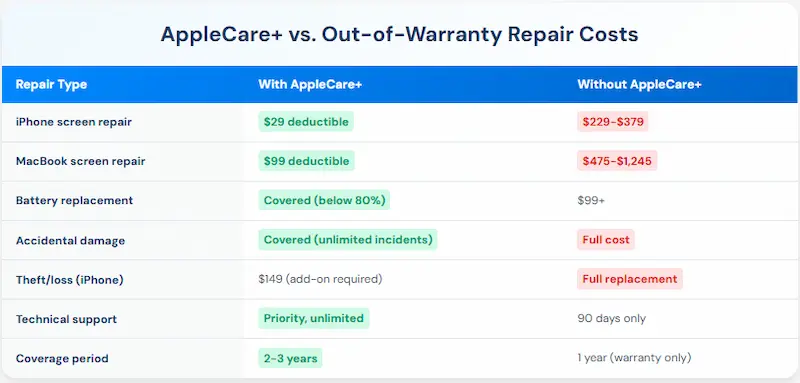
- Cost structure: Is there a monthly fee, an upfront payment, or both, and how do service fees compare?
- Service options: What happens when you actually need a repair, where do you go, and how long does it take?
- Claim limits: How many incidents are covered in a given period?
These are exactly the categories that distinguish one protection product from another, and they are the categories a buyer should compare side by side before committing. The exact answers for AppleCare+ and AppleCare One are the substance of Engadget's breakdown; what matters here is recognizing that the two products should not be evaluated as if they were identical.

Why Similar Names Cause Real Problems
Product naming in the technology industry has a long history of creating this kind of ambiguity. When a company extends an existing brand rather than inventing a new one, customers reasonably assume continuity. A plus sign suggests an upgrade, an enhanced tier, or an addition. A word like "One" suggests a unified or consolidated offering. Put those two names next to each other on a comparison page, and the natural instinct is to assume one is simply a better version of the other.
That instinct can lead people to make a purchase decision based on the label rather than the terms. The safer approach is to treat the names as arbitrary and focus entirely on what each plan provides. A buyer who does that will end up with coverage that actually fits their situation, regardless of which name sounds more premium.
How to Work Through the Choice for Yourself
Start with what you own
The right plan depends heavily on your device lineup. Someone carrying a single phone has a very different set of needs than someone managing a household with multiple phones, tablets, laptops, and wearables. Before comparing plans at all, list the devices you would want covered and note how old each one is. Eligibility rules often hinge on how recently a device was purchased, so age matters.
Think about how long you keep your hardware
Protection plans tend to make the most sense for people who hold onto devices for years rather than upgrading annually. If you replace your phone every twelve months, a long-term coverage commitment may not deliver much value. If you routinely keep a laptop for four or five years, the math changes considerably.
Compare total cost, not the sticker price
Monthly pricing is designed to look small. The meaningful figure is what you pay across the entire period you expect to be covered, plus any service fees you would owe if you filed a claim. Add those numbers up before deciding that one option is cheaper than the other.
Be honest about your risk profile
Some people drop their phones regularly; others have never cracked a screen. Protection is insurance, and insurance is worth paying for when the downside risk would genuinely hurt. If replacing a device out of pocket would be a serious financial problem, coverage carries more value. If it would be a minor inconvenience, the calculation is different.

What a Thorough Comparison Should Address
When reading any explainer on this topic, including Engadget's, it helps to check whether the following points are covered clearly:
- Which specific models and product categories each plan accepts.
- Whether coverage can be added after purchase, and for how long.
- Whether the plan is billed monthly, annually, or as a lump sum.
- What the service fee is for common repairs such as screen damage.
- Whether accidental damage is included or only manufacturing defects.
- How the plan interacts with existing warranty rights.
- What happens if you cancel, upgrade, or sell the device.
- Whether there are limits on the number of claims.
A comparison that answers all of these gives a buyer something actionable. A comparison that only says one is "better" does not.
The Bottom Line
The simplest way to approach the AppleCare+ versus AppleCare One decision is to stop thinking of them as versions of the same thing. They are two distinct options, and the right one depends on your devices, your budget, and your tolerance for repair costs. Engadget's post sets out to explain the difference directly, which makes it a useful starting point for anyone standing at that particular fork in the road. Read the terms carefully, run the numbers for your own situation, and choose based on coverage rather than on which name sounds more reassuring.
This article is based on reporting by Engadget. Read the original article.

Originally published on engadget.com