A homecoming that also serves as a warning about operational strain
The USS Gerald R. Ford Carrier Strike Group has returned to Naval Station Norfolk after a 326-day deployment, ending what the source describes as the longest deployment in more than five decades. The arrival closes a cruise that was repeatedly extended and redirected, turning what began as a routine deployment to Europe into a multi-theater demonstration of how hard the U.S. Navy is leaning on its carrier force.
In raw symbolic terms, the homecoming is easy to celebrate. Nearly 4,500 sailors came back after an unusually long stretch at sea. The strike group logged more than 57,000 nautical miles, over 5,700 flight hours, and more than 12,000 aircraft launches, according to the source text. Those numbers underscore both tempo and endurance, and on arrival Carrier Strike Group 12 was presented with the Presidential Unit Citation.
But beneath the ceremony is a more consequential story: modern carrier deployments are increasingly being shaped not by fixed schedules, but by cascading geopolitical demands that force the same assets to remain on station longer and operate across wider regions.
From scheduled deployment to crisis response asset
The Ford reportedly left Virginia nearly a year ago for what had been expected to be a conventional European deployment. That plan did not hold. The source says the carrier was redirected to the Caribbean in November ahead of Operation Absolute Resolve, then later crossed the Atlantic again to support pressure operations from the eastern Mediterranean and northern Red Sea during Operation Epic Fury against Iran.
This kind of rerouting illustrates why aircraft carriers remain central to U.S. military posture. They are mobile airfields, visible signals of national resolve, and rapidly repositionable tools for crisis management. When policymakers want immediate presence without relying entirely on host-nation basing, a carrier strike group is still one of the most flexible instruments available.
That flexibility, however, comes at a cost. Long deployments increase wear on ships, aircraft, and crews. They compress maintenance windows. They disrupt training cycles for follow-on units. And they place greater pressure on a force structure that already has to balance deterrence, readiness, and repair.
The Ford’s deployment shows both capability and dependence
The Gerald R. Ford is the lead ship of its class and is often presented as the most advanced aircraft carrier in the world. A deployment of this length and intensity offers a strong data point for the carrier’s operational utility. The ship was not simply present; it was repeatedly reassigned as strategic circumstances changed. In that sense, the cruise served as a real-world test of persistence under evolving mission demands.
Still, the same facts can support a less comfortable interpretation. If one strike group must cover multiple crises across two continents and multiple combatant commands, that suggests the Navy’s global obligations continue to outrun the slack in its deployment model. Carriers can do many things, but they cannot be everywhere without consequences.
That matters because deployments this long do not just affect one ship’s schedule. They ripple across the wider force. Other carriers returning from workups or routine operations may face adjusted readiness expectations. Maintenance sequencing can tighten. Future deployment dates can shift. A single extended cruise can become a planning problem for an entire fleet architecture.
The strategic signal is not only external
Carrier deployments are normally discussed in terms of deterrence toward rivals or reassurance toward allies. The Ford’s voyage certainly fits that pattern. Its movement from the Atlantic to the Caribbean and back toward the Mediterranean and Red Sea reflects how Washington uses naval power to respond visibly to fast-moving crises.
But these deployments also send an internal signal about force management. They reveal what national command authorities are asking the Navy to sustain, and what the Navy is willing or compelled to absorb. The record-setting length of the Ford’s deployment is therefore not just a milestone. It is evidence of a fleet being stretched by demand that does not fit neatly into peacetime rotation models.
For sailors and families, that reality is personal before it is analytical. Every extension changes timelines, disrupts planning, and raises the human burden of readiness. The enthusiastic homecoming in Norfolk reflects more than pride. It reflects relief.
What comes next for the carrier force
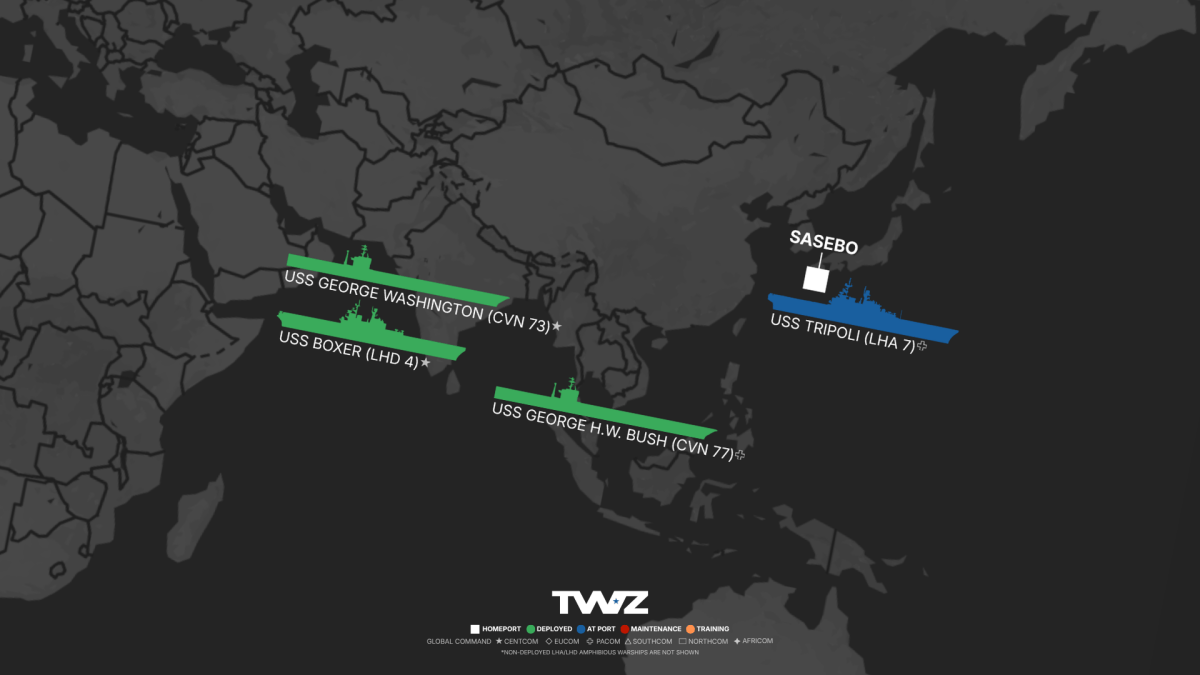
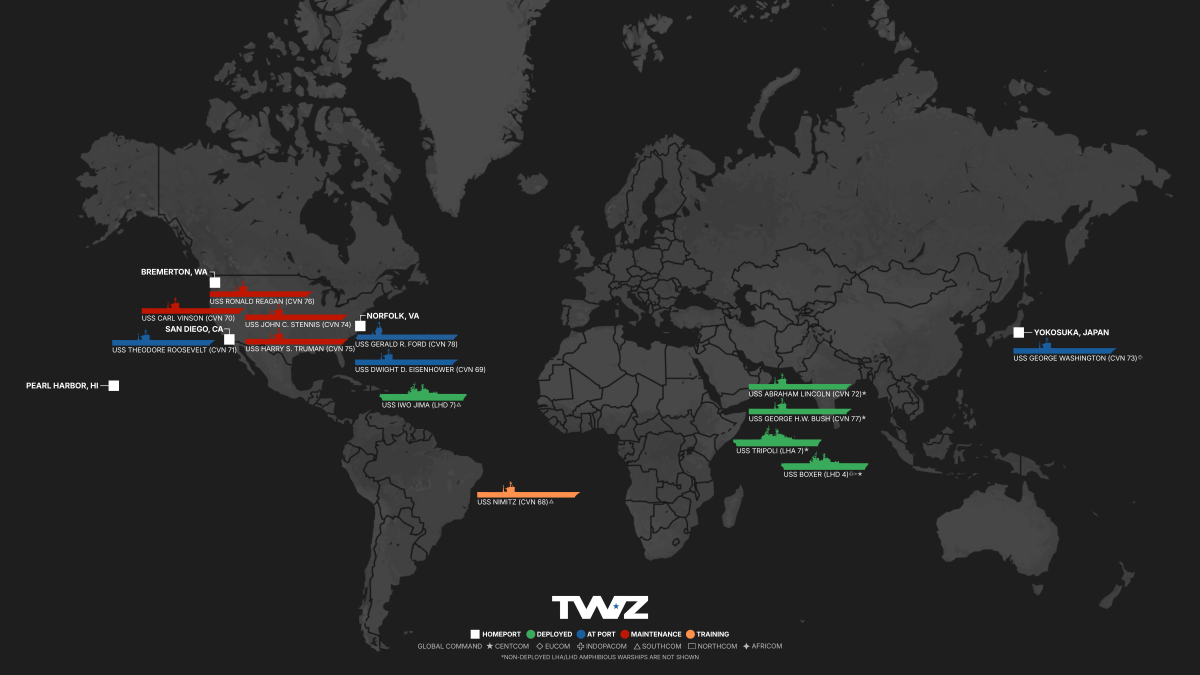
The source also notes that USS George Washington, USS Dwight D. Eisenhower, and USS Theodore Roosevelt returned to their homeports after routine operations and workups. That contrast is revealing. Those returns were comparatively uneventful, while Ford’s arrival carried the weight of a campaign history.
The larger question is whether the Ford experience will remain exceptional or become more normal. If the security environment continues to produce overlapping crises, long carrier deployments could become harder to avoid. In that case, the Navy will face renewed pressure to reconcile global ambition with maintenance realities and crew sustainability.
For now, Ford’s return stands as both an operational achievement and a case study in strain. The deployment demonstrated reach, adaptability, and sustained sortie generation. It also highlighted the degree to which U.S. naval power still depends on a relatively small number of highly demanded capital ships and the people who serve aboard them.
That dual meaning is what makes the deployment notable. It was a display of endurance, but also a reminder that endurance is not free. The Ford came home with honors. The harder task for Navy planners is ensuring that record-setting deployments do not become the default price of readiness.
This article is based on reporting by twz.com. Read the original article.
Originally published on twz.com