Britain sets a path for a new artillery fleet
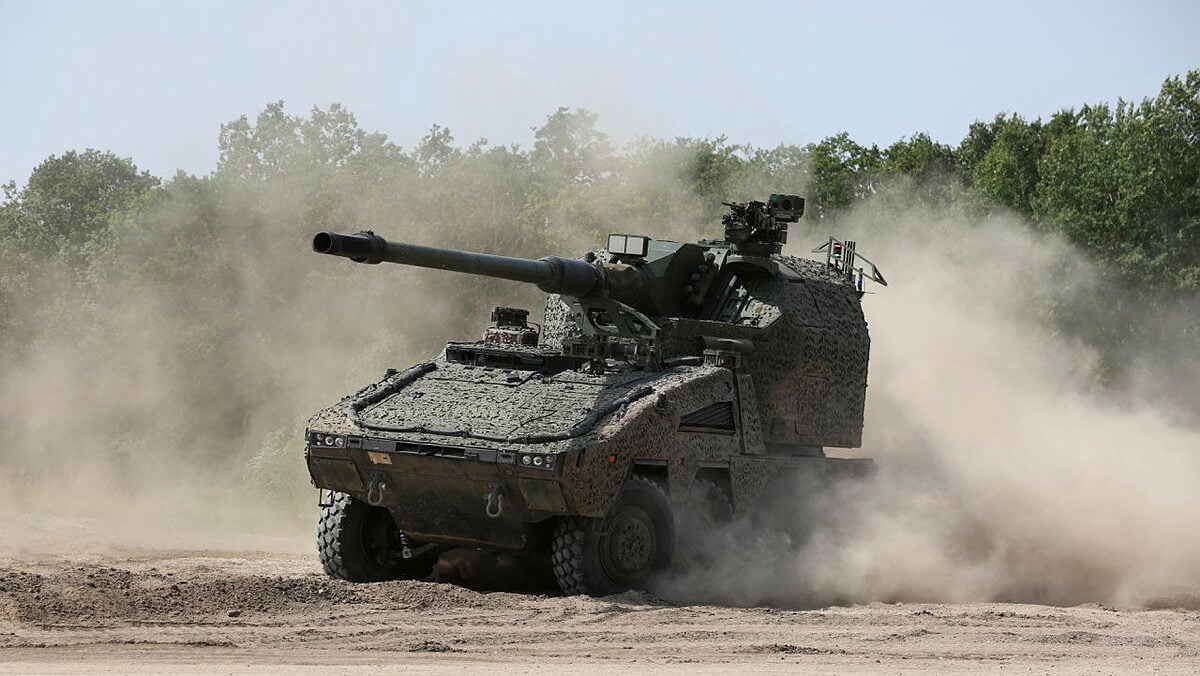
The UK has announced plans to procure 72 RCH 155 self-propelled howitzers under a future contract valued at close to £1 billion, a move that would restore a long-term close-support artillery capability for the British Army and deepen industrial cooperation with Germany.
According to the British Ministry of Defence, the first deliveries are expected to begin in 2028. The system combines a 155 mm remote-controlled howitzer turret with the Boxer armored vehicle platform, creating a highly automated mobile gun intended for modern land warfare and NATO interoperability.
The announcement is notable not only because of the scale of the order, but because it clears a decision that had been delayed while the UK’s Defence Investment Plan remained unfinished. With that bottleneck easing, the program now looks set to become one of the British Army’s major modernization efforts of the coming decade.
What the RCH 155 brings
The Ministry of Defence says the new platform can fire eight rounds per minute and strike targets at ranges of up to 70 kilometers. It also emphasizes the system’s automation. The turret can be operated from the protected crew compartment by just two soldiers, with advanced controls designed to reduce workload and speed employment.
Those attributes align with a wider trend in artillery procurement: longer range, lower crew burden, and faster digital operation. Artillery remains central to high-intensity conflict, but armies are increasingly looking for systems that can deliver firepower while improving survivability and mobility.
The UK is effectively buying into that model. The RCH 155 promises not only replacement capacity, but a more modern concept of operation than legacy tube artillery.
Filling a capability gap after AS90
The acquisition also addresses a specific British shortfall. The UK has lacked a durable long-term close-support artillery solution since it transferred AS90 systems to Ukraine in 2023. Sweden’s Archer system will continue to serve as an interim option until the RCH 155 begins operations.
That context matters. Recent European rearmament has been shaped not just by future planning, but by the immediate consequences of military aid to Ukraine. In Britain’s case, replacing donated systems while modernizing at the same time has become a central procurement challenge.
The RCH 155 appears designed to answer both needs at once: restore massed artillery capacity and do so with a platform oriented toward future battlefield requirements.
An international and industrial program
The Ministry of Defence said the deal will be contracted through the Organisation for Joint Armament Cooperation, or OCCAR, on behalf of the British Army to ARTEC, a joint venture involving KNDS and Rheinmetall. That structure places the purchase firmly inside Europe’s collaborative defense procurement architecture.
Industrial participation inside the UK is also central to the announcement. Rheinmetall’s large-caliber production site in Telford is set to manufacture the RCH 155 weapon system elements including the barrel, breech, recoil systems, and trunnions. British steel will be supplied through Sheffield Forgemasters. The Boxer drive module, including chassis, engine, and drivetrain, is to be manufactured by KNDS UK in Stockport.
That footprint gives the program a domestic industrial dimension that goes beyond simple importation. It ties the artillery buy to jobs, production capacity, and long-term sustainment inside Britain, all of which have become politically important features of major defense acquisitions.
Part of a broader UK-German alignment
The Ministry of Defence described the program as a joint effort between the British and German armies and linked it to the Trinity House agreement struck by the two countries in 2024. That language suggests the RCH 155 is meant to serve not only as a weapons purchase, but also as a practical expression of a deeper bilateral defense relationship.
For NATO, that matters. Standardization and cross-border industrial cooperation can improve logistics, training, and operational planning. For Britain and Germany, it also signals that land modernization is becoming a shared strategic project rather than a set of isolated national programs.
The RCH 155 therefore sits at the intersection of several priorities: rebuilding artillery, increasing automation, supporting domestic industry, and tightening European defense cooperation.
Why this order stands out
Artillery has re-emerged as one of the defining systems of European defense planning. The UK’s choice reflects that reality. By committing to 72 platforms and connecting the program to industrial support and training, Britain is not making a symbolic purchase. It is establishing the foundations of a future artillery force.
The questions that remain are mostly about execution: contract finalization, production pace, integration, and whether 2028 deliveries hold. But strategically, the direction is now clearer. The British Army is moving toward a more automated, longer-range artillery capability anchored in European partnership and domestic manufacturing.
- The UK plans to procure 72 RCH 155 howitzers under a future contract worth close to £1 billion.
- First deliveries are scheduled to begin in 2028.
- The system can fire eight rounds per minute to ranges of up to 70 kilometers.
- Production work is set to involve sites in Telford, Sheffield, and Stockport.
This article is based on reporting by Breaking Defense. Read the original article.
Originally published on breakingdefense.com