A Carrier as Backup Infrastructure
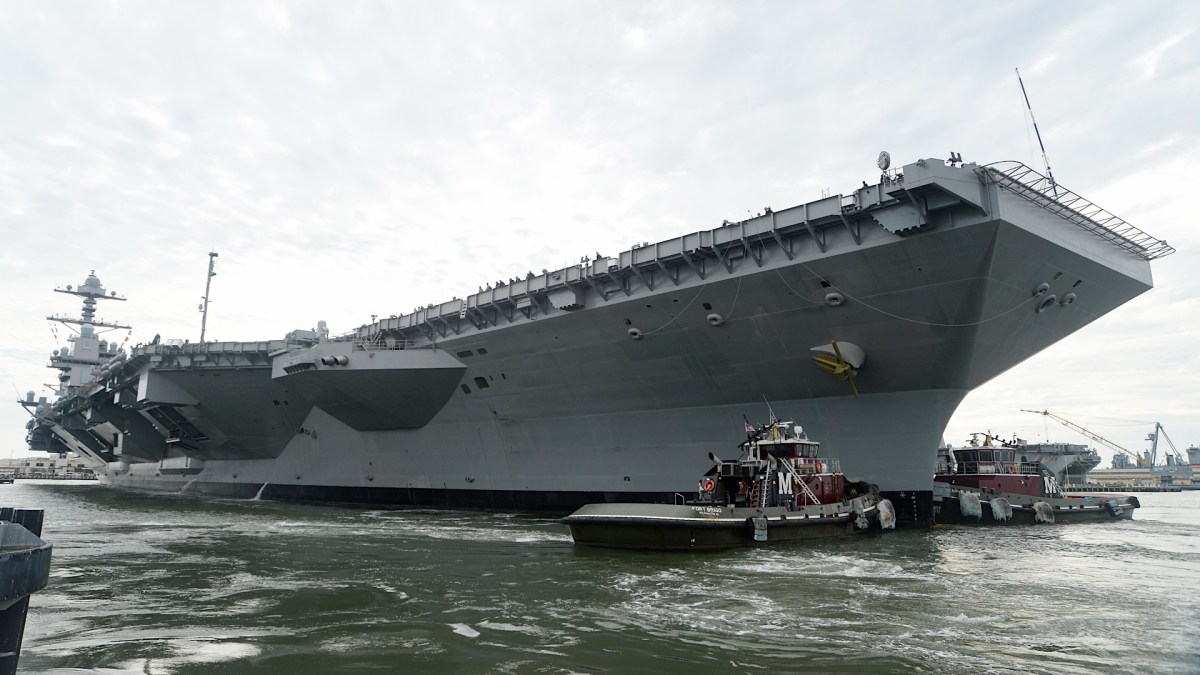
The U.S. Navy is preparing a demonstration that could expand how military planners think about both energy resilience and the wartime utility of major naval assets. This summer, the service plans to test whether the aircraft carrier USS Gerald R. Ford can send electrical power ashore to facilities at Naval Station Norfolk in Virginia.
The idea is unusual enough to draw attention, but the strategic logic is straightforward. Bases rely on stable power for communications, maintenance, logistics, security, and mission support. If those supplies are interrupted by an attack, a natural disaster, or another contingency, the consequences can extend well beyond inconvenience. The Navy says the test is part of a broader effort to ensure installations can retain firm baseload power under stressed conditions.
What the Navy Has Confirmed
Acting Secretary of the Navy Hung Cao publicly referenced the planned demonstration during a May 14 hearing before the House Armed Services Committee, saying that Norfolk Naval Base would be powered from an aircraft carrier and that the service would export energy from the ship to the base. Afterward, a Navy spokesperson told The War Zone that the Department of the Navy is pursuing a multi-pronged strategy to improve energy resilience and mission assurance across its installations.
According to that statement, one element of the plan is to deliver power from a Ford-class nuclear-powered aircraft carrier to a compatible shore installation in order to demonstrate a capability that could meet emergent, mission-critical needs. An initial test is planned for later this year at Naval Station Norfolk.
While the statement referred to the Ford class in general, USS Gerald R. Ford is the only ship of that class currently commissioned. It is also homeported in Norfolk, making it the obvious platform for the demonstration.
Why the Ford Matters
Ford is not just any warship. Its two A1B nuclear reactors make it one of the most powerful mobile energy platforms in the U.S. military. Aircraft carriers are designed first and foremost to project air power, but nuclear propulsion also means they generate large amounts of onboard electricity. Exporting some of that energy to shore would turn a core combat asset into an emergency utility resource.
Using ships to supply electricity ashore is not unprecedented. The War Zone notes that there is historical precedent for naval vessels serving this role. What makes the upcoming test noteworthy is the platform involved. A Ford-class carrier sits at the high end of naval complexity and power generation, and proving that it can support nearby installations could create additional options for crisis response.
Energy Resilience as a Defense Requirement
The military increasingly treats power continuity as a security problem rather than a facilities issue. Modern bases depend on dense digital systems and tightly coupled operations. A loss of electricity can degrade command functions, interrupt maintenance, hinder force movement, and create openings for adversaries during precisely the moments when resilience matters most.
That is why the Navy describes this work in terms of mission assurance. Resilient energy is not simply about reducing costs or modernizing infrastructure. It is about preserving the ability to operate during attack, infrastructure failure, or disaster. In that framework, a carrier tied into a shore grid is not an engineering novelty. It is a mobile contingency asset.
Potential Uses Beyond Norfolk
If the test succeeds, the implications could extend beyond a single installation. A proven ship-to-shore export capability could be relevant for other naval bases and, potentially, for disaster relief scenarios in which civilian infrastructure is heavily damaged. A nuclear-powered carrier positioned near a stricken coastal region would not replace a grid, but it could help sustain critical nodes of activity.
Operationally, the concept also underscores the flexibility of naval power. Large surface combatants and carriers are typically discussed in terms of deterrence, strike capacity, sea control, and logistics. But the Norfolk demonstration suggests the Pentagon is also looking at them as contributors to energy resilience inside the continental United States.
Constraints and Open Questions
The announcement leaves important details unresolved. The Navy has not publicly outlined how much power it expects to export, how long the test will run, or which shore facilities are considered compatible. It also remains unclear how quickly such a capability could be employed under emergency conditions, and what infrastructure would be required on both the ship and base side to enable routine use.
Those unknowns matter because demonstrations can prove technical feasibility without establishing operational practicality. A one-time export test is not the same as a durable emergency-power doctrine. Still, the service's public framing suggests that the exercise is tied to real planning needs rather than a purely symbolic technology showcase.
A Small Test With Larger Meaning
The planned Norfolk demonstration lands at the intersection of military readiness, civil infrastructure vulnerability, and the long-term consequences of electrified operations. For the Pentagon, keeping the lights on at a critical installation is no longer a background concern. It is increasingly part of force protection and continuity planning.
USS Gerald R. Ford has already drawn attention for the scale of its deployment history and the capabilities of the Ford class. This summer's energy-export test points to another possible role: not just as a launch platform for aircraft, but as a floating reserve of power for a military system that cannot afford prolonged outages.
If the Navy can make that capability work reliably, the carrier's reactors may become part of a broader answer to one of the defense establishment's quieter but more pressing questions: how to maintain operations when the infrastructure on land fails first.
This article is based on reporting by twz.com. Read the original article.
Originally published on twz.com