The U.S. Navy’s MQ-25A Stingray has reached a long-awaited production milestone. Acting Secretary of the Navy Hung Cao said the carrier-based unmanned aircraft system has received Milestone C approval, allowing the program to move into low-rate initial production. For the Navy, the decision is less about adding another drone to the inventory than about changing how carrier air wings manage range, fuel, and mission capacity.
What Milestone C unlocks
According to the Navy, a low-rate initial production Lot 1 contract for three aircraft is expected this summer. The service also outlined priced options for three Lot 2 aircraft and five Lot 3 aircraft. Those numbers are modest, but they represent the formal start of production for what the Navy describes as its first operational carrier-based unmanned aircraft.
Production decisions matter because they signal that a program has progressed beyond technology demonstration and developmental promise. In this case, the Navy is committing to fielding a system intended to operate as part of the carrier air wing, not simply to prove that unmanned operations at sea are possible.
The role the MQ-25 is meant to play
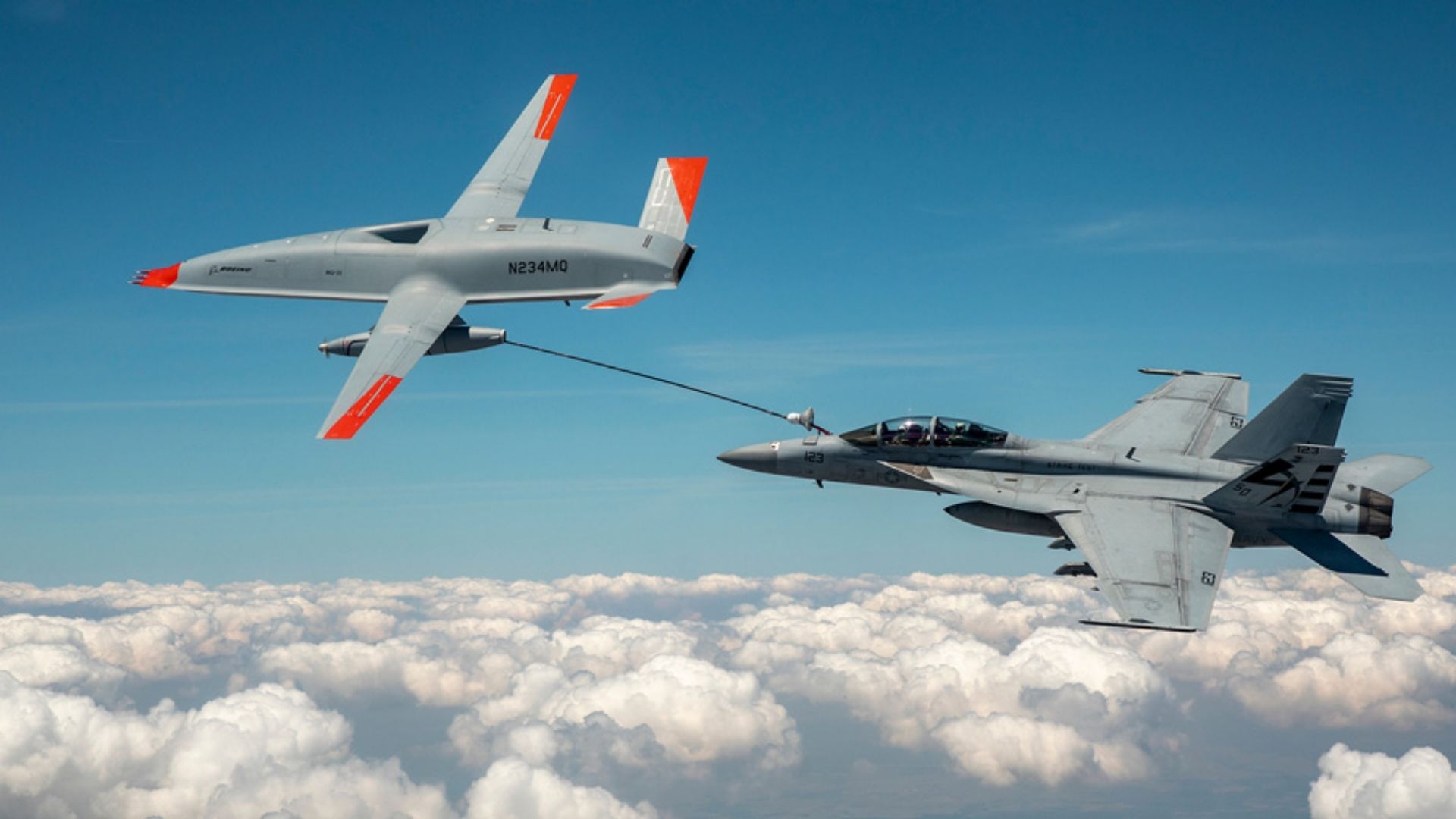
The Stingray’s primary mission is aerial refueling. That may sound less dramatic than strike or reconnaissance, but it addresses a practical limitation inside naval aviation. Today, F/A-18 Super Hornets often perform the tanker role, which pulls crewed fighters away from their strike mission. By shifting that burden to an unmanned platform, the Navy expects to extend the reach of the air wing while preserving high-end fighters for the jobs they were designed to do.
Cao framed the point directly, saying unmanned refueling extends U.S. reach against adversaries and increases the lethality of carrier strike groups. The idea is straightforward: every refueling mission handled by a dedicated drone can translate into more flexibility and more combat value from the rest of the wing.
The Navy has also said the MQ-25 may perform intelligence, surveillance, and reconnaissance missions. Even if refueling remains its core task, the platform’s eventual contribution could extend beyond one functional niche.
Recent flight progress helped clear the gate
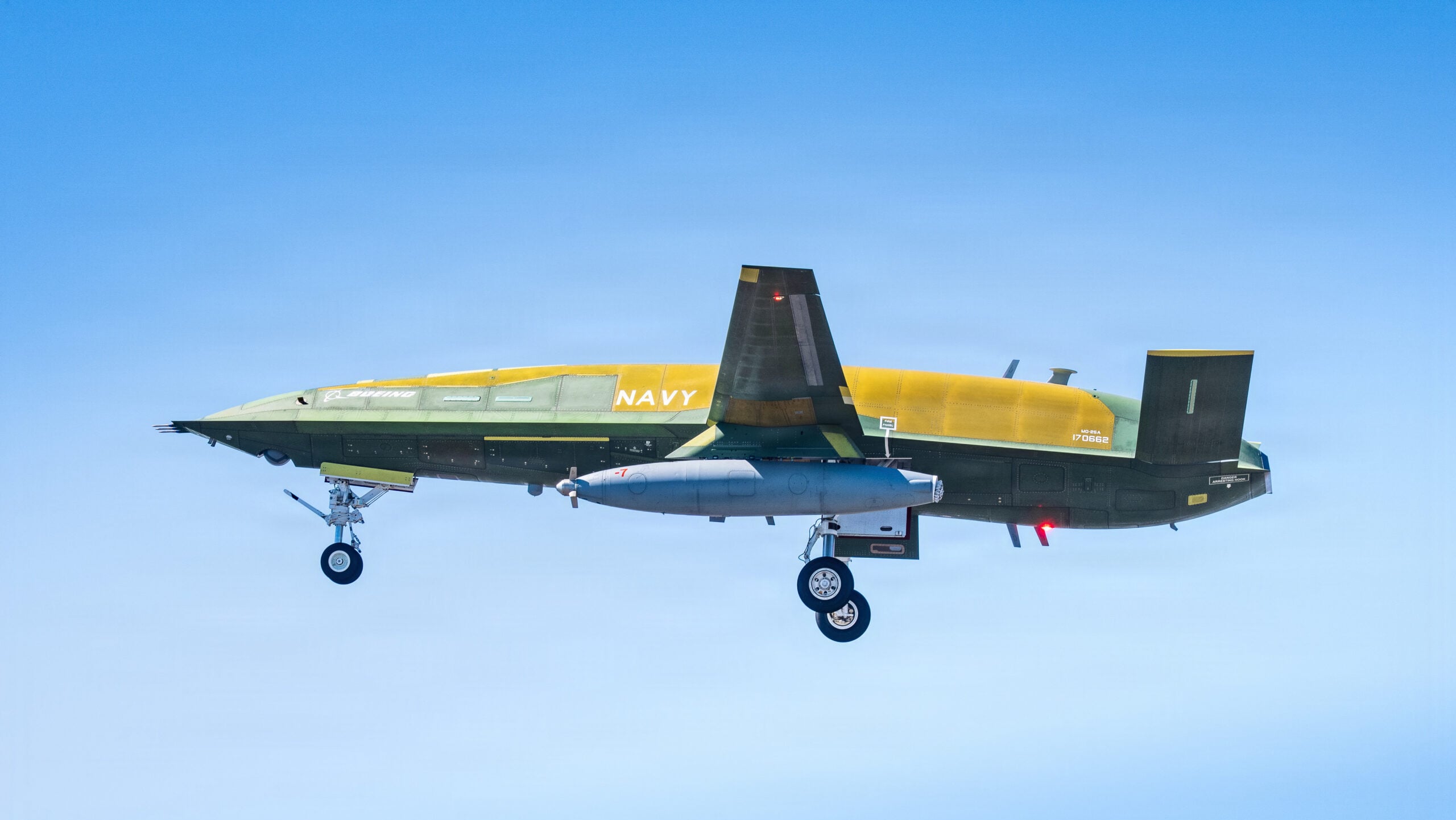
The production decision follows the first test flight of a production representative aircraft in April at Boeing’s facility at MidAmerica Airport in Mascoutah, Illinois. During that flight, the aircraft demonstrated autonomous taxi, takeoff, flight, landing, and responsiveness to commands from a ground control station, according to Boeing.
Those elements are especially important for a carrier aviation program. Autonomous behavior has to be reliable before the aircraft can move into more demanding environments. The next round of flights from MidAmerica Airport is expected before the aircraft heads later this year to Naval Air Station Patuxent River in Maryland, where the program will prepare for carrier qualifications.
Why this program matters strategically
The MQ-25 sits at the intersection of two military priorities: extending range in contested environments and integrating unmanned systems into frontline operations. Carrier strike groups remain central to U.S. naval power, but their survivability and relevance depend in part on how far their aircraft can project power without exhausting manned assets. A dedicated refueling drone addresses that challenge in an operationally concrete way.
It also serves as a proof point for future naval unmanned aviation. If the Stingray becomes a reliable part of carrier operations, it will reinforce the Navy’s ability to incorporate autonomous aircraft into highly constrained, high-risk environments. That does not mean the carrier air wing becomes unmanned overnight. It means one of the most complex military operating environments is beginning to absorb autonomous systems in a functional role.
Boeing called the aircraft game-changing, and the Navy’s own language suggests the service sees it as more than incremental. The real test, however, comes next: sustained production, flight testing, and carrier qualification. Milestone C is not the end of the story. It is the point at which the Navy’s tanker drone shifts from development program to fielding effort, with the fleet now closer to receiving a new capability designed to free manned fighters, extend operational reach, and reshape how carriers generate air power.
This article is based on reporting by Breaking Defense. Read the original article.
Originally published on breakingdefense.com