Toyota moves to expand the Hilux’s working range
Toyota is preparing a factory-backed gross vehicle mass upgrade for selected Australian-market Hilux 4x4 models, a change designed to push one of the world’s best-known midsize pickups deeper into heavy-duty commercial and recreational use. The update centers on payload, one of the main constraints that limits midsize trucks when owners try to carry trade equipment, building materials, or fully outfitted camping gear.
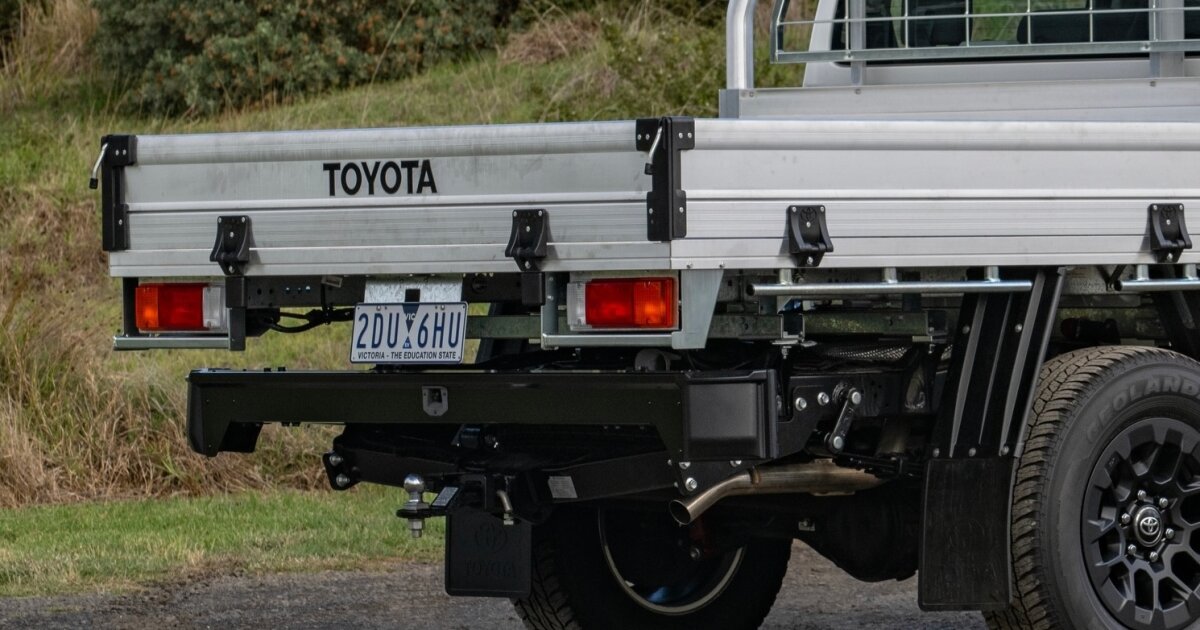
According to the supplied source text, the package will be offered on five Hilux 4x4 variants equipped with Toyota’s 2.8-liter turbo-diesel engine. Toyota Australia has shown a pre-production double cab-chassis version and described hardware changes that include longer rear shocks and higher-capacity front and rear axles. The implication is straightforward: rather than repositioning the Hilux with cosmetic trim or niche accessories, Toyota is focusing on one of the specifications that matters most to tradespeople and overland users who regularly operate near vehicle limits.
Why payload matters more than styling
In many markets, midsize pickups have become dual-purpose vehicles expected to commute during the week and haul serious loads on weekends. That has exposed a gap between rugged image and practical carrying ability. The source text frames payload as the category’s weak point, especially when owners add rooftop tents, recovery gear, water tanks, drawers, auxiliary batteries, or jobsite equipment. A truck can have off-road hardware and four-wheel-drive credibility, but if legal payload disappears once accessories and passengers are onboard, its usefulness narrows quickly.
This is the problem Toyota appears to be addressing. By increasing gross vehicle mass, the company is effectively trying to preserve the Hilux’s maneuverability and global durability reputation while giving buyers more freedom to use it as a true load-carrying tool. For commercial fleets, that can mean more efficient transport of supplies and equipment. For private buyers, it can mean less compromise when fitting canopies, slide-on camping systems, or expedition gear.
The source material contrasts the Hilux with midsize trucks sold in the United States, noting that many American buyers view the global-market Hilux as a more utilitarian platform. That comparison helps explain the product’s mystique, but the more important takeaway is that Toyota is continuing to lean into the Hilux’s work-first identity rather than diluting it.

A targeted upgrade, not a full redesign
The reported changes do not amount to a new-generation Hilux. Instead, Toyota is using a focused engineering package to extend the truck’s capabilities within its existing platform. That matters because it suggests a faster route to market and a clearer business case. A full redesign would require far more cost and lead time. A targeted GVM package lets Toyota answer a known customer demand with a smaller but potentially high-value intervention.
The five-model rollout also indicates Toyota is segmenting the offer rather than making it universal. That is consistent with how many pickup buyers use their trucks. Not everyone needs additional legal payload, and heavier-duty components can affect ride, cost, and positioning. By limiting the package to specific 4x4 diesel variants, Toyota can address buyers who are most likely to benefit without reshaping the entire lineup.
The Australian setting is also notable. Australia remains one of the world’s most demanding pickup markets, with buyers who routinely combine towing, long-distance travel, rough-surface operation, and commercial use. If Toyota sees enough demand there for a higher-capacity Hilux straight from the manufacturer, that is a useful signal about where the midsize truck market is heading more broadly.
What it says about the pickup market
The Hilux update reflects a wider shift in vehicle demand: buyers increasingly want multi-role machines that can bridge fleet duty, adventure travel, and personal transport. That often pushes midsize trucks into jobs once reserved for larger pickups, but without the same physical size or fuel penalty. The tradeoff has usually been payload. Toyota’s answer, at least in this case, is to strengthen the truck where the real-world pressure shows up first.
For competitors, the move underscores the continued value of practical engineering over lifestyle branding. Suspension travel, axle capacity, and legal carrying limits are less glamorous than large touchscreens or appearance packages, but they shape whether a pickup can actually perform the tasks buyers imagine for it. In commercial and enthusiast markets alike, that credibility can be decisive.
The source text also hints at why the Hilux continues to command such attention outside its home markets. Its appeal is tied not just to scarcity or diesel power, but to a reputation for straightforward utility. A payload-oriented upgrade strengthens that identity. It tells buyers that Toyota sees the Hilux not merely as a legacy nameplate to be maintained, but as a working platform worth refining for harder use cases.
Outlook
Toyota has not, in the supplied text, laid out every final specification or market detail for the package. What is clear is the direction: more carrying capacity, hardware changes to support it, and a deliberate push toward users who need a midsize truck that can do more without stepping into a full-size segment. If execution matches the intent, the upgraded Hilux could become especially attractive to buyers balancing worksite demands with off-grid travel ambitions.
In a market crowded with pickups that promise toughness, Toyota is making a more measurable claim. More payload is not a slogan. It is a capability that changes what owners can legally and practically do with the truck. That makes this Hilux update less about image than about extending the usefulness of a vehicle already known for durability.
This article is based on reporting by New Atlas. Read the original article.
Originally published on newatlas.com