A fragile surface test with broader industrial implications
Researchers at RMIT University have demonstrated a new way to apply ultraviolet-protective coatings using high-frequency sound waves, a method designed to be far gentler than the processes typically used to form covalent organic frameworks, or COFs. To prove just how delicate the approach can be, the team applied the coating to the leaves of a common houseplant, showing that harmful UV light could be blocked without interfering with photosynthesis.
That plant experiment is visually striking, but the larger story sits elsewhere. The technology is aimed at materials such as textiles, plastics, glass, and silicon, where durable, precise and non-damaging coatings are commercially useful. If the method can reliably tame the fussy chemistry of COFs and place them on vulnerable surfaces, it could expand how these highly engineered materials are used outside the lab.
Why covalent organic frameworks matter
COFs are porous crystalline materials often described as molecular scaffolding. Their structure can be engineered to absorb light, trap chemicals, or shield surfaces, making them attractive for applications that require selectivity and fine control. In theory, they are versatile. In practice, they have been difficult to deploy broadly because the precursor materials that assemble into COFs are notoriously sensitive during fabrication.
That sensitivity has kept many COF applications confined to laboratory settings. Conventional methods can involve harsher conditions or less precise deposition techniques, limiting how easily the materials can be transferred onto delicate biological surfaces or thin industrial substrates. The RMIT team’s contribution is therefore less about inventing a new class of material than about finding a more workable way to handle one that already holds promise.
How the sound-wave process works
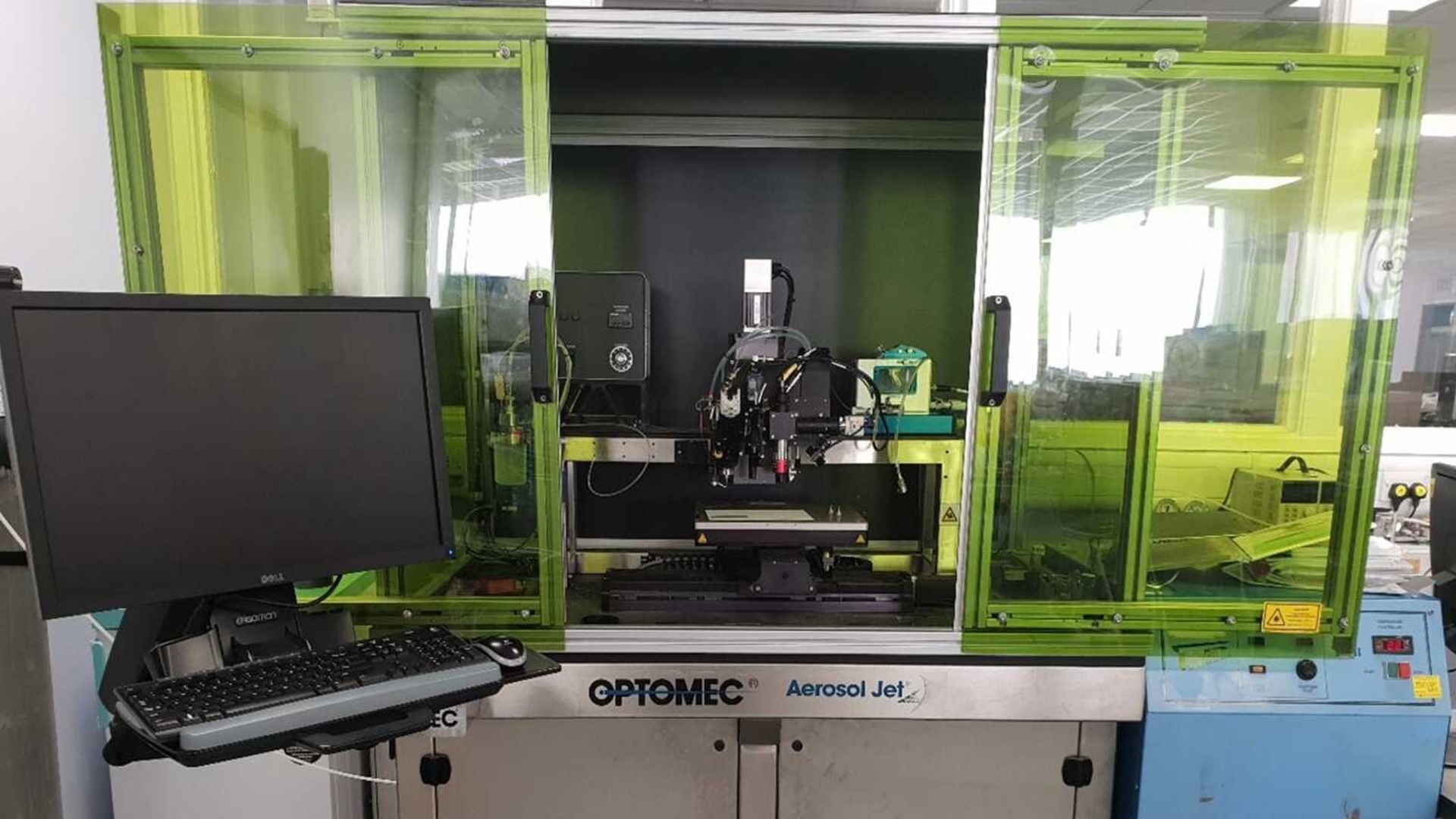
According to the source text, the process uses high-frequency sound waves to destabilize a liquid and generate a fine mist of micrometer-sized aerosol droplets. Those droplets then help create a thin COF-based layer across the target surface. On the plant leaves used in the proof of concept, that layer acted like a microscopic sunscreen: it absorbed harmful ultraviolet light while allowing visible light through, enabling the leaves to continue photosynthesizing.
Lead author Javad Khosravi Farsani said the coating blocks UV while still transmitting the wavelengths the plant needs. That balance is central to the demonstration. A protective layer is only useful if it does not damage or disable the thing it is meant to protect. The plant test therefore serves as a demanding benchmark for process gentleness as much as for optical performance.
The researchers described the result as evidence that COFs can function as protective coatings on plant leaves for solar ultraviolet shielding, highlighting a possible path toward real-world deployment across devices, biological systems and environmental interfaces.
Where the commercial interest could emerge
The most immediate significance may lie in manufacturing rather than agriculture. If the same deposition method can be adapted to textiles, plastics, glass and silicon, it could open new options for UV management on products where lightweight, ultra-thin and uniform coatings are valuable. A gentle aerosol-based process may also make it easier to coat surfaces that would be damaged by more aggressive fabrication methods.
That matters because protective materials increasingly need to do more than simply block light. They must often preserve transparency, flexibility, conductivity, or surface function at the same time. A coating platform that can be tuned while remaining mild enough for fragile substrates could therefore be useful in areas ranging from wearables to specialty packaging and sensitive optical systems.
The RMIT work also suggests a route for moving COFs from being interesting materials to usable manufacturing ingredients. Many advanced materials stall at that transition point. They perform well in controlled experiments but lack a practical deposition or integration process. By focusing on how to place the material, not just how to synthesize it, the researchers are addressing one of the main reasons promising materials fail to travel.
An enabling technique worth watching
There is still a distance between proof of concept and industrial deployment. The source material does not claim large-scale production, long-term durability across multiple product classes, or a completed commercialization pathway. Those are substantial hurdles. But the work is notable because it tackles a recurring bottleneck in materials innovation: translating high-performance chemistry into a process that can survive contact with the real world.
The plant demonstration is an elegant shorthand for that ambition. If a COF coating can be formed on a living leaf without shutting down photosynthesis, the technique may indeed be gentle enough for a wider family of sensitive materials. For industries looking for new ways to manage UV exposure without sacrificing function, that is a meaningful proposition. The breakthrough here is not just the sunscreen effect. It is the emergence of a softer, more controllable way to build protective layers where rougher methods would fail.
This article is based on reporting by refractor.io. Read the original article.
Originally published on refractor.io