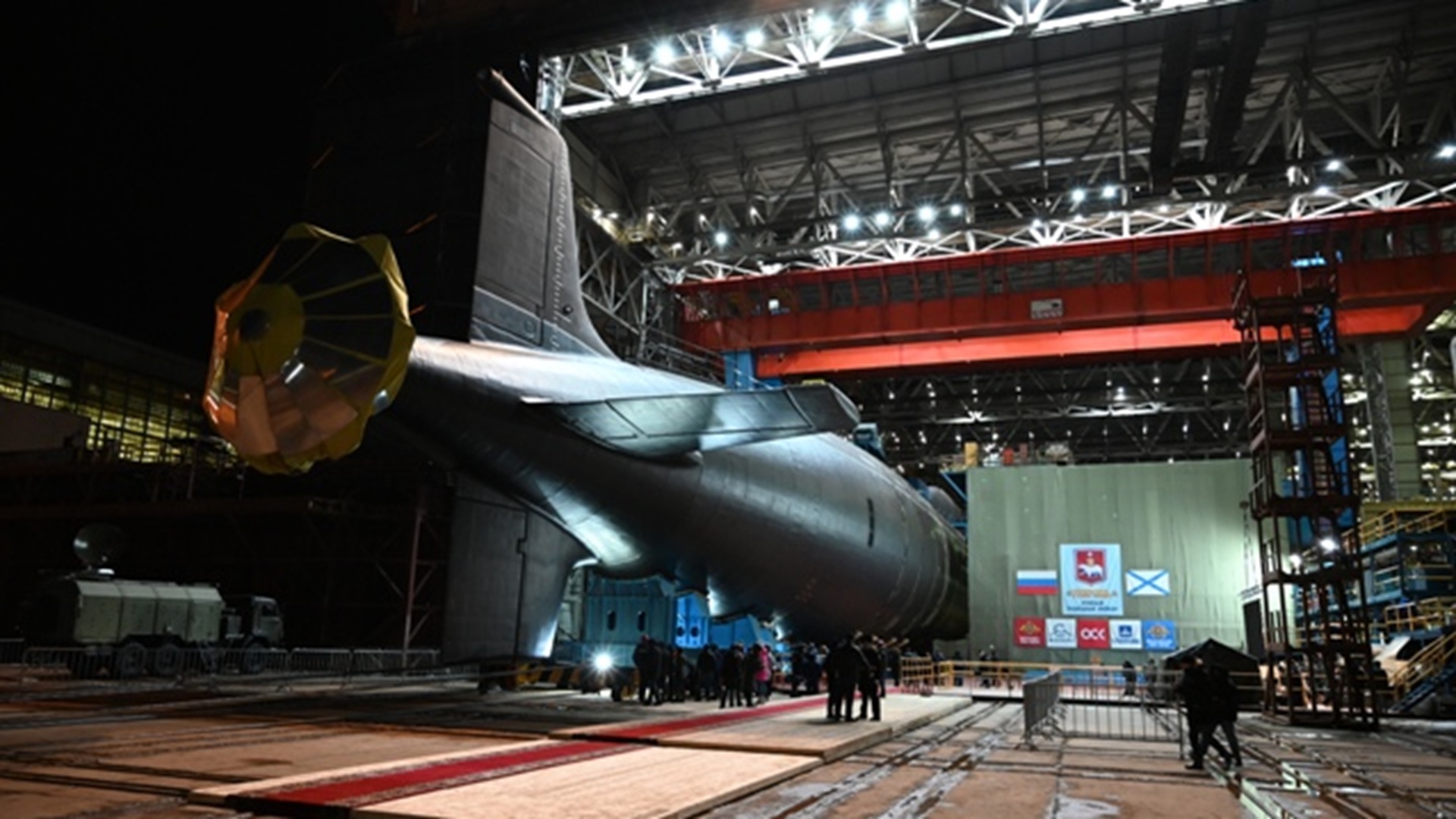
Russia puts Perm submarine into service
Russia has formally commissioned the Perm, a nuclear-powered multipurpose submarine that Moscow says is equipped with hypersonic Zircon missiles. The vessel’s entry into service adds a new platform to Russia’s naval forces and highlights the country’s continuing emphasis on long-range strike capabilities carried beneath the sea.
The commissioning was reported as a formal move rather than a test or proposed future deployment. Russia characterizes Perm as the first multipurpose submarine fitted with Zircon missiles, linking the boat to one of the country’s most prominent hypersonic weapons programs.
What the announcement establishes
The reported vessel is a 13,800-ton nuclear submarine. Its nuclear propulsion is significant because it supports the endurance and range expected of a submarine intended for extended operations. The report identifies Perm as a multipurpose design, a term generally used for boats able to undertake more than one naval role rather than being limited to a single mission.
The specific capability emphasized in the announcement is its Zircon missile armament. Moscow’s description places the submarine at the intersection of two longstanding priorities: a nuclear-powered undersea fleet and the deployment of weapons it classifies as hypersonic.
A shift from development to service
Commissioning matters because it signals that a vessel has moved from construction and preparation into formal naval service. It does not, by itself, disclose where the submarine will operate, how many missiles it carries, or what missions it will receive. Those details were not provided in the supplied report.
Still, the step provides a concrete marker for the Zircon program’s integration with submarine forces. The announcement is centered on a submarine entering service with the missile system, not merely on a missile test or a construction milestone.

Why the Zircon claim draws attention
Hypersonic weapons are typically discussed for their ability to travel at very high speed and complicate defensive planning. Russia has repeatedly promoted Zircon as a hypersonic missile. Placing such a weapon on a nuclear-powered submarine potentially expands the ways it could be positioned and employed, compared with a land-based or surface-ship launch platform.

Submarines are valued for concealment and mobility. A nuclear-powered boat can sustain operations without the same fuel limitations associated with conventional propulsion. Combined with a missile designed for rapid flight, that pairing is intended to give planners a survivable strike option and give opponents another class of platform to track.
The available report does not independently detail the missile’s performance, operational range, payload, targeting process or readiness status. It also does not state how Russian claims about the missile’s characteristics have been independently verified. The commissioning announcement should therefore be read as confirmation of Russia’s stated deployment decision, rather than as a complete technical assessment of the weapon system.
Broader naval significance
For Russia, putting Perm into service is a reminder that submarine modernization remains a core component of naval strategy. Nuclear-powered multipurpose submarines can be used for a range of missions, including operations against surface vessels and land targets, depending on their weapons and tasking. The report does not specify Perm’s assigned fleet, patrol area or initial deployment schedule.
The development also matters beyond the submarine itself. Integrating a weapon into a service platform can require training, maintenance, command-and-control procedures and support infrastructure. The public announcement offers no detail on those elements, but a formal entry into service indicates that Russia is presenting the boat as part of its operational force rather than as an experimental asset.
Important unanswered questions
- The announcement does not specify Perm’s home port or operational area.
- It does not state the number of Zircon missiles the submarine carries.
- It does not describe the vessel’s first mission or deployment timetable.
- It provides no detailed account of the missile system’s operational configuration aboard the boat.

What to watch next
The clearest next indicators will be evidence of Perm’s operational activity, further official disclosures about its weapons fit, and whether Russia describes additional submarines as receiving the same missile capability. Any future deployment announcements would help clarify how Moscow intends to use the combination of nuclear propulsion and Zircon armament.
For now, the key development is straightforward: Russia says Perm has entered service as a nuclear-powered multipurpose submarine equipped with Zircon missiles. The announcement turns a weapons-integration claim into an officially declared fleet milestone, while leaving many practical details undisclosed.
This article is based on reporting by Interesting Engineering. Read the original article.
Originally published on interestingengineering.com


