An Ancient Material in Modern Chips
Glass has been a fundamental human material for thousands of years. Now it is poised to find its way into the AI chips used in the world's most advanced data centers—not as a container or a window, but as the structural foundation on which processor dies are mounted and interconnected. A South Korean company called Absolics is beginning commercial production of specialized glass panels designed for use as advanced packaging substrates, and analysts believe this technology could reduce the energy demands of AI computing by meaningful amounts while enabling higher performance.
Intel is among the major chip companies pushing forward in glass substrate technology, alongside others experimenting with the material as a replacement for the organic resin-based substrates that currently serve as the backbone of most computer chips. The transition, if successful, would represent one of the more significant materials innovations in semiconductor packaging in decades—comparable in importance to the shift from wire bonding to flip-chip packaging that transformed chip performance in the 1990s.
What Chip Substrates Do
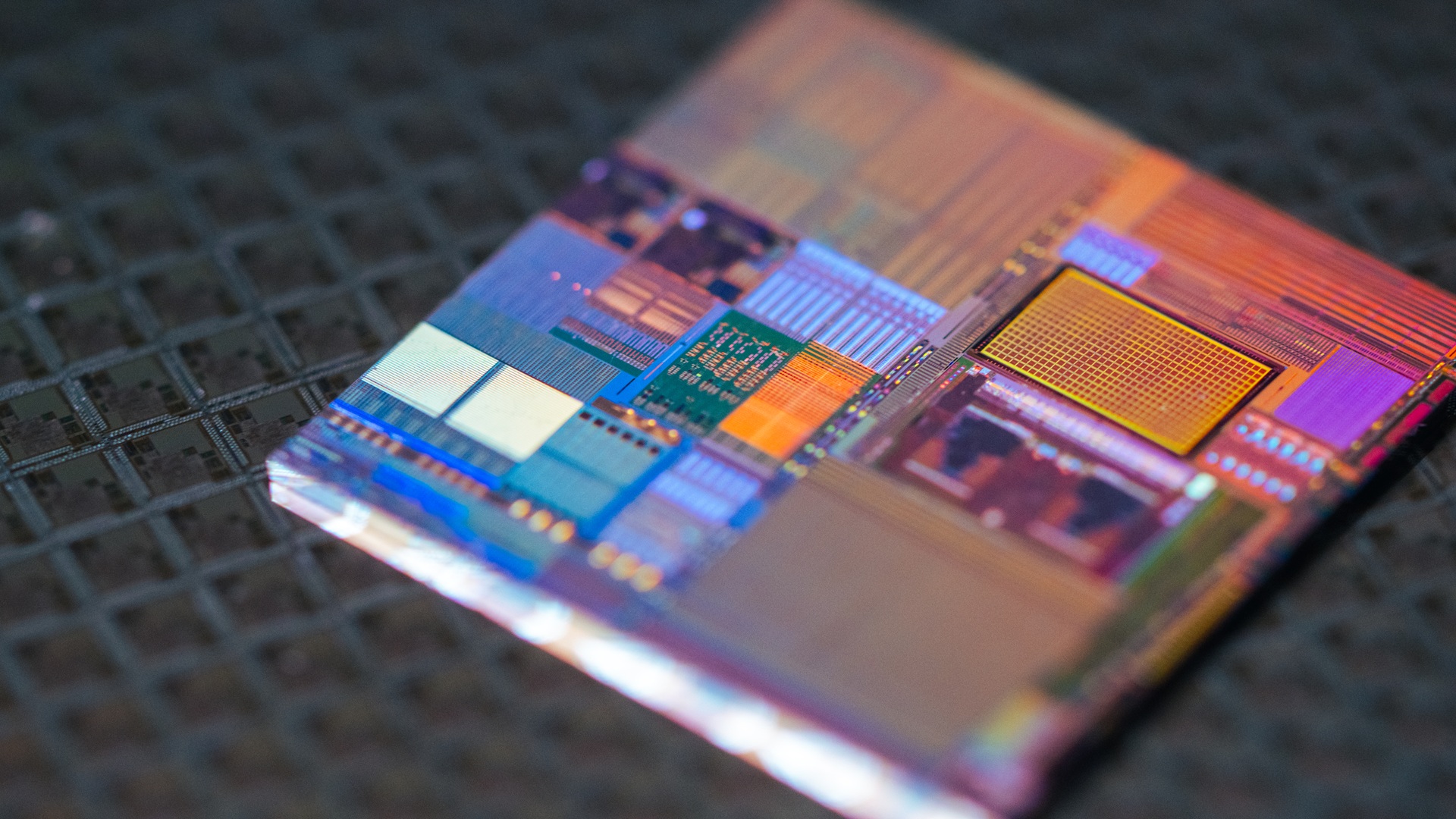
A chip substrate is the layer on which a semiconductor die is mounted and through which it connects to the circuit board below. Substrates serve multiple functions simultaneously: they provide mechanical support, conduct heat away from the chip, and carry the dense network of electrical connections that link the processor to memory, power circuits, and other components.
Current organic substrates—made from a combination of glass fiber and epoxy resin—are effective but have significant limitations. They expand and contract with temperature changes in ways that can stress the fine connections between chip and substrate. Their electrical properties limit how tightly connections can be packed and how quickly signals can travel. And they become mechanically warped during manufacturing, complicating the assembly of the densest modern chip packages.

Why Glass Is Different
Glass substrates offer several properties that address organic substrates' limitations. Glass expands and contracts much less with temperature changes than organic materials, reducing the thermal stress that causes solder joint failures over time. Glass can be produced with much higher dimensional precision—flatter, more uniform—than organic substrates, enabling tighter tolerances in chip mounting and reducing the number of defective packages.
Most importantly for AI applications, glass enables much higher density interconnection than organic alternatives. Smaller holes—called through-glass vias—can be created in glass than the through-silicon or through-organic vias used in current packaging, allowing more connections to be packed into less space. More connections mean faster data transfer between the processor and its memory, which is currently one of the primary bottlenecks limiting AI chip performance.
The Energy Efficiency Angle
AI data centers consume enormous amounts of electricity—a single large language model training run can consume as much power as thousands of homes over weeks. A significant fraction of that energy is consumed not in computation itself but in moving data between processors and memory. The fundamental limitation is that data transfer through electronic connections dissipates energy as heat proportional to the distance traveled and the number of connections traversed.
Tighter interconnection enabled by glass substrates reduces the distance data must travel and enables lower-voltage signaling, both of which reduce energy per bit transferred. If glass packaging can reduce interconnect power consumption by even 20-30 percent, the aggregate impact across millions of data center chips would be substantial—both in energy savings and in the reduced cooling infrastructure required to remove waste heat.

The Manufacturing Challenge
Glass substrates are not without manufacturing challenges. Glass is brittle and requires different processing techniques than organic materials. Creating the precise through-glass vias needed for high-density interconnection requires laser drilling and chemical etching processes that are more complex than analogous steps in organic substrate manufacturing. And building the supply chain—glass production, via formation, metallization, and assembly—from scratch is a multi-year industrial effort.
Absolics's entry into commercial production represents the first time glass substrates have been available at industrial scale, not just as research demonstrations. Intel's investments in the technology, which the company has publicly discussed as part of its roadmap to regain semiconductor leadership, provide both validation and a major potential customer for the emerging supply chain.
The Roadmap
Industry analysts expect glass substrates to appear first in the highest-performance AI accelerator chips, where the performance and efficiency benefits justify the premium manufacturing cost. As the supply chain matures and volumes increase, costs should decline, eventually making glass substrates competitive with organic alternatives in a broader range of applications.
If the technology proves out at scale, it could become a standard element of the chip packaging stack used in AI accelerators, high-performance CPUs, and eventually consumer electronics over the next five to ten years—another example of a niche industrial material becoming ubiquitous through the demands of high-performance computing.
This article is based on reporting by MIT Technology Review. Read the original article.

Originally published on technologyreview.com