Affordable hardware is starting to absorb premium creator features
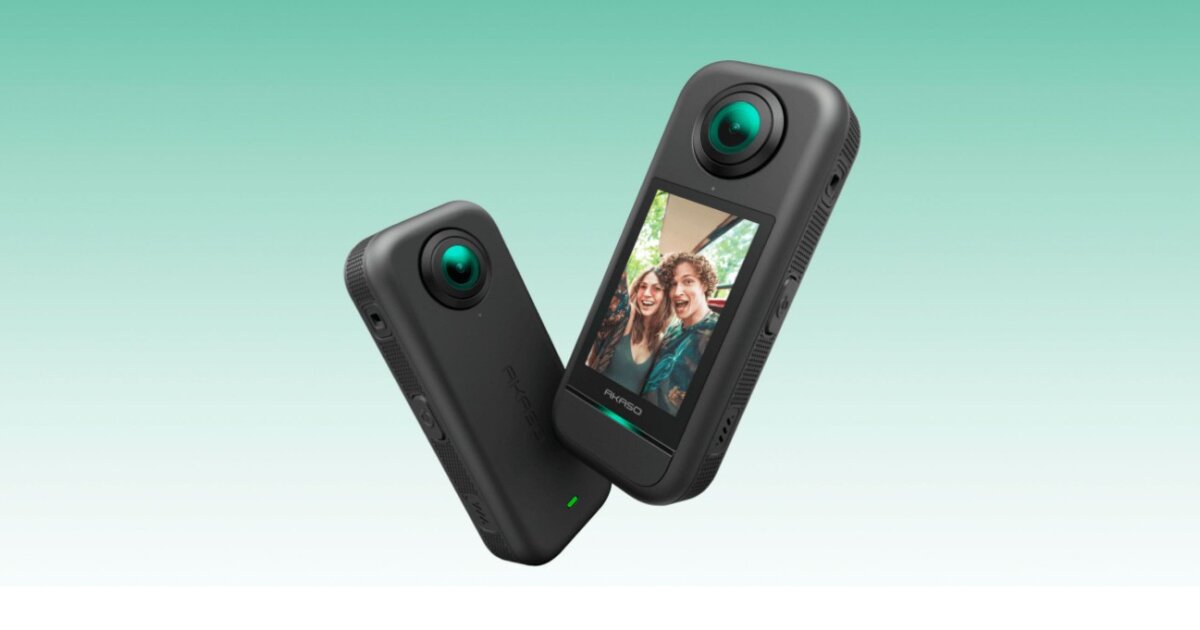
The latest action-camera review from New Atlas is nominally about a single device, the Akaso 360. But the more interesting story is not the product itself. It is what the device suggests about where creator hardware is going. A feature set once associated with pricier 360-degree cameras is now being pushed into a lower-cost product aimed at beginners, with a retail price described at roughly $212 to $250 depending on accessories.
That matters because imaging categories often expand not when the best device improves, but when a capable-enough version becomes accessible to people who previously could not justify the cost. In this case, the review frames the Akaso 360 as a budget alternative to more established premium options, especially for users who want the advantages of 360 capture without paying well above $400.
The appeal of 360 capture
Action cameras have a basic problem: framing is hard in motion. Mounted to a helmet, chest, or stick, a conventional camera can miss the shot entirely. The result may be exciting footage, or it may be unusable video of the sky, the ground, or whatever happened to dominate the frame at the wrong moment.
That is the promise of 360 systems. Instead of betting on a single angle while recording, users capture the full scene and decide later which view to publish. The workflow described in the review is “shoot first, frame later,” and that phrase captures why the category has staying power. It turns a live production problem into a post-production choice.
For experienced users, that convenience can justify higher prices. For new users, cost has remained a major barrier. That is why a lower-priced model is significant even if it does not dethrone category leaders on every technical metric.

What the Akaso device offers
According to the review, the camera uses fisheye lenses on both the front and back to record two hemispherical images that the company’s software then stitches into a single global image. The hardware weighs 180 grams and includes a touchscreen and a responsive shutter button. The broader point is that the core 360 workflow is now being delivered in a package meant for first-time buyers rather than only for dedicated enthusiasts.
The review positions the Akaso 360 as comparable in features and performance to more expensive devices in the Insta360 X series, which it says appears to have inspired the product. That does not prove parity across every use case, but it does show how quickly design expectations propagate through consumer electronics once a category matures.
In other words, the premium segment does the expensive work of defining the product concept, and later entrants compress that concept into lower price bands. That is a familiar pattern in smartphones, drones, and wearables. It now appears to be happening more clearly in 360 action cameras too.
Why this is an innovation story, not just a gadget review
Innovation is not only about unprecedented inventions. It is often about diffusion: the process by which specialized capabilities become widely usable. By that standard, a cheaper 360 camera for beginners is meaningful. It suggests that immersive capture is shifting from enthusiast territory toward mainstream creator tooling.
This matters for more than vacation videos. Lower-cost spherical capture can influence sports footage, outdoor documentation, small-team media production, and social content workflows. When more people can capture an entire environment and reframe later, editing gains importance relative to camera placement. The creative bottleneck moves downstream.
That shift also aligns with broader trends in computational imaging. More of the value in modern cameras comes from software-assisted reconstruction, stitching, selection, and output. The Akaso device, as described, relies on algorithms to combine the two fisheye images into one navigable result. The hardware is only part of the user experience. The rest is software turning raw capture into something flexible and publishable.
Limits remain
A budget device is still a budget device. The source material presents the camera as a beginner-oriented product, not a definitive new benchmark for professionals. Price compression usually comes with tradeoffs, whether in image quality, software polish, accessories, durability, or low-light performance. The review framing itself implies that the comparison standard remains higher-end products.
There is also a broader market question. Making a feature cheaper does not automatically make it mainstream. Users still need editing tools, sharing formats, and reasons to prefer reframed 360 footage over simpler conventional video. Some technologies plateau after novelty fades. Others become standard once cost drops enough and workflows simplify. The category is still negotiating that line.
The larger signal
Even with those caveats, this product points to a familiar but important phase in consumer innovation. A once-premium capability is being reorganized around access rather than aspiration. That can expand the market, pressure incumbents, and normalize a new creative habit.
The Akaso 360 may or may not become a defining product in its category. But the review shows that the economics of 360 capture are changing. For beginner creators, the question is becoming less “Can I afford to try this format?” and more “Is this the workflow I want?” That is a different kind of threshold, and it is usually the one that matters when a technology starts moving from niche adoption toward broader use.
This article is based on reporting by New Atlas. Read the original article.

Originally published on newatlas.com