Turning Pollution Into Robots
Every year, petroleum refining generates tens of millions of metric tons of elemental sulfur as a byproduct. The vast majority of this sulfur is stockpiled in enormous blocks near refineries or used in limited industrial applications like fertilizer production. It represents one of the oil industry's most visible waste management problems.
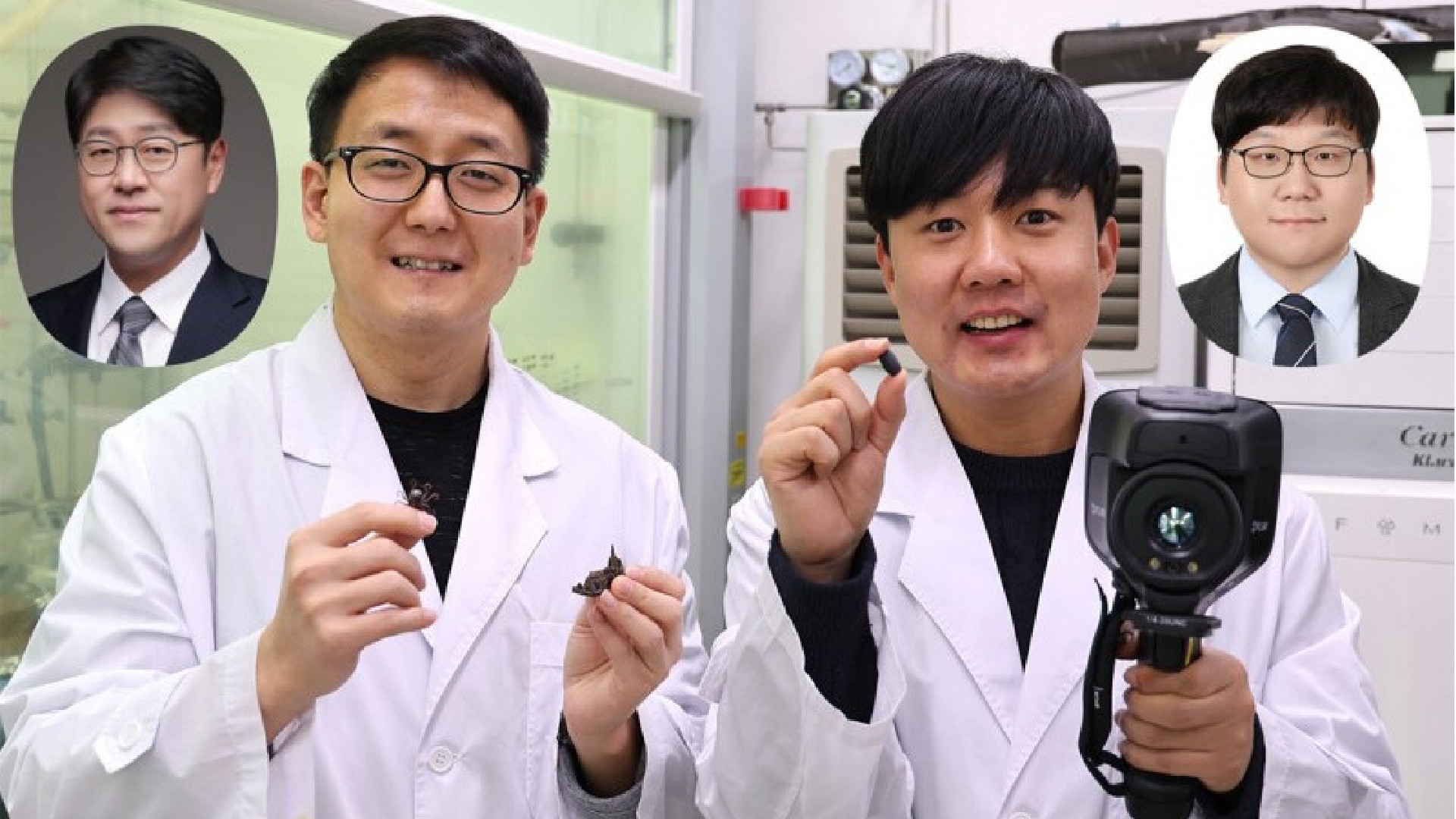
A Korean research team has found a way to transform this industrial waste stream into self-moving, fully recyclable soft robots. Using a 4D printing method demonstrated for the first time, the team led by Dr. Dong-Gyun Kim of the Korea Research Institute of Chemical Technology, Professor Jeong Jae Wie of Hanyang University, and Professor Yong Seok Kim of Sejong University has produced a new class of material that brings together sustainability and cutting-edge robotics in an unexpected combination.
What Is 4D Printing?
Standard 3D printing produces static objects — shapes fixed after the printing process. 4D printing adds a fourth dimension: time. Objects created through 4D printing are designed to change their shape, structure, or properties after fabrication when exposed to specific environmental triggers. The result is a printed object that is not a finished product but a programmed material that behaves dynamically in response to its environment.
The Korean team made this possible by engineering a new class of sulfur-rich polymer called poly(phenylene polysulfide) networks, or PSNs. These polymers are synthesized from elemental sulfur and small aromatic molecules through a reaction called inverse vulcanization — a process that converts sulfur's unstable, crystalline form into a stable, amorphous polymer with programmable mechanical properties.
How the Robots Move
The PSN materials are stimuli-responsive — they change their physical dimensions or mechanical behavior when exposed to external triggers. The team demonstrated response to three different stimuli: heat, light (through photothermal conversion), and magnetic fields when mixed with magnetic nanoparticles.
By designing the geometry of 4D-printed PSN structures and choosing where different material compositions are placed within those structures, the researchers can program specific deformation sequences — the robot curls when heated, straightens when cooled, bends toward a magnetic field. These programmed mechanical behaviors, combined with the material's capacity for large, reversible deformation, produce autonomous locomotion when the robot is placed in an appropriate environment.
The Recyclability Advantage
One of the most commercially and environmentally significant properties of PSN-based soft robots is their recyclability. Unlike conventional elastomers used in soft robotics, PSN networks contain dynamic covalent sulfur-sulfur bonds that can be cleaved and reformed under appropriate conditions. A damaged or end-of-life PSN robot can be dissolved, reprocessed, and reprinted without significant material loss — a genuinely circular material lifecycle.
The combination of a waste-derived feedstock and a recyclable material lifecycle gives the PSN platform a sustainability profile unusual in advanced materials research. Most high-performance materials involve rare or difficult-to-recycle components; the PSN approach builds performance from an abundant waste stream and preserves that material in a recoverable form throughout the product lifecycle.
Potential Applications
Soft robotics — robots built from compliant, deformable materials rather than rigid structures — have applications where conventional robots are unsuitable. Minimally invasive medical devices that navigate through body cavities, grippers that handle delicate objects without damage, inspection robots that pass through irregular confined spaces, and search-and-rescue robots that deform to fit through rubble are all active soft robotic development areas. The PSN platform's autonomous responsiveness to environmental stimuli, combined with its recyclability and waste-derived feedstock, positions it as a potentially significant contribution to this field.
This article is based on reporting by Interesting Engineering. Read the original article.
Originally published on interestingengineering.com