चट्टानें जो वहां नहीं होनी चाहिए
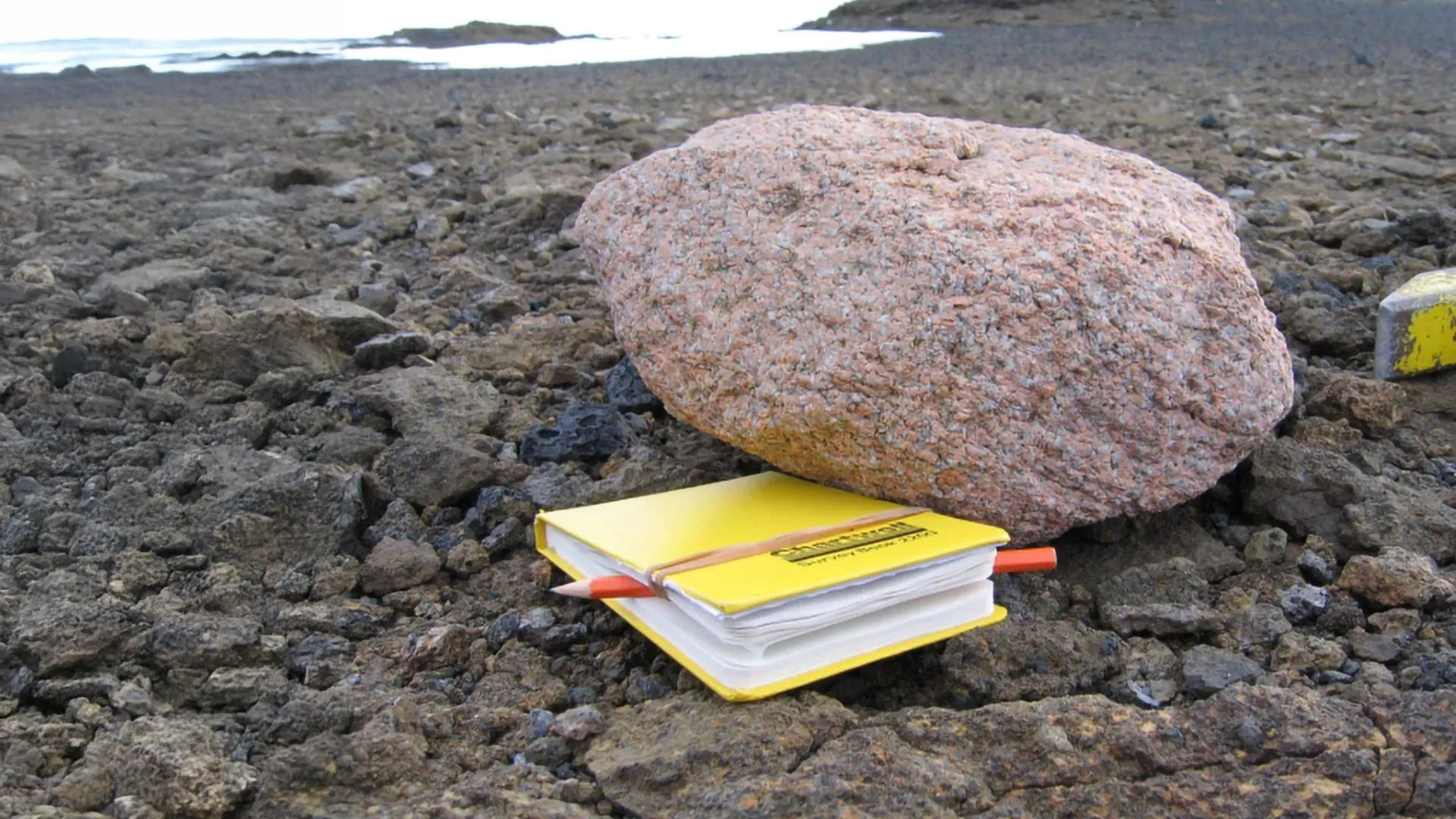
दशकों तक, Antarctica के Hudson Mountains में काम करने वाले भूवैज्ञानिकों ने कुछ विचित्र देखा: क्षेत्र की विशिष्ट काली ज्वालामुखी चट्टान के ऊपर गुलाबी granite बोल्डर के समूह। Granite और volcanic basalt बिल्कुल अलग-अलग भूवैज्ञानिक प्रक्रियाओं के माध्यम से बनते हैं, और ज्वालामुखी इलाके से भरे क्षेत्र में granite की मौजूदगी सवाल उठाती है जिनका कोई ने पूरी तरह जवाब नहीं दिया था। एक नए अध्ययन ने इस रहस्य को सुलझा दिया है — और ऐसा करके, Antarctica के सबसे महत्वपूर्ण glacier के नीचे छिपी एक असाधारण स्केल की भूवैज्ञानिक संरचना को प्रकट किया है।
यह शोध, एक प्रमुख भूविज्ञान पत्रिका में ब्रिटिश और अमेरिकी भूवैज्ञानिकों की एक टीम द्वारा प्रकाशित, rock age dating और airborne gravity surveys के संयोजन का उपयोग करके सतह के बोल्डर को उनके स्रोत से जोड़ा: एक विशाल granite निकाय, या pluton, Pine Island Glacier के तहत किलोमीटर दफन और इसके सबसे चौड़ी बिंदु पर लगभग 100 किलोमीटर तक फैला।
चट्टानों की डेटिंग
इस रहस्य को खोलने की कुंजी गुलाबी granite बोल्डर की radiometric dating थी। टीम ने granite के भीतर zircon crystals के लिए uranium-lead dating लागू की, granite के निर्माण को Jurassic काल में रखा, लगभग 170 मिलियन साल पहले — जब Antarctica महाद्वीप Gondwana का हिस्सा था और इसके अंतिम विभाजन से जुड़ी व्यापक igneous गतिविधि का अनुभव कर रहा था।
Antarctica में Jurassic granite निर्माण अपने आप में असामान्य नहीं है। इन परिणामों को महत्वपूर्ण बनाने वाली बात यह थी कि dating ने बोल्डर की सतह पर यात्रा के बारे में क्या संकेत दिया। बोल्डर सतह की ज्वालामुखी गतिविधि से स्थानीय रूप से नहीं बने थे — वे गहराई से अपरदित हुए थे और भूवैज्ञानिक समय में glacial dynamics द्वारा ऊपर की ओर स्थानांतरित किए गए थे, Pine Island Glacier के fluctuating ice sheets द्वारा सतह पर उभरे जैसे कि अंतर्निहित bedrock क्षेत्र में आगे बढ़े और पीछे हटे।

वायु गुरुत्व सर्वेक्षण छिपे हुए द्रव्यमान को प्रकट करते हैं
एक बार जब radiometric dates ने सुझाया कि बोल्डर के पास गहरा दफन स्रोत है, टीम Pine Island Glacier पर आयोजित वायु भूभौतिकीय सर्वेक्षण की ओर मुड़ गई। गुरुत्व सर्वेक्षण सतह के नीचे चट्टान के घनत्व में अंतर के कारण होने वाली पृथ्वी के गुरुत्वाकर्षण क्षेत्र में सूक्ष्म भिन्नताओं को मापते हैं। Granite, आसपास की volcanic और metamorphic चट्टान की तुलना में कम घना है जो West Antarctica की bedrock की विशेषता है, एक विशिष्ट गुरुत्व हस्ताक्षर पैदा करता है जो सावधानीपूर्वक माप में बाहर खड़ा होता है।
सर्वेक्षण डेटा ने Pine Island Glacier के नीचे एक स्पष्ट गुरुत्व anomaly को प्रकट किया — एक बड़े granite निकाय की उपस्थिति के साथ सुसंगत। anomaly के आकार और परिमाण को मॉडल करके, शोधकर्ताओं ने दफन द्रव्यमान का अनुमान लगभग 100 किलोमीटर चौड़ा और इसके गहरे भाग में 7 किलोमीटर मोटा होने के रूप में लगाया, जो हाल के दशकों में Antarctica में खोजी गई सबसे बड़ी uncharted भूवैज्ञानिक संरचनाओं में से एक का प्रतिनिधित्व करता है।
यह खोज बर्फ की चादर विज्ञान के लिए महत्वपूर्ण क्यों है
Pine Island Glacier के नीचे एक बड़े granite pluton का प्रकाश मात्र एक भूवैज्ञानिक curiosity नहीं है। glacier के व्यवहार को समझने और समुद्र स्तर बढ़ने में इसके योगदान के लिए इसके सीधे निहितार्थ हैं। Pine Island Glacier Antarctica के सबसे तेजी से बदलते हुए glaciers में से एक है और बर्फ की चादर की स्थिरता के लिए चिंता का एक प्रमुख फोकस है। इसकी गतिविधियां उस bedrock द्वारा प्रभावित होती हैं जिस पर यह बहती है — आकार, संरचना, और बर्फ के नीचे चट्टान के thermal गुण सभी प्रभावित करते हैं कि glacier कैसे चलता है और पिघलता है।
Granite में naturally radioactive तत्वों जैसे uranium और thorium की उच्च सांद्रता हो सकती है, जो radioactive decay के माध्यम से heat generate करते हैं। एक बड़े granite निकाय से थोड़ी अतिरिक्त heat भी glacier के नीचे basal melting दरों को प्रभावित कर सकती है — वह प्रक्रिया जिसके द्वारा बर्फ की चादर का आधार bedrock के संपर्क में पिघलता है, glacier के flow को ocean की ओर lubricate करता है।
बर्फ की चादर मॉडलिंग के लिए निहितार्थ
West Antarctic Ice Sheet की जलवायु परिवर्तन के प्रति प्रतिक्रिया के वर्तमान मॉडल bedrock geology के बारे में assumptions पर निर्भर करते हैं जो पृथ्वी के सबसे inaccessible परिवेश में sparse measurements द्वारा constrained हैं। Pine Island Glacier के नीचे इस scale की एक previously unknown भूवैज्ञानिक feature की खोज का मतलब है कि existing models को इसके thermal और physical प्रभाव को ice dynamics पर account करने के लिए revision की आवश्यकता हो सकती है।
इसका यह मतलब जरूरी नहीं है कि glacier का व्यवहार वर्तमान projections से अधिक alarming है — granite निकाय कुछ scenarios के तहत एक stabilizing प्रभाव भी प्रदान कर सकता है। खोज जो emphasize करती है वह यह है कि Antarctic glaciers की भूवैज्ञानिक substrate के बारे में कितना कुछ unknown रहता है और यह substrate बर्फ की चादर के भविष्य को समझने के लिए कितना consequential है।
यह लेख Science Daily की रिपोर्टिंग पर आधारित है। मूल लेख पढ़ें।
Originally published on sciencedaily.com