A Budget Cruise Missile Proves the Concept
In a development that could reshape how the United States and its allies think about long-range strike capability, the experimental Rusty Dagger cruise missile has completed a successful flight test, striking its intended target after a flight of several hundred miles. The test, conducted at a military range in the western United States, validated the core premise behind the program: that a functionally effective cruise missile can be built for a fraction of the cost of existing weapons by leveraging commercial off-the-shelf (COTS) components and modern manufacturing techniques.
The Rusty Dagger program, which has operated with relatively little public attention compared to higher-profile weapons development efforts, is part of a broader Pentagon initiative to develop affordable mass — the ability to field large numbers of expendable precision munitions that an adversary cannot economically counter. The missile's reported unit cost, while not officially disclosed, is believed to be well under $100,000, compared to the $1.5 million to $2 million price tag of a Tomahawk cruise missile.
How Rusty Dagger Works
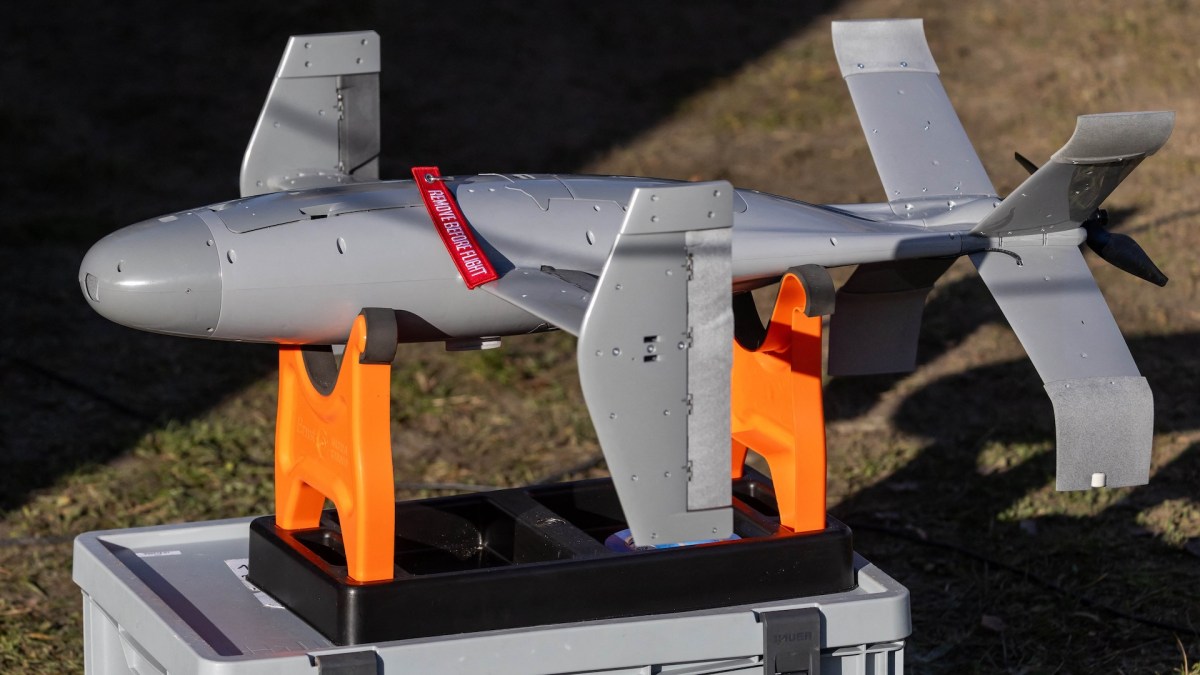
The Rusty Dagger is designed as a subsonic, terrain-following cruise missile with a range exceeding 300 nautical miles. It uses a small turbojet engine derived from commercial drone powerplants, a GPS/INS guidance package augmented with terminal seekers for precision targeting, and a modular warhead section that can accommodate different payloads depending on the mission.
The airframe is constructed primarily from composite materials and can be manufactured using automated layup processes, reducing both cost and production time. Unlike the Tomahawk, which was designed for launch from ships and submarines with sophisticated launch systems, the Rusty Dagger is intended to be deployed from simple ground-based launchers, cargo aircraft, or even modified shipping containers — maximizing operational flexibility.
Commercial Components, Military Performance
What makes the Rusty Dagger noteworthy is not any single technological breakthrough, but rather the integration philosophy behind it. The program deliberately avoids custom-designed components wherever possible, instead adapting hardware and software from the commercial drone, automotive, and consumer electronics industries.
The navigation system, for example, uses sensor-fusion algorithms originally developed for autonomous vehicles, combining GPS signals with inertial measurement units and terrain-matching databases to maintain accuracy even in GPS-denied environments. The flight-control software runs on commercially available processors and was developed using agile software practices more common in Silicon Valley than in traditional defense contracting.
This approach carries trade-offs. The Rusty Dagger is not stealthy, does not fly at supersonic speeds, and lacks the sophisticated electronic countermeasures found on more expensive weapons. But its advocates argue that these limitations are acceptable when the missile costs so little that it can be used in quantity. A salvo of twenty Rusty Daggers, even if some are intercepted, could saturate an adversary's defenses at a total cost lower than a single advanced cruise missile.
The Affordable Mass Imperative
The successful test comes at a critical moment for US defense strategy. Military planners have been warning for years that the American way of war — built around small numbers of exquisite, expensive platforms — is increasingly vulnerable to adversaries who can field large quantities of cheaper weapons. China's rapidly expanding missile arsenal, Russia's use of Iranian-designed Shahed drones in Ukraine, and the Houthi campaign against Red Sea shipping have all demonstrated the effectiveness of quantity over quality in certain operational contexts.
The Department of Defense's Replicator initiative, launched in 2023, was explicitly designed to address this challenge by accelerating the fielding of autonomous systems and affordable munitions. The Rusty Dagger fits squarely within this framework, offering a weapon that can be produced in the thousands rather than the hundreds.
Production Scalability
One of the program's key goals is manufacturing scalability. Traditional cruise missiles like the Tomahawk are produced on dedicated assembly lines by a single prime contractor, with production rates measured in dozens per month. The Rusty Dagger's design is intended to be producible by multiple manufacturers simultaneously, using distributed production methods that can rapidly scale output in a crisis.
Defense officials have discussed the possibility of establishing production lines at multiple facilities across the country, each capable of turning out hundreds of missiles per month. The use of COTS components means that the supply chain is less vulnerable to the single-point-of-failure problems that plague programs dependent on specialized, sole-source parts.
Strategic Implications
If the Rusty Dagger or similar programs reach full-rate production, the implications for deterrence and warfighting are significant. An adversary planning an attack on US forces or allies would have to account for the possibility of a massive retaliatory strike using thousands of affordable cruise missiles — a prospect that complicates their calculus far more than a smaller number of expensive, exquisite weapons.
The concept also has implications for allied nations. Many US partners lack the budgets to maintain large inventories of weapons like the Tomahawk or the Joint Air-to-Surface Standoff Missile (JASSM). A low-cost cruise missile that can be produced in volume could democratize long-range strike capability among allied forces, strengthening collective deterrence.
Analysis: The Right Direction, With Caveats
The Rusty Dagger's successful test is a promising proof of concept, but significant hurdles remain before the weapon reaches operational units. Reliability across diverse environmental conditions needs to be demonstrated through more extensive testing. The guidance system's performance in heavily jammed electromagnetic environments is an open question. And the Pentagon's track record of scaling promising prototypes into mass-produced systems is, to put it diplomatically, uneven.
There are also doctrinal questions to resolve. How will affordable cruise missiles be integrated into existing strike planning architectures? Who controls the launch authority for weapons that might be deployed from shipping containers or cargo planes? How does the proliferation of cheap precision strike change escalation dynamics?
These are important questions, but they should not obscure the fundamental significance of the test. The Rusty Dagger demonstrates that the technology exists to break the cost curve on long-range precision strike. Whether the defense establishment can break the bureaucratic and industrial barriers to actually fielding such weapons in quantity is the real test that lies ahead.
This article is based on reporting by defensenews.com. Read the original article.
Originally published on defensenews.com