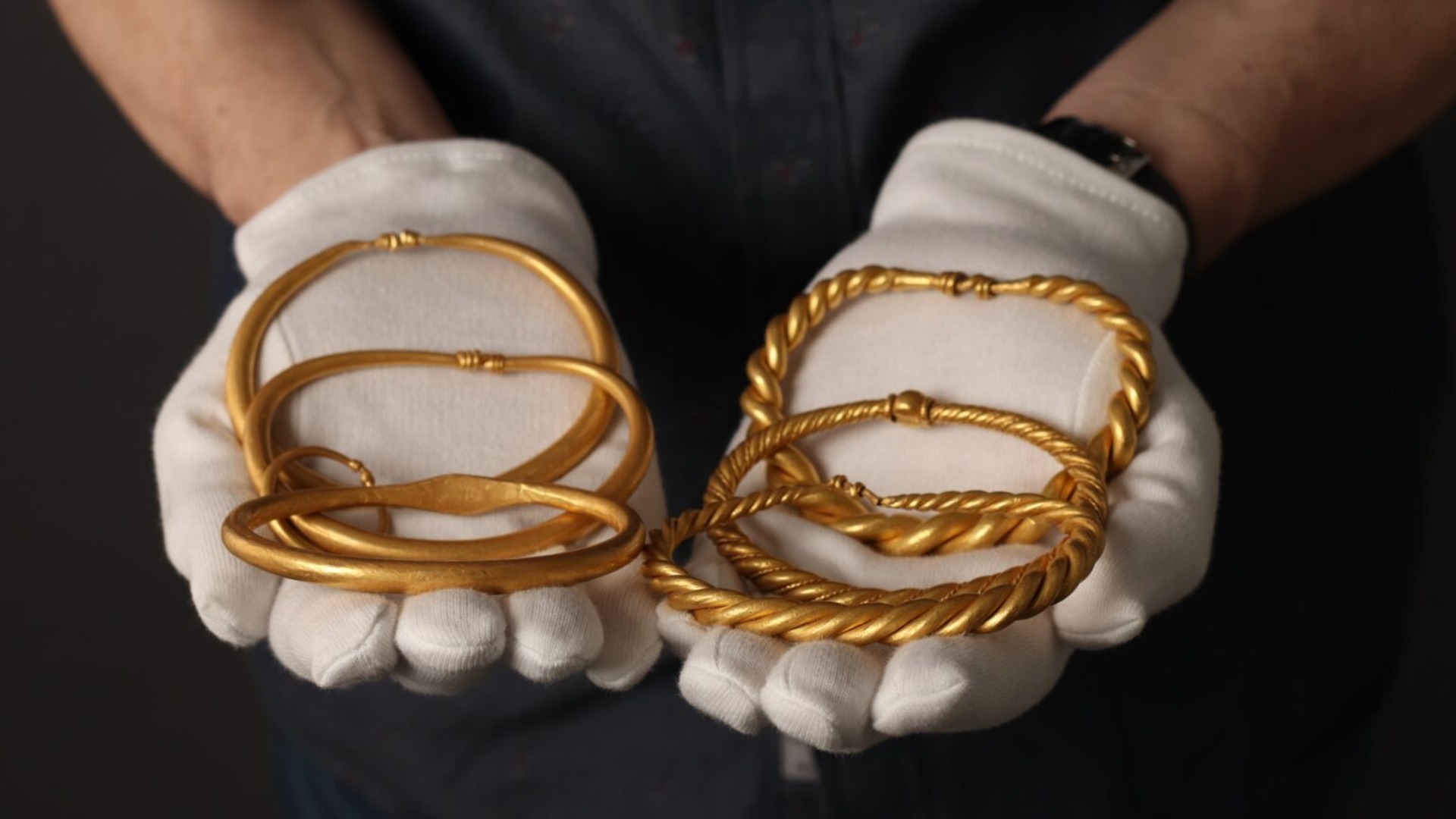
तत्काल ऐतिहासिक महत्व वाली एक दुर्लभ खोज
डेनमार्क के पुरातत्वविद् हाल के वर्षों में देश में हुई सबसे उल्लेखनीय बहुमूल्य धातु खोजों में से एक का सामना कर रहे हैं, क्योंकि रिपोर्ट के अनुसार छह ठोस सोने के बाजूबंद मिले हैं। इस खोज को पूरी तरह अद्वितीय बताया गया है, और इसका आकार ही ध्यान खींचने के लिए पर्याप्त है: स्रोत के दावे के अनुसार, यह डेनमार्क में अब तक मिला तीसरा सबसे बड़ा सोने का खजाना है।
यह रैंकिंग इसलिए महत्वपूर्ण है क्योंकि पुरातात्विक खजाने शायद ही कभी केवल संपत्ति की कहानियाँ होते हैं। वे राजनीतिक अधिकार, सामाजिक अनुष्ठानों, व्यापारिक नेटवर्क और अस्थिरता के दौर के संकेत होते हैं। जब सोना अलग-अलग आभूषणों के बजाय एक केंद्रित भंडार में मिलता है, तो शोधकर्ता आम तौर पर कठिन सवाल पूछना शुरू करते हैं: धातु पर किसका नियंत्रण था, इसे क्यों इकट्ठा किया गया, और क्या इसे छिपाया गया, अर्पित किया गया, या खतरे के जवाब में जमा किया गया।
बाजूबंद क्यों महत्वपूर्ण हैं
इस कहानी का केंद्र वस्तु का प्रकार है। बाजूबंद कोई बेतरतीब टुकड़े या पिघला हुआ बुलियन नहीं हैं। वे पहने जाने वाली संपत्ति के रूप हैं, और कई प्रारंभिक समाजों में उनके कई स्तरों वाले अर्थ होते थे। वे आभूषण, चल संपत्ति, हैसियत के संकेतक, कूटनीतिक उपहार, या अभिजात पहचान से जुड़े प्रतीक के रूप में काम कर सकते थे। बड़े सोने के छल्लों से बना खजाना शुरुआत से ही एक स्पष्ट उद्देश्य का संकेत देता है।
क्योंकि स्रोत सामग्री इन वस्तुओं को ठोस सोना बताती है और उनकी विशिष्टता पर जोर देती है, यह खोज स्कैंडिनेवियाई पुरातत्व के विशेषज्ञों का लगातार ध्यान खींचने की संभावना है। आगे की खुदाई के विवरण के बिना भी, मूल रूपरेखा से ही स्पष्ट है कि यह सामान्य दैनिक भौतिक संस्कृति नहीं थी। सोना दुर्लभ था, प्राप्त करना कठिन था, और आम तौर पर शक्तिशाली समूहों के पास केंद्रित रहता था। ऐसी खोजें विद्वानों को यह परखने में मदद करती हैं कि सत्ता कैसे प्रदर्शित और संरक्षित की जाती थी।

यह सिर्फ खजाने की कहानी से अधिक है
पुरातात्विक खोजों में जनता की दिलचस्पी अक्सर धातु के मूल्य से शुरू होती है, लेकिन गहरा महत्व कहीं और होता है। किसी खजाने का महत्व उसके संदर्भ से जुड़ा होता है: वह कहाँ मिला, वस्तुएँ कैसे व्यवस्थित थीं, क्या उन्हें एक ही समय में एक साथ रखा गया था, और आसपास के साक्ष्य बस्ती, अनुष्ठान या संघर्ष के बारे में क्या बता सकते हैं। ये विवरण एक नाटकीय खोज को अतीत के समाज की अर्थपूर्ण पुनर्रचना में बदल सकते हैं।
व्यावहारिक रूप से, इस पैमाने की खोज संग्रहालयों की व्याख्या और क्षेत्रीय इतिहास को भी नया रूप दे सकती है। यदि वस्तुओं की तिथि सुरक्षित रूप से निर्धारित की जा सके और उन्हें डेनिश प्रागैतिहासिक काल के किसी विशिष्ट चरण से जोड़ा जा सके, तो वे संपत्ति के संकेंद्रण, स्थानीय नेतृत्व, या समुदायों के बीच संबंधों के बारे में नए प्रमाण दे सकती हैं। यहाँ तक कि वस्तुओं की संख्या कम होने पर भी, यदि उनकी कारीगरी, संरचना या दफनाने की परिस्थितियाँ शोधकर्ताओं की अपेक्षाओं से अलग हों, तो कथा बदल सकती है।
शोधकर्ता आगे संभवतः क्या अध्ययन करेंगे
- छल्लों की धातुकर्मीय संरचना और क्या सोना ज्ञात क्षेत्रीय स्रोतों या दूरस्थ विनिमय की ओर संकेत करता है।
- औजारों के निशान और कारीगरी, जो कार्यशाला की प्रथाओं या अभिजात उत्पादन परंपराओं की पहचान कर सकते हैं।
- जमा करने का संदर्भ, जिसमें यह शामिल है कि क्या खजाना जानबूझकर गाड़ा गया था, संकट में खो गया था, या किसी अनुष्ठानिक गतिविधि से जुड़ा था।
- पहले के डेनिश खजानों से तुलना, ताकि यह तय किया जा सके कि यह खोज किसी मौजूदा पैटर्न में फिट बैठती है या उससे अलग है।
ऐतिहासिक अभिलेख की नाजुकता की एक याद
ऐसी खोजें पुरातत्व की एक मूल सच्चाई को भी सामने लाती हैं: बचा हुआ अभिलेख अधूरा, असमान और अक्सर आकस्मिक होता है। सत्ता की पूरी प्रणालियाँ केवल कुछ बचे हुए उच्च-मूल्य की वस्तुओं के रूप में दर्ज हो सकती हैं। जब एक अखंड या केंद्रित भंडार सामने आता है, तो वह वर्षों के अनुत्तरित सवालों को नए साक्ष्य के एक ही क्षण में समेट सकता है।
यही कारण है कि डेनमार्क की यह खोज पूर्ण अकादमिक विश्लेषण प्रकाशित होने से पहले ही महत्वपूर्ण है। वस्तुएँ स्वयं महत्वपूर्ण हैं, लेकिन उतना ही महत्वपूर्ण वह है जो वे संभव बनाती हैं। एक दुर्लभ खजाना आर्थिक इतिहास को धार्मिक प्रथा से, कला को पदानुक्रम से, और स्थानीय भूगोल को बड़े महाद्वीपीय विनिमय तंत्रों से जोड़ सकता है। यह शोधकर्ताओं को किंवदंती या अनुमान से अधिक ठोस कुछ देता है।
फिलहाल, पुष्टि की गई रूपरेखा ही इस खोज को डेनमार्क के आधुनिक रिकॉर्ड की सबसे उल्लेखनीय पुरातात्विक खोजों में शामिल करने के लिए पर्याप्त है। छह ठोस सोने के बाजूबंद अपने आप में असाधारण हैं। देश के सबसे बड़े खजानों में से एक के हिस्से के रूप में, वे कुछ और बन जाते हैं: एक ऐसी दुनिया से प्रमाण का सघन टुकड़ा जो आम तौर पर अंशों में ही वर्तमान तक पहुँचती है।
यह लेख Interesting Engineering की रिपोर्टिंग पर आधारित है। मूल लेख पढ़ें.
Originally published on interestingengineering.com