सोलर की एक स्थायी समस्या के लिए व्यावहारिक विचार
फ्लोटिंग फोटोवोल्टिक प्रणालियाँ जलाशयों, औद्योगिक तालाबों और अन्य जल सतहों को बिजलीघरों में बदलने का वादा करती हैं, वह भी दुर्लभ भूमि से प्रतिस्पर्धा किए बिना। लेकिन पारंपरिक सोलर ऐरे की तरह, फ्लोटिंग मॉड्यूल भी गर्म होने पर अपना प्रदर्शन खो देते हैं। जर्मनी की FH Aachen University of Applied Sciences की एक शोध टीम का कहना है कि अपेक्षाकृत सरल स्प्रे-कूलिंग व्यवस्था इस समस्या को हल करने में मदद कर सकती है, और अब उसने एक गतिशील मॉडल बनाया है ताकि यह दिखाया जा सके कि यह तरीका कब सबसे अच्छा काम करता है।
शोधकर्ताओं ने इसे फ्लोटिंग PV के लिए स्प्रे कूलिंग का एक सिस्टम-स्तरीय मॉडल बताया है, जिसमें तापीय व्यवहार, विद्युत उत्पादन, और सक्रिय कूलिंग नियंत्रण को एक ही ढाँचे में जोड़ा गया है। यह काम किसी असामान्य या अत्यधिक इंजीनियर किए गए शीतलन तरीके पर केंद्रित नहीं था। इसके बजाय, ध्यान एक कम लागत वाले स्प्रे सिस्टम पर था, जिसे वास्तविक प्रतिष्ठानों में लागू किया जा सके।
यह व्यावहारिक जोर महत्वपूर्ण है। सोलर मॉड्यूल के लिए कई कूलिंग अवधारणाएँ सिद्धांत में आशाजनक लगती हैं, लेकिन लागत, जटिलता, रखरखाव और वास्तविक परिचालन स्थितियों को देखते ही उन्हें उचित ठहराना कठिन हो जाता है। अध्ययन को अपेक्षाकृत सरल पंप-और-स्प्रिंकलर व्यवस्था पर केंद्रित करके टीम स्प्रे कूलिंग को प्रयोगशाला की नवीनता से अधिक, लक्षित फील्ड उपयोग के लिए एक संभावित विकल्प के रूप में प्रस्तुत कर रही है।
750 kW फ्लोटिंग PV साइट के विरुद्ध मॉडल का सत्यापन
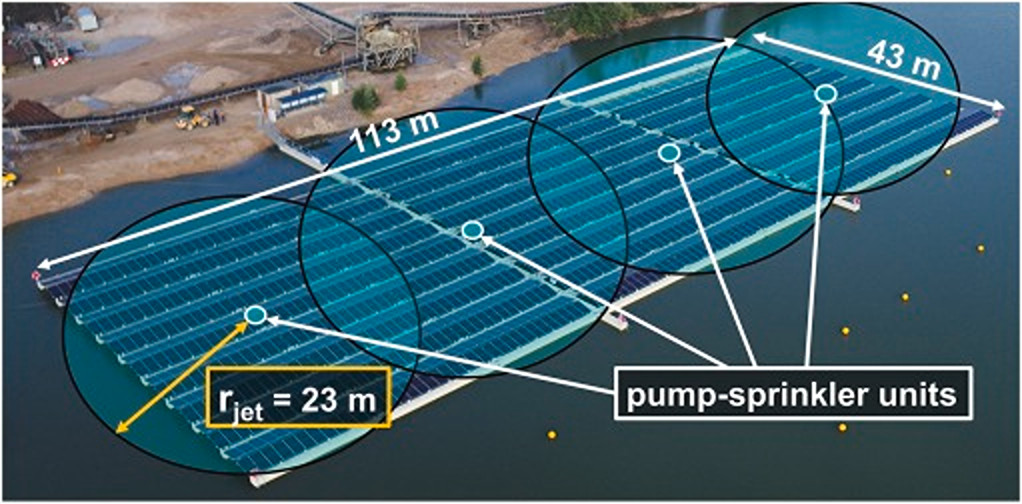
जर्मन टीम ने केवल सिमुलेशन पर ही काम समाप्त नहीं किया। स्रोत रिपोर्ट के अनुसार, मॉडल का सत्यापन चार पंप-स्प्रिंकलर इकाइयों से सुसज्जित 750 kW फ्लोटिंग PV स्थापना के विरुद्ध किया गया। यह सत्यापन चरण इसलिए महत्वपूर्ण है क्योंकि सोलर प्रणालियों में शीतलन प्रदर्शन तापमान, विकिरण, आर्द्रता, हवा, और स्थानीय संचालन कार्यक्रमों जैसे तेज़ी से बदलने वाले पर्यावरणीय कारकों पर निर्भर करता है।
वास्तविक स्थापना से मॉडल की तुलना करके शोधकर्ता यह जाँच सके कि उनका ढाँचा आदर्शीकृत मान्यताओं के बजाय व्यावहारिक परिस्थितियों में सक्रिय शीतलन प्रणाली के व्यवहार को पकड़ सकता है या नहीं। रिपोर्ट किया गया परिणाम विभिन्न जलवायु में मॉड्यूल प्रदर्शन पर शीतलन के प्रभाव का आकलन करने के लिए अधिक विश्वसनीय आधार देता है।
मुख्य आँकड़े उल्लेखनीय हैं। चार जलवायु में किए गए सिमुलेशनों में पाया गया कि स्प्रे कूलिंग मॉड्यूल के तापमान को 42% तक घटा सकती है और ऊर्जा उत्पादन को 3.8% तक बढ़ा सकती है। हालांकि ये लाभ सर्वत्र समान नहीं हैं। अध्ययन इस बात पर जोर देता है कि लाभ स्थानीय परिस्थितियों पर काफी निर्भर करते हैं, जिसका अर्थ है कि भौगोलिक स्थिति और मौसम पैटर्न यह तय करेंगे कि यह अवधारणा आर्थिक रूप से उचित है या नहीं।

फ्लोटिंग PV के लिए तापमान नियंत्रण क्यों महत्वपूर्ण है
सोलर मॉड्यूल सामान्यतः अधिक गर्म होने पर विद्युत रूप से कम दक्ष हो जाते हैं। तेज धूप होने पर भी, बढ़ा हुआ तापमान आउटपुट को कम कर सकता है। फ्लोटिंग ऐरे पानी के ऊपर लगाए जाने से पहले ही कुछ लाभ पाते हैं, लेकिन इससे तापीय तनाव पूरी तरह समाप्त नहीं हो जाता। कुछ परिचालन स्थितियों में, सक्रिय शीतलन तापमान को और कम कर सकता है और उस आउटपुट को वापस पा सकता है जो अन्यथा खो जाता।
स्प्रे कूलिंग की अपील सीधी है: पानी और एक सरल वितरण प्रणाली का उपयोग करके पैनल की सतह से गर्मी हटाना। सिद्धांत रूप में, यह अवधारणा फ्लोटिंग PV के साथ स्वाभाविक रूप से मेल खाती है क्योंकि पानी पहले से ही स्थल पर उपलब्ध होता है। चुनौती इस स्पष्ट लाभ को ऐसी प्रणाली में बदलने की है जो अत्यधिक ऊर्जा उपयोग, रखरखाव बोझ, या संचालन लागत के बिना भरोसेमंद ढंग से काम करे।
यह मॉडलिंग कार्य उस चुनौती को पूरे विद्युत-उत्पादन तंत्र के हिस्से के रूप में शीतलन का अध्ययन करके संबोधित करता है, न कि एक पृथक तापीय हस्तक्षेप के रूप में। यह व्यापक दृष्टिकोण डेवलपर्स को पंप चलाने के लिए आवश्यक बिजली और ठंडे मॉड्यूल से होने वाले अतिरिक्त उत्पादन के बीच समझौते का आकलन करने में मदद कर सकता है।
जलवायु तय करती है लाभ
सबसे महत्वपूर्ण निष्कर्ष यह हो सकता है कि स्प्रे कूलिंग जलवायु पर बहुत अधिक निर्भर है। जो शीतलन रणनीति एक क्षेत्र में उपयोगी लाभ देती है, वह दूसरे क्षेत्र में केवल मामूली सुधार दे सकती है। इसका अर्थ है कि फ्लोटिंग PV संचालकों को ऐसी प्रणालियाँ लगाने का निर्णय लेने से पहले केवल एक सामान्य नियम पर निर्भर नहीं रहना चाहिए।
परियोजना डेवलपर्स के लिए, यह अधिक चयनात्मक तैनाती मॉडल की ओर इशारा करता है। स्प्रे कूलिंग उन साइटों के लिए सबसे उपयुक्त हो सकती है जहाँ उच्च विकिरण और लगातार तापीय तनाव मिलकर मापने योग्य प्रदर्शन हानि पैदा करते हैं। हल्के मौसम वाले वातावरण में, अतिरिक्त हार्डवेयर और संचालन जटिलता को उचित ठहराना कठिन हो सकता है।
यह अंतर इस बात को प्रभावित कर सकता है कि फ्लोटिंग सोलर उद्योग अनुकूलन के बारे में कैसे सोचता है। कूलिंग को एक सार्वभौमिक अपग्रेड मानने के बजाय, डेवलपर्स इसे तेजी से एक स्थान-विशिष्ट उपकरण के रूप में देख सकते हैं, जिसका उपयोग केवल तब किया जाए जब सिमुलेशन और फील्ड डेटा पर्याप्त रिटर्न दिखाएँ।
यह शोध क्या बदलता है
यह अध्ययन यह नहीं कहता कि स्प्रे कूलिंग अपने आप फ्लोटिंग सोलर की अर्थव्यवस्था को बदल देगी। 3.8% तक का उत्पादन लाभ महत्वपूर्ण है, लेकिन यह क्रांतिकारी नहीं बल्कि क्रमिक सुधार है। फिर भी, यूटिलिटी-स्तरीय ऊर्जा परियोजनाओं में, यदि छोटे प्रतिशत सुधार लगातार और कम लागत पर मिलें, तो उनका महत्व होता है।
अधिक स्थायी योगदान शायद पद्धतिगत हो। तापीय और विद्युत व्यवहार को सक्रिय कूलिंग नियंत्रणों से जोड़कर और मॉडल को एक संचालित संयंत्र पर सत्यापित करके FH Aachen टीम ने यह विश्लेषण करने का अधिक ठोस तरीका दिया है कि कूलिंग कब लगाना उचित है। इससे बेहतर परियोजना डिज़ाइन, अधिक यथार्थवादी लागत-लाभ आकलन, और स्थानीय जलवायु के अनुसार अधिक समझदार अनुकूलन को समर्थन मिल सकता है।
विस्तृत ऊर्जा क्षेत्र के लिए, यह काम सोलर नवाचार में एक परिचित पैटर्न को दर्शाता है। सबसे बड़े लाभ अब केवल नए मॉड्यूल रसायन विज्ञान या बड़े हार्डवेयर बदलावों से नहीं आ रहे हैं। बढ़ती हुई संख्या में वे सिस्टम ट्यूनिंग से भी आते हैं: बेहतर नियंत्रण, अधिक स्मार्ट साइट-विशिष्ट इंजीनियरिंग, और ऐसे लक्षित हस्तक्षेप जो मौजूदा संरचनाओं से अधिक उत्पादन निकालते हैं।
फ्लोटिंग सोलर अभी भी PV बाजार का अपेक्षाकृत युवा खंड है, और डेवलपर्स अलग-अलग वातावरणों में इसे सर्वोत्तम रूप से कैसे अनुकूलित किया जाए, यह परखना जारी रखे हुए हैं। यह नया मॉडलिंग कार्य सुझाव देता है कि सक्रिय स्प्रे कूलिंग उस चर्चा में स्थान पाने योग्य है, न कि एक सर्वसमाधान के रूप में, बल्कि एक व्यावहारिक विकल्प के रूप में जिसका मूल्य स्थानीय परिचालन स्थितियों के साथ बढ़ता या घटता है।
मुख्य निष्कर्ष
- शोधकर्ताओं ने स्प्रे कूलिंग को पूरे फ्लोटिंग PV सिस्टम के हिस्से के रूप में मॉडल किया, जिसमें तापीय और विद्युत प्रभाव शामिल थे।
- इस दृष्टिकोण का सत्यापन चार पंप-स्प्रिंकलर इकाइयों वाली 750 kW स्थापना के विरुद्ध किया गया।
- सिमुलेशनों में मॉड्यूल तापमान में 42% तक की कमी और ऊर्जा उत्पादन में 3.8% तक की वृद्धि दर्ज की गई।
- अध्ययन में पाया गया कि स्प्रे कूलिंग का लाभ होगा या नहीं, यह स्थानीय जलवायु पर बहुत निर्भर करता है।
यह लेख PV Magazine की रिपोर्टिंग पर आधारित है। मूल लेख पढ़ें.
Originally published on pv-magazine.com