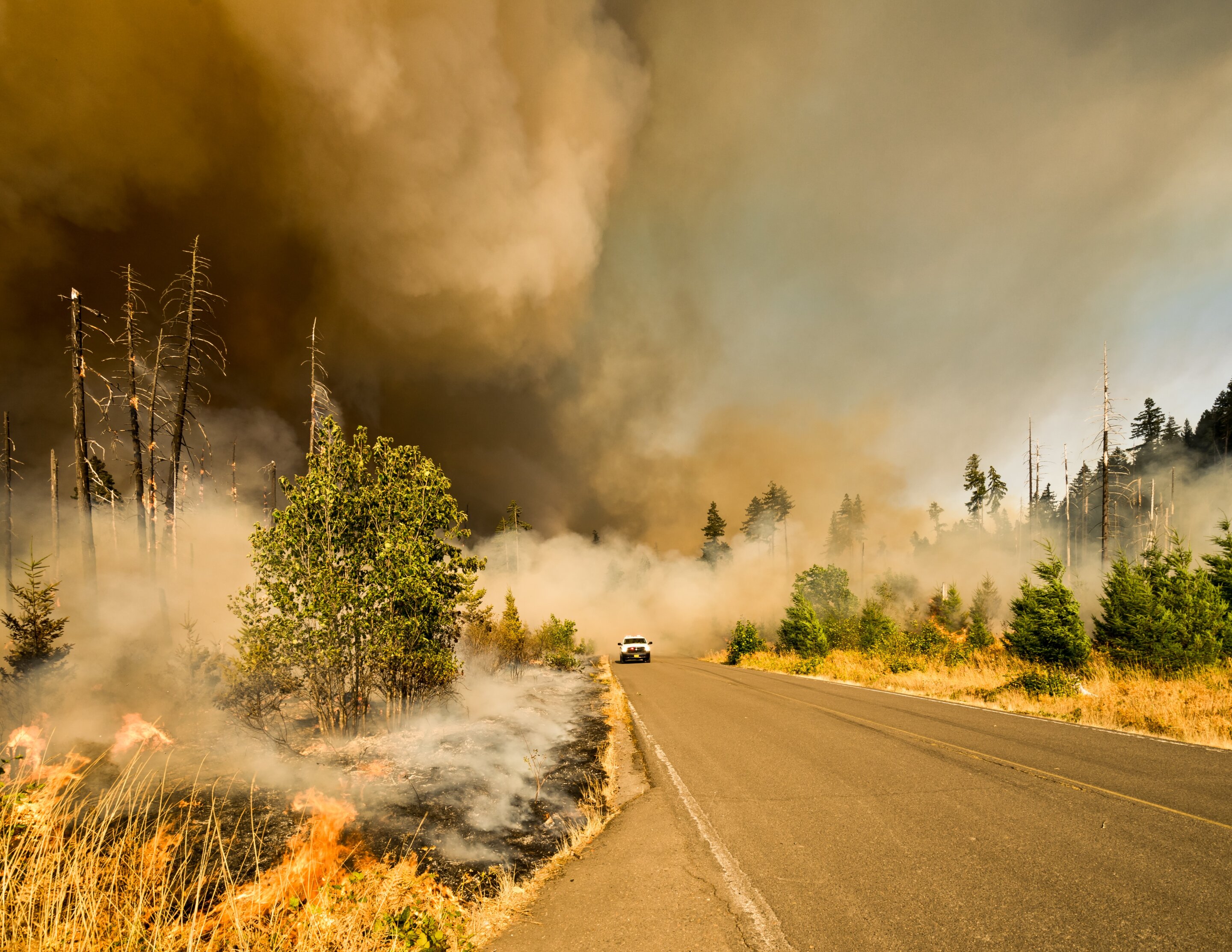
Wildfires are no longer only a fireline emergency
Across the northern hemisphere, the 2026 wildfire season is hitting multiple regions at once, with major fires affecting parts of Europe, the United States and Canada. In the United Kingdom alone, more than 21,000 hectares had already burned by late July across 66 fires larger than 30 hectares, according to the source material. England and Wales also recorded their driest July in nearly 200 years, while many areas moved into official drought. Elsewhere in Europe, countries including Greece, Spain, France and the Netherlands were simultaneously fighting significant blazes, with Spain reporting more than 186,000 hectares burned since January.
That backdrop matters because it shows how wildfire risk is no longer confined to isolated disaster zones. In expert commentary published by Medical Xpress from the London School of Hygiene & Tropical Medicine, research fellow Dr. Kamal Jyoti Maji argues that the health burden from wildfires is broader than many people assume. The immediate danger from flames remains severe, but for the wider population the dominant public health threat often comes from the smoke, not the fire front itself.
Smoke turns a local fire into a regional health event
The direct harms from wildfire are obvious: injuries, deaths, destroyed homes, damaged infrastructure and the disruption of medical care during evacuations. People who depend on regular treatment can be especially exposed when transport routes close or care services are interrupted. But the source text emphasizes that the larger population-level impact usually comes through inhalation of smoke that can travel long distances.
At the center of that problem is PM2.5, the fine particulate matter produced by combustion. These particles are described in the source as about 30 times smaller than the width of a human hair, small enough to penetrate deep into the respiratory system. Dr. Maji says wildfire smoke also contains other combustion pollutants, and the combined exposure has been linked to increased respiratory illness, cardiovascular illness, hospital admissions and premature death.
The significance is not merely theoretical. The source cites a global analysis estimating that landscape-fire-related PM2.5 is associated with substantial excess mortality worldwide each year. Even when a fire seems geographically distant, the pollutants it creates can still reach communities far from the flames. That makes wildfire smoke a cross-border public health issue rather than only a local emergency-management problem.
In practical terms, this means communities do not need to be directly burned to be affected. Residents downwind may face degraded air quality, aggravated asthma, heightened cardiac stress and growing pressure on local health systems. The source text frames that pattern as the main public health impact for the broader population.

Heat, drought and smoke are compounding one another
A second point in the expert commentary is that wildfire health risks are becoming more complex because they increasingly overlap with other climate-linked hazards. Wildfires often coincide with heat waves and drought, both of which carry their own health consequences. When all three occur together, the burden is not simply additive.
Dr. Maji says that when heat, drought and wildfire smoke combine, the cumulative health toll is greater than that of any one hazard alone. That matters because many of the regions affected this summer are not facing a single event. They are experiencing prolonged dry conditions, elevated temperatures and recurring smoke exposure in the same period.
For public health planning, that combination changes the challenge. Heat can worsen dehydration and cardiovascular strain. Drought can affect water availability and living conditions. Smoke increases respiratory and circulatory stress. Together, they raise the risk that vulnerable groups will suffer more severe outcomes than they would from any one exposure in isolation.
That is especially important for older adults, people with preexisting heart or lung conditions, those dependent on regular health services and communities repeatedly exposed to prolonged fire seasons. The expert commentary does not present wildfire as a one-off shock. It presents it as part of a wider pattern of layered environmental stress.
The psychological toll is becoming harder to ignore
The health effects discussed in the source are not limited to air pollution or physical injury. Dr. Maji also points to the growing evidence around the mental health burden of wildfires. Anxiety, trauma and a sense of loss can follow repeated damage to familiar landscapes and recurring exposure to fire seasons.
This is a notable shift in how wildfire harm is framed. A community may experience psychological strain even when direct physical exposure to smoke is limited. Repeated evacuations, uncertainty, visible environmental degradation and the erosion of seasonal predictability can all contribute to distress. In places that now endure recurrent fire seasons, that chronic stress can become part of the disaster itself.
The source stops short of prescribing a fully detailed policy roadmap, but it clearly supports a broader view of wildfire preparedness, one that includes mental as well as physical health. That has implications for emergency response, local health messaging and long-term planning.

Why this matters now
The commentary arrives at a moment when wildfire seasons are affecting more countries at once and placing more people under layered risk. The examples in the source text illustrate that scale: tens of thousands of hectares burned in the UK by late July, widespread drought conditions in parts of Britain, simultaneous major fires across several European countries and a much larger burn total in Spain since the start of the year.
The central message is that wildfire danger should not be measured only by fire perimeters or structures lost. A major share of the health burden spreads through the atmosphere and interacts with other environmental extremes. In that sense, wildfires are both acute disasters and diffuse public health events.
For governments and health systems, that suggests preparedness cannot focus solely on suppression and evacuation. Smoke exposure, care continuity during displacement, protection for vulnerable populations and mental health impacts all belong in the same planning framework. The expert commentary makes the case that the real footprint of wildfire is wider than the burn scar.
As fires continue to intensify across multiple regions, that broader understanding may become essential. The flames are the most visible part of the crisis. The smoke, heat and long-tail health effects may prove just as consequential.
This article is based on reporting by Medical Xpress. Read the original article.
Originally published on medicalxpress.com