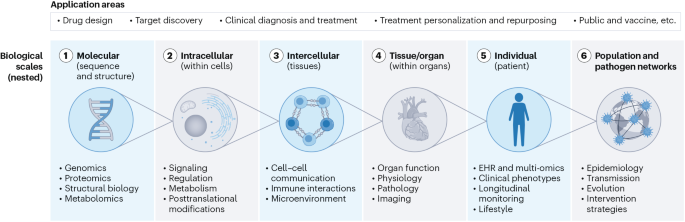
The Vision: Digital Organisms as Living Models
In a recent perspective published in Nature Medicine, scientists outline a bold new framework for biomedical research: the AI-driven digital organism. This concept goes beyond traditional computer models of biological processes—it envisions a comprehensive, dynamic, and interactive simulation of an entire organism, powered by artificial intelligence and continuously refined by real-world data. The authors argue that such digital twins could transform how we understand disease, test therapies, and personalize medicine.
The core idea is to create a virtual replica of a living system—from a single cell to a whole human—that behaves and responds like its physical counterpart. Unlike static models, these digital organisms would learn and adapt, incorporating new data from laboratory experiments, clinical trials, and wearable devices. This would allow researchers to run thousands of simulations in silico, testing hypotheses and predicting outcomes with unprecedented speed and accuracy.
Why Now? The Convergence of AI and Biology
The proposal comes at a time when artificial intelligence has made remarkable strides in biology. Machine learning algorithms can now predict protein structures, analyze genomic data, and even design new molecules. However, these advances are often siloed, focusing on isolated components rather than the whole system. The digital organism concept aims to integrate these disparate tools into a unified platform that mimics the complexity of life.
Recent breakthroughs in AI, such as large language models and generative networks, provide the computational power needed to handle the vast amounts of biological data. At the same time, advances in high-throughput biology—such as single-cell sequencing and CRISPR screens—offer the detailed data required to train and validate these models. The authors emphasize that the time is ripe to combine these capabilities into a coherent framework.
Applications in Drug Discovery and Personalized Medicine
One of the most promising applications is in drug development. Currently, bringing a new drug to market takes over a decade and costs billions of dollars, with high failure rates. A digital organism could change this by allowing researchers to simulate drug interactions on a virtual patient before ever testing in humans. This would help identify the most promising candidates, predict side effects, and optimize dosing regimens.
In personalized medicine, a digital twin of an individual patient could be constructed from their genetic, proteomic, and clinical data. Physicians could then use this model to simulate different treatment options and choose the one most likely to succeed for that specific patient. This approach could be particularly valuable for complex diseases like cancer, where tumors are highly heterogeneous and responses to therapy vary widely.
Beyond drug development, digital organisms could aid in understanding fundamental biology. By manipulating the virtual system, researchers could explore the effects of genetic mutations, environmental factors, and aging in ways that are not feasible in living organisms. This could lead to new insights into disease mechanisms and identify novel therapeutic targets.
Technical Challenges and Ethical Considerations
Building a digital organism is a monumental technical challenge. It requires integrating data across multiple scales—from molecular interactions to organ systems—and capturing the dynamic, nonlinear nature of biological networks. The authors acknowledge that current computational models are far from complete, and that significant advances in data integration, algorithm design, and computing infrastructure are needed.
Data privacy is another critical concern. To create a personalized digital twin, researchers would need access to an individual's most sensitive health data. Ensuring that this information is protected and used ethically is paramount. The authors call for robust governance frameworks to guide the development and use of digital organisms, emphasizing transparency, consent, and equity.
There are also philosophical questions about the nature of such models. If a digital organism becomes indistinguishable from its biological counterpart in behavior, what are the implications for our understanding of life and consciousness? While these questions are not new, the digital organism concept brings them to the forefront.

Toward a Collaborative Future
The authors envision a collaborative ecosystem where researchers from multiple disciplines—biology, computer science, engineering, and medicine—work together to build and refine digital organisms. They propose open standards and shared platforms to accelerate progress and ensure that the benefits are widely accessible.
While the full realization of an AI-driven digital organism may be years away, the perspective serves as a call to action. It challenges the scientific community to think bigger and to invest in the foundational research needed to turn this vision into reality. As AI continues to advance, the possibility of creating a truly integrated digital model of life is becoming more tangible.
In the near term, we may see incremental progress: digital twins of specific organs, such as the heart or liver, or of cellular pathways involved in disease. These partial models could provide immediate value in research and clinical practice, while paving the way for more comprehensive simulations.
The concept of an AI-driven digital organism is not just a technical aspiration; it represents a paradigm shift in how we approach biology and medicine. By creating virtual replicas that can be manipulated and studied without ethical or practical constraints, we open up new avenues for discovery and innovation. The journey will be challenging, but the potential rewards—for patients, for science, and for society—are immense.
This article is based on reporting by Nature Medicine. Read the original article.
Originally published on nature.com