Deux secondes et demie qui ont réécrit l'histoire
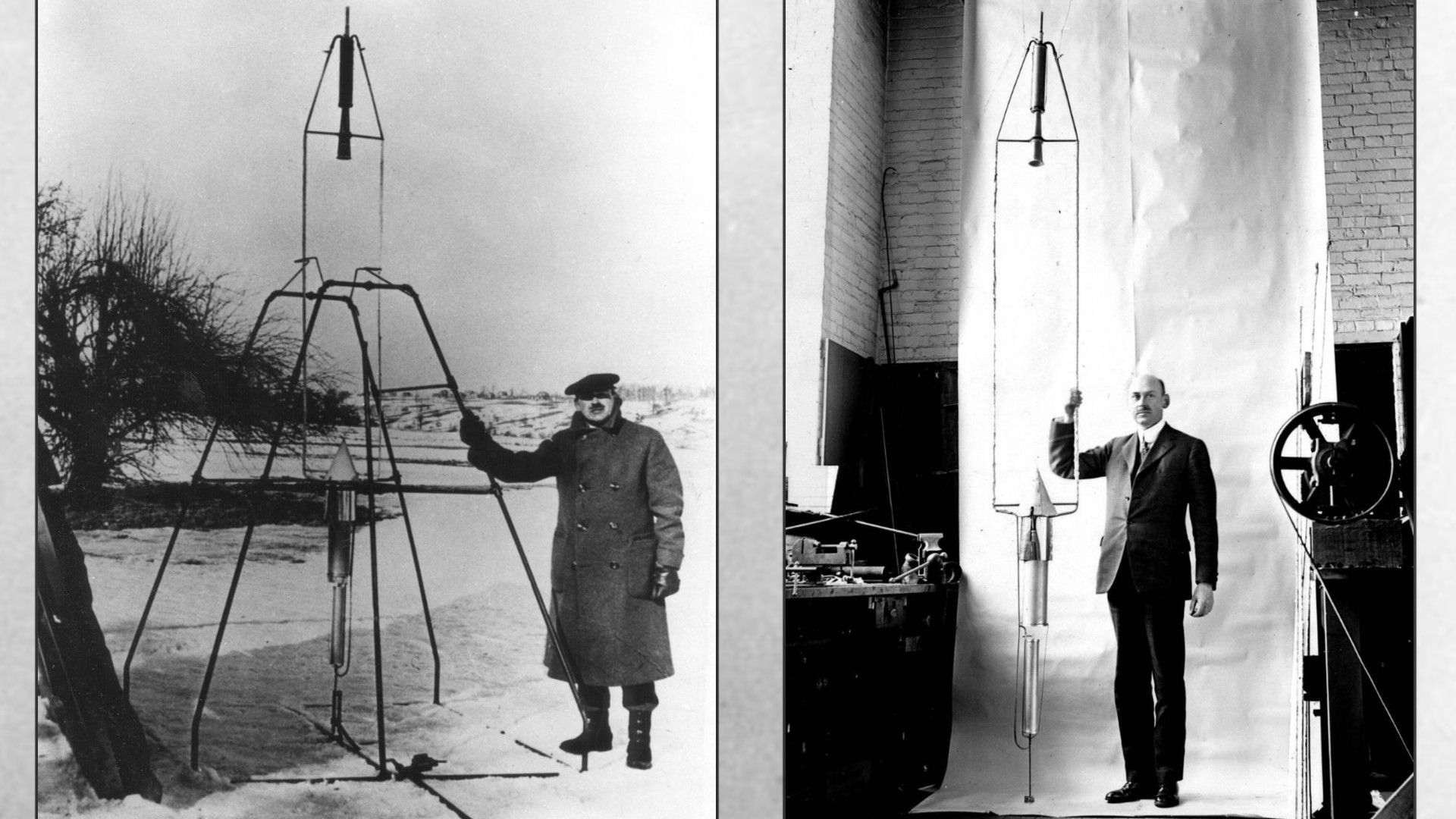
Le 16 mars 1926, dans un champ enneigé de la ferme de sa tante à Auburn, Massachusetts, Robert Hutchings Goddard a allumé une fusée alimentée par de l'oxygène liquide et de l'essence, l'a vue s'élever dans le ciel gris d'hiver, parcourir 184 pieds à une altitude de 41 pieds et retomber dans un potager 2,5 secondes après le lancement. Le vol s'est terminé presque avant de commencer. Ses conséquences n'ont pas encore pris fin.
Cent ans plus tard, le vol de 2,5 secondes de Goddard reste l'une des démonstrations d'ingénierie les plus conséquentes de l'histoire humaine — la preuve de concept que la propulsion par fusée à carburant liquide fonctionne, que le vol contrôlé au-delà de l'atmosphère est réalisable, et qu'un inventeur solitaire doté de ressources limitées et du scepticisme institutionnel peut établir une base technologique qui finit par porter des êtres humains à la Lune et des instruments scientifiques aux planètes extérieures.
Le centenaire arrive à un moment où l'industrie des fusées que Goddard a inventée n'a jamais été aussi active. SpaceX lance des satellites Starlink par douzaines. Blue Origin et les startups de fusées sur plusieurs continents construisent de nouveaux véhicules. Le programme Artemis ramène les humains vers la Lune. Des missions sont en route vers Mars et la ceinture d'astéroïdes. Le lien entre tout cela et le moment où un physicien de 43 ans se tenait dans un champ du Massachusetts il y a un siècle et allumait une mèche est direct, documenté et profond.
L'expérience du 16 mars 1926
La fusée que Goddard a volée ce matin d'hiver n'était pas élégante selon les normes de ce qui a suivi. Son réservoir de carburant et son réservoir d'oxygène liquide se trouvaient en bas du véhicule, avec la chambre de combustion et la tuyère en haut — une disposition qui plaçait la masse lourde du moteur au-dessus du centre de gravité, rendant la fusée intrinsèquement instable d'une manière que Goddard lui-même a reconnue et que les conceptions ultérieures ont corrigées en déplaçant le moteur vers le bas. Le véhicule faisait 10 pieds de haut, pesait 10 livres vide et avait été en construction pendant des années.
La combinaison de carburant à base d'oxygène liquide et d'essence liquide a été choisie pour des raisons pratiques : les deux étaient disponibles, l'oxygène liquide fournissait le comburant nécessaire à la combustion en l'absence d'air atmosphérique, et l'essence avait une densité énergétique suffisante pour un véhicule de démonstration. Les systèmes de pompage et d'alimentation que Goddard a conçus pour livrer ces carburants à la chambre de combustion dans des conditions contrôlées comptaient parmi ses contributions techniques les plus importantes — gérer le flux de liquides cryogéniques et inflammables de manière fiable et contrôlée était l'un des principaux problèmes d'ingénierie qu'il devait résoudre pour faire fonctionner le système.
Le vol lui-même a duré si brièvement que les observateurs auraient pu douter de son importance. Mais le propre cahier de Goddard de ce jour, conservé au Smithsonian, le consigne avec la précision modérée d'un scientifique : l'heure, les carburants utilisés, la durée, la distance parcourue. Il savait ce que cela signifiait. Il avait prouvé que les fusées à carburant liquide pouvaient voler, qu'elles pouvaient s'allumer de manière fiable, et que le cadre théorique qu'il avait développé au cours d'années de recherche était physiquement correct.

Le long chemin de Goddard vers le rocketry
Robert Goddard n'est pas arrivé à son lançage historique sans préparation. Il pensait aux fusées depuis son adolescence, inspiré par La Guerre des Mondes de H.G. Wells, et avait commencé une investigation scientifique sérieuse de la propulsion par fusée en tant qu'étudiant en physique, puis professeur à Clark University à Worcester, Massachusetts. Ses articles théoriques des années 1910 ont établi les principes fondamentaux de la propulsion par fusée — y compris la fameuse mais controversée suggestion qu'une fusée pourrait se rendre à la Lune — qui ont suscité un intérêt scientifique et une moquerie publique à peu près égale.
La moquerie d'un éditorial du New York Times de 1920, qui écartait la possibilité de fusées lunaires en arguant à tort que les fusées ont besoin d'air pour se pousser, a blessé Goddard et renforcé sa tendance au secret intense quant à ses recherches. Il travaillait largement en isolement, brevetant ses inventions avant de publier les résultats, et partageait ses progrès prudemment avec la petite communauté de chercheurs qui prenaient son travail au sérieux. Le Times, à juste titre, a publié une correction en juillet 1969 — le jour après qu'Apollo 11 soit lancé vers la Lune.
Goddard a continué à développer des fusées de plus en plus sophistiquées dans les années 1920 et 1930, atteignant des altitudes plus élevées, développant des systèmes de guidage giroscopique et résolvant les problèmes d'ingénierie du vol contrôlé un par un. Il a reçu un soutien crucial de Charles Lindbergh et du philanthrope Daniel Guggenheim, ce qui lui a permis de déplacer ses opérations à Roswell, New Mexico, où le terrain plat et la population clairsemée étaient mieux adaptés aux tests de véhicules de plus en plus ambitieux.
Un siècle de progrès
Du périgée de 41 pieds de Goddard en 1926 à la Station Spatiale Internationale orbitant à 250 milles, à Voyager 1 voyageant au-delà de l'héliopause dans l'espace interstellaire, la distance parcourue par les fusées à carburant liquide en un siècle n'est pas seulement physique mais conceptuelle. L'intuition fondamentale de Goddard — qu'une combustion chimique contrôlée et soutenue peut produire une poussée suffisante pour surmonter la gravité terrestre et propulser un véhicule vers des vitesses orbitales et d'échappement — a été mise en œuvre à des échelles qu'il n'aurait pas pu imaginer, avec une sophistication qui s'appuie sur un siècle de connaissances d'ingénierie accumulées.
Le moteur de fusée à carburant liquide moderne, qu'il s'agisse du RS-25 Space Shuttle Main Engine, du Merlin de SpaceX ou du BE-4 alimentant Vulcan Centaur, fonctionne selon les mêmes principes thermodynamiques sur lesquels Goddard a travaillé dans ses calculs il y a un siècle. Poussée, impulsion spécifique, rapport de masse, vitesse d'échappement — les équations n'ont pas changé. Ce qui a changé, c'est la capacité humaine à fabriquer, tester et exploiter des systèmes qui réalisent ces équations à des échelles et des fiabilités qui rendent l'accès régulier à l'espace réalisable plutôt que héroïque.
L'héritage de Goddard dans la nouvelle ère spatiale
La renaissance actuelle du développement des fusées — menée par des entreprises privées avec des ambitions allant des constellations d'internet par satellite à la colonisation de Mars — pourrait surprendre Goddard par son ampleur et sa vitesse mais pas par sa nature fondamentale. Il a compris dès le début de sa carrière que la limite de ce que les fusées pouvaient faire n'était pas établie par la physique mais par l'ambition d'ingénierie et les ressources. Ses propres ambitions s'étendaient aux voyages interplanétaires, documentées dans des écrits qui sont restés privés pendant sa vie car il craignait les moqueries qui avaient accueilli ses suggestions sur la Lune.
Au centenaire de ce vol de 2,5 secondes au Massachusetts, les fusées que Goddard a pionnières sont lancées chaque semaine, transportant des instruments scientifiques vers des corps lointains, construisant une infrastructure commerciale en orbite et prenant les premiers pas de ce qui pourrait devenir une civilisation pluriplanétaire. Le potager d'Auburn où son premier véhicule a atterri est maintenant un marqueur historique. La trajectoire qu'il a établie continue de s'élever.
Cet article est basé sur les reportages de Space.com. Lisez l'article original.
Originally published on space.com