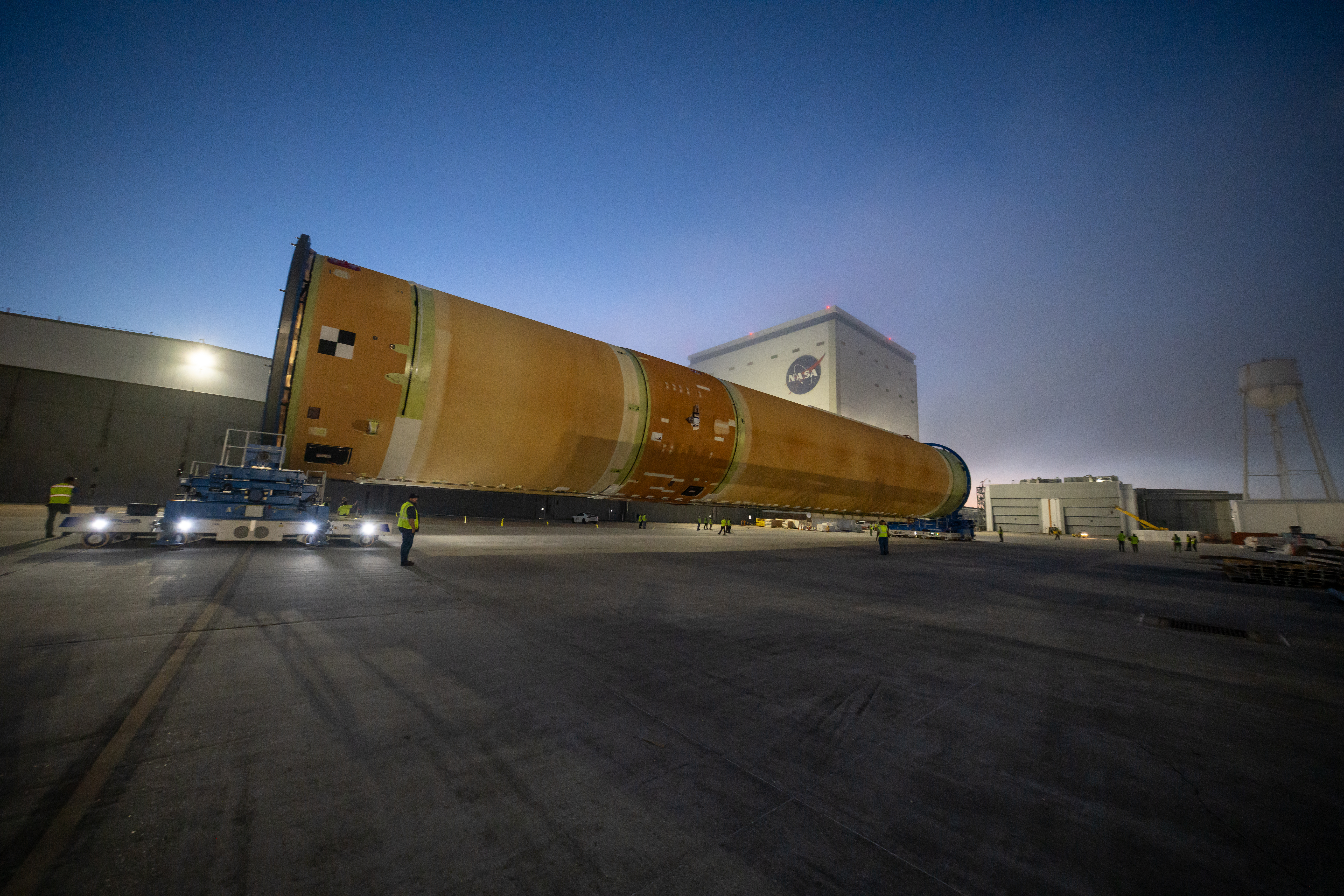
The next Artemis III hardware move is a large one
NASA says it will roll the top four-fifths of the Space Launch System core stage for Artemis III out of the Michoud Assembly Facility in New Orleans on April 20, loading the structure onto the Pegasus barge for shipment to Kennedy Space Center in Florida. The move is one of the most tangible milestones yet in the assembly flow for the mission NASA currently schedules for launch in 2027.
The section heading to Florida includes the liquid hydrogen tank, liquid oxygen tank, intertank, and forward skirt. Once it arrives at Kennedy, teams will complete stage outfitting and vertical integration before handing the hardware over to NASA’s Exploration Ground Systems Program for stacking and launch preparations. In large launch programs, these transfers matter because they mark the point where manufacturing gives way to final assembly and mission integration.
How the rest of the rocket is lining up
NASA also outlined where other major Artemis III elements stand. The SLS engine section and boat-tail moved from Kennedy’s Space Systems Processing Facility to the Vehicle Assembly Building in July 2025. The four RS-25 engines that will power the stage are scheduled to ship from NASA’s Stennis Space Center no later than July 2026 for integration into the engine section.
When complete, the four-engine core stage will provide more than 2 million pounds of thrust to send astronauts aboard Orion on the Artemis III mission. The schedule remains tied to the broader Artemis sequence, with NASA saying Artemis III is currently set for 2027 following the Artemis II test flight around the Moon, which concluded on April 10, 2026.
Why this milestone matters
The rollout is not a launch, but it is the kind of industrial milestone that reveals whether a deep-space program is maintaining physical momentum. Artemis missions depend on a distributed manufacturing and integration effort involving NASA centers and major contractors. In this case, NASA identified Boeing as the core stage lead contractor and L3Harris Technologies as the lead RS-25 engines contractor, underscoring the scale of coordination required to move from factory hardware to flight stack.
That coordination challenge is often underestimated in public coverage of space programs. The most visible moments are launches and splashdowns, but mission schedules are shaped just as much by transport logistics, integration readiness, and the order in which large subsystems arrive at the right place. Moving a giant core-stage section by barge from Louisiana to Florida is part of that choreography.
If NASA holds its current timeline, Artemis III will be the mission that attempts to return astronauts to the lunar surface under the modern Artemis program. Against that backdrop, even a factory-to-barge transfer carries more weight than a normal industrial shipment. It is a visible sign that the rocket intended for that mission is continuing its slow, highly complex progression toward assembly at Kennedy.
This article is based on reporting by NASA. Read the original article.
Originally published on nasa.gov