Une mission d’ondes gravitationnelles avec un bonus pour la science planétaire
Le Laser Interferometer Space Antenna, ou LISA, est en cours de construction pour détecter les ondes gravitationnelles provenant de certains des événements les plus violents de l’univers. Mais un nouvel article suggère que la mission pourrait aussi faire office de balance pour astéroïdes, en utilisant son extraordinaire sensibilité pour mesurer la masse d’astéroïdes géocroiseurs proches sans aucune modification matérielle.
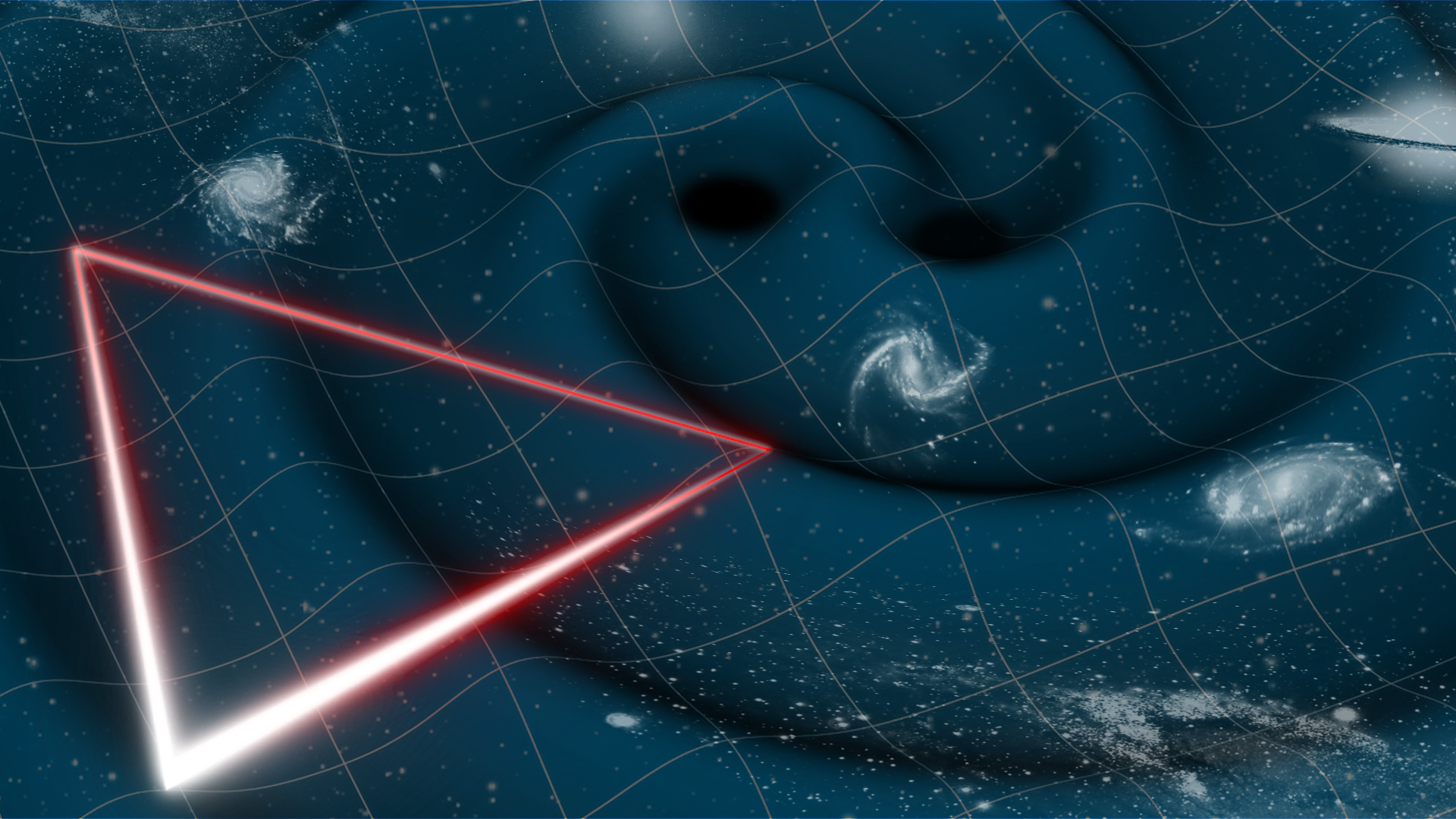
L’idée est simple en principe mais techniquement inhabituelle. LISA sera composée de trois engins spatiaux volant en formation triangulaire, avec des instruments capables de détecter des changements extrêmement faibles dans la position de masses d’épreuve en chute libre à l’intérieur de chaque engin. Ces mesures sont destinées à capter les ondulations de l’espace-temps provenant d’événements astrophysiques lointains. La même sensibilité pourrait toutefois aussi enregistrer de minuscules attractions gravitationnelles d’astéroïdes de passage.
Pourquoi la masse d’un astéroïde est difficile à mesurer
La masse est l’une des caractéristiques les plus importantes d’un astéroïde, mais aussi l’une des plus difficiles à déterminer avec précision. Elle influe sur le risque d’impact, le potentiel de ressources et le comportement orbital. Pourtant, pour la plupart des astéroïdes géocroiseurs, les scientifiques ne mesurent pas directement la masse. Ils l’estiment souvent en combinant des observations optiques avec une densité supposée fondée sur les propriétés spectrales.
La source indique que, pour moins de 35% des astéroïdes géocroiseurs, la masse peut être estimée avec des incertitudes aussi faibles que 10%. Les mesures les plus fiables proviennent souvent des astéroïdes binaires, où la dynamique orbitale fournit des informations supplémentaires, ou de rares cas où un astéroïde interagit gravitationnellement avec un autre corps de manière mesurable. Envoyer un vaisseau spatial vers chaque objet serait plus précis, mais ce n’est pas pratique pour les plus de 41.000 astéroïdes géocroiseurs connus mentionnés dans l’article.
Comment LISA pourrait aider
Si un astéroïde passe suffisamment près de l’un des engins de LISA, plus précisément dans ce que l’on appelle la distance minimale d’intersection orbitale, sa gravité exercerait une légère attraction sur les masses d’épreuve en chute libre. Les instruments de LISA sont assez précis pour détecter des variations à l’échelle du picomètre, et le nouvel article soutient que ces perturbations pourraient être séparées des autres signaux de la mission.
Ce que les concepteurs de la mission considéraient à l’origine comme du bruit pourrait donc devenir une donnée. Au lieu de traiter les attractions newtoniennes ordinaires comme une gêne dans la recherche des ondes gravitationnelles, les chercheurs proposent de les modéliser et de les exploiter pour la science planétaire.
L’article mis en avant dans la source est signé Sara Marques de l’Université de Berne et Oliver Jennrich de l’ESA. Leur travail a modélisé l’apparence du signal induit par les astéroïdes et soutient que l’effet pourrait être identifiable plutôt que perdu dans la complexité du bruit de fond.
Un ajout scientifique à faible coût
L’un des points forts de cette proposition est qu’elle ne nécessite pas de nouveaux instruments. LISA est déjà prévue pour un lancement en juillet 2035 en tant qu’observatoire phare des ondes gravitationnelles. Si des estimations de masse d’astéroïdes peuvent être extraites des mêmes mesures, le bénéfice viendrait de l’analyse plutôt que d’un matériel spatial supplémentaire.
Cela est séduisant, car la caractérisation des astéroïdes reste pauvre en données au regard de leur importance pour la défense planétaire et les futures discussions sur les ressources. Même une hausse modeste du nombre d’objets dont la masse est mieux contrainte pourrait améliorer la modélisation des risques et la compréhension scientifique.
- LISA est conçu pour détecter des ondes gravitationnelles, pas des astéroïdes.
- Ses instruments pourraient toutefois aussi détecter de minuscules attractions gravitationnelles d’astéroïdes géocroiseurs proches.
- L’approche pourrait améliorer les estimations de masse des astéroïdes sans modifier le matériel de la mission.
Le concept reste prospectif et la mission ne sera lancée que dans quelques années. Mais il reflète une tendance plus large de la science spatiale: des instruments extrêmement sensibles conçus pour une question de frontière peuvent parfois ouvrir des réponses dans un domaine voisin. Dans ce cas, une mission tournée vers les trous noirs et d’autres événements cosmiques pourrait aussi aider à résoudre un problème plus local en science planétaire.
Si la méthode fonctionne comme proposé, LISA ne se contenterait pas d’écouter l’univers lointain. Elle aiderait aussi à peser certains petits corps qui se déplacent dans notre voisinage céleste.
Cet article s’appuie sur un reportage de Universe Today. Lire l’article original.
Originally published on universetoday.com