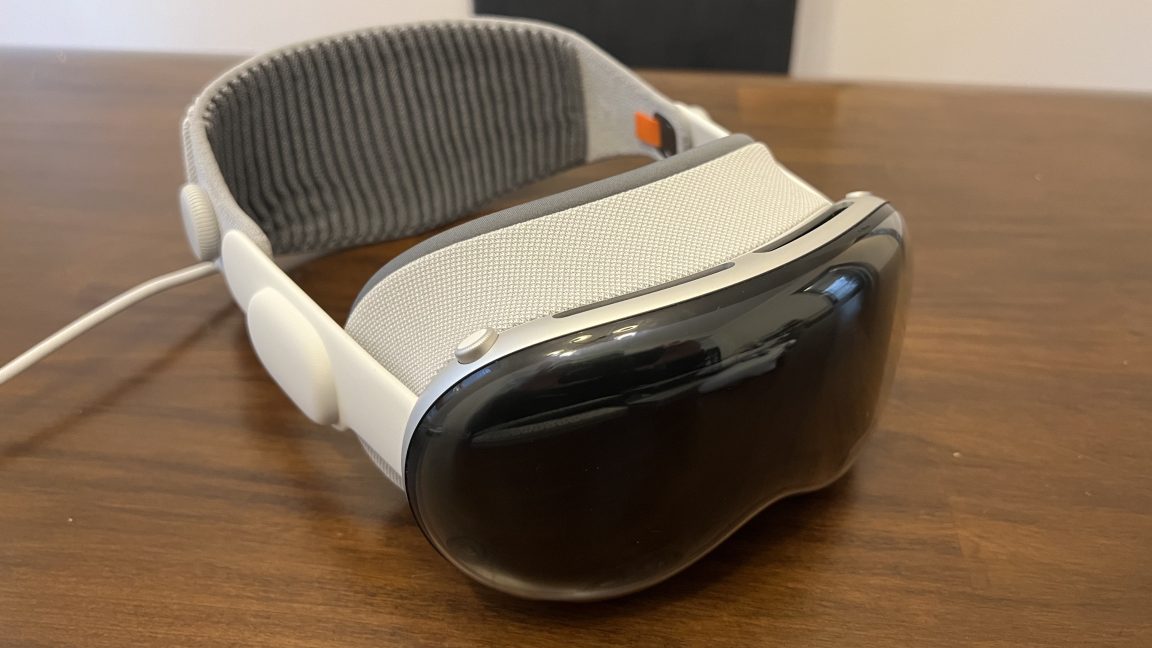
Valve adds an official Steam Link option for Vision Pro
Valve is bringing its Steam Link app to Apple’s Vision Pro, creating a native way for headset owners to stream games from a nearby Mac, Windows PC, or Linux gaming machine over a local network. The move gives Apple’s mixed-reality headset an official route into Steam’s ecosystem for conventional games, replacing the more improvised setups that users previously relied on.
The new app is not a VR gaming announcement. Valve’s current Vision Pro release is for streaming traditional 2D games, the same kinds of titles people would normally play on a monitor or television. That distinction matters because it sets expectations correctly: this is a remote-display and input experience for existing Steam libraries, not a sign that SteamVR support has arrived on Apple’s headset.
Even with that limitation, the launch is notable. Vision Pro has often been judged not just on its hardware, but on how easily it connects to the broader worlds of gaming and media. A first-party Steam Link client does not solve every compatibility question around the platform, but it reduces friction in one of the most obvious use cases: turning the headset into a large virtual display for PC games already owned by the user.
What the app does now
According to Valve, the current pre-release version is available through Apple’s TestFlight system. The company says the app supports streaming at up to 4K resolution and lets users dynamically adjust the curve of the display in panoramic mode. Those details suggest Valve is leaning into the strengths of a headset environment rather than simply porting a flat app unchanged.
Steam Link has already existed across several Apple platforms, including the Mac, iPhone, iPad, and Apple TV. Its basic model is familiar: pair a controller to the client device, connect over the same local network, and stream a game running elsewhere. Bringing that model to Vision Pro means Apple’s headset joins the broader list of screens through which users can access a home gaming PC.
That matters because Vision Pro is an expensive and technically ambitious product that has often faced questions about how open or practical it is beyond Apple’s own software boundaries. An official Steam Link app does not erase that debate, but it does make the device more useful for a category of buyer that wants flexibility without complicated third-party workarounds.

Why this is a meaningful shift for Vision Pro users
Before Valve’s release, it was possible to stream Steam games to Vision Pro using third-party tools such as ALVR. But those options were described as a more awkward path to the same outcome. A native Steam Link app is meaningful because it gives users a more direct, tested, and recognizable option from Valve itself.
For mixed-reality platforms, convenience often matters as much as raw technical capability. If a function exists only through unofficial tools, a large portion of users simply will not bother. Official support changes the threshold. It lowers setup friction, improves trust, and increases the odds that the feature becomes part of regular use rather than a niche experiment for hobbyists.
That practical improvement may be the most important part of this launch. Vision Pro does not suddenly become a mainstream gaming headset because Steam Link is available. But it does become easier to justify as a high-end personal display for people who already spend time inside the Steam ecosystem and want another way to access their library around the home.
What this does not mean yet
The announcement also draws a clear boundary around speculation. Valve has not announced support for SteamVR games on Vision Pro. The new app streams standard games, not immersive PC VR titles. Any future connection between Apple’s headset and Valve’s VR software stack remains exactly that: future possibility, not present product reality.
Still, the release may be read as a sign that the relationship between established PC gaming platforms and newer headset hardware is becoming more pragmatic. Even when companies are not embracing full interoperability across every feature, they are finding selective ways to meet user demand. In this case, that means treating the headset as a premium streaming display rather than insisting it fit into older categories of monitor, TV, or dedicated VR device.
Apple’s platform has gradually improved since launch in terms of outside connectivity and content options. Valve’s Steam Link arrival fits that broader pattern. It does not transform the state of headset gaming overnight, but it narrows one of the gaps that made Vision Pro feel isolated from the habits of PC players.

The broader takeaway
Steam Link on Vision Pro is best understood as an incremental but practical development. It gives Apple headset owners an easier way to play the traditional Steam games they already own, using nearby hardware they already have. It also gives Valve another screen category for Steam Link without forcing a larger strategic commitment to Apple’s platform.
For users, that combination may be enough. The most useful platform expansions are not always dramatic launches or sweeping ecosystem mergers. Sometimes they are straightforward reductions in friction. A native app, support for high-resolution streaming, and a display mode designed for immersive viewing are all small pieces, but together they make Vision Pro more competent at a job many owners likely wanted from day one.
In that sense, this release reflects a broader truth about mixed reality hardware: utility grows one bridge at a time. Valve has now built one of the cleaner bridges yet between PC gaming and Apple’s headset.
This article is based on reporting by Ars Technica. Read the original article.
Originally published on arstechnica.com